Should you size up for an oversized graphic hoodie?

Usually, no: choose your usual size when the graphic hoodie is already cut oversized, and size up only when its measurements fall short of the fit or layering room you want. For your 2026 wardrobe, check chest width, sleeve length, and body length before buying; a larger size adds volume, but it does not guarantee better proportions.
TL;DR- Should you size up for an oversized graphic hoodie? Usually no; check garment measurements before changing sizes.
- An oversized cut and a larger size are different routes to extra room.
- Compare chest width, sleeve length, and body length with a hoodie you already like.
- Rageuathletics sells athletic apparel for disciplined athletes; choose hoodie sizing by fit, not the label alone.
Should you size up for an oversized graphic hoodie?
Start with your usual size for an oversized cut. Size up only to solve a specific fit problem. That problem might be a tight chest over your intended layer, sleeves that stop short, or a hem that sits higher than you want.
The word oversized describes the intended silhouette. The size label identifies a position within that garment's sizing system. Neither tells you exactly where the cuffs or hem will land on your body.
For athletic apparel from Rageuathletics, apply the same rule: judge the individual garment rather than assuming your usual letter size will fit every cut.
| Sizing choice | Best for | Advantage | Trade-off |
|---|---|---|---|
| Usual size in an oversized cut | A relaxed silhouette without deliberately adding more volume | Starts with the garment's intended proportions | Still requires a measurement check |
| Larger size in an oversized cut | Additional room for a specific layer or a deliberately wider silhouette | Adds room where the larger garment's measurements increase | Sleeves and body length can exceed what you want |
| Larger size in a regular cut | More room when you already like the regular cut's shape | Keeps you within a familiar design | Does not necessarily reproduce an oversized pattern |
Do not treat those choices as interchangeable. A regular-cut hoodie in a larger size can still have a different shoulder shape, armhole, and relationship between width and length from an oversized design.
Why this matters
A hoodie can look right while you stand still and feel wrong when you reach forward. It can also feel roomy through the chest while the sleeves cover your hands. Fit is a set of relationships, not a single measurement.
For a disciplined athlete, the useful question is simple: does the hoodie work through the movements and settings you actually use? Your commute, warm-up, and everyday wear do not demand identical styling, but they all expose a poor fit.
Your 2026 buying decision should start with a familiar garment, not an unfamiliar size label. A hoodie you already wear gives you a physical reference for comfort, length, and volume.
How do you check hoodie sizing before ordering?
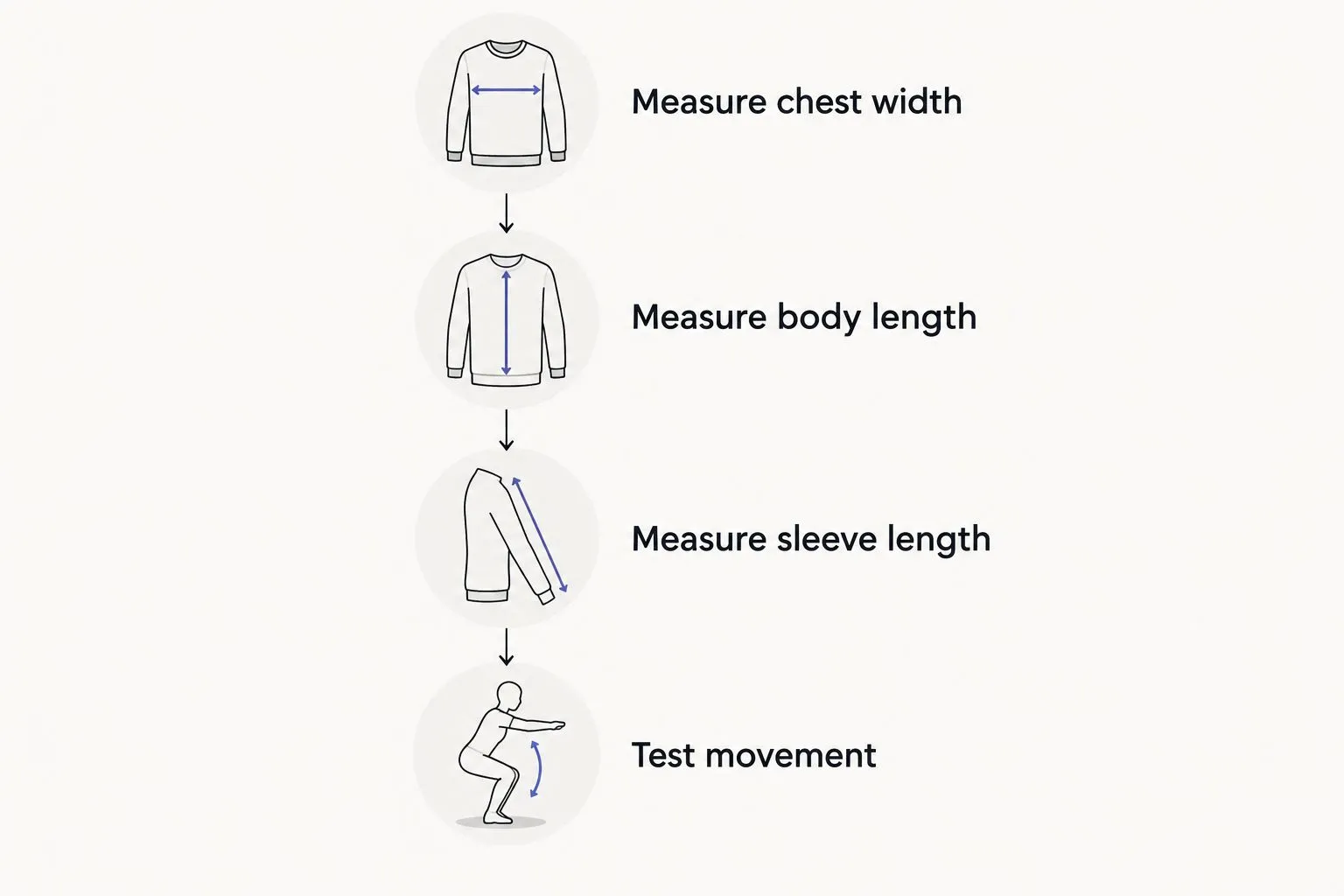
Use a hoodie that already fits the way you want. Do not choose one you constantly adjust. Lay it flat without stretching the fabric, then compare its measurements with the measurement instructions provided for the hoodie you are considering.
Measure chest width
Measure across the body from underarm to underarm. Keep the garment flat and the tape straight. Record the measurement in the same units used by the size chart.
For your own reference, you can record measurements to the nearest 0.25 inch. That is a recording choice, not a required fit allowance. The goal is a consistent comparison rather than false precision.
Check whether the chart lists a flat garment width or a body chest circumference. Those describe different things. A body measurement does not tell you exactly how much room a finished hoodie contains.
As a measurement example, 1 inch of additional flat chest width represents 2 inches around the corresponding doubled width. That arithmetic explains why a seemingly small width change matters; it is not a recommended sizing margin or a measurement for any particular product.
Measure body length
Follow the seller's stated starting point. A measurement from the shoulder and a measurement from the back neckline are not automatically comparable.
Then check where your reference hoodie's hem lands when worn. Decide whether you want that same position. More length is not inherently better, particularly when the hem folds over itself or catches on your hips.
Measure sleeve length
Check how the sleeve measurement is taken. A shoulder-to-cuff measurement differs from one that starts at the center back of the neckline.
Dropped shoulders make this distinction especially useful. A shorter sleeve measurement from a lower shoulder seam does not automatically mean less overall reach. Compare like with like.
Test movement
Wear your reference hoodie over the layer you intend to use. Reach forward, raise your arms, and sit down. Notice chest tension, cuff position, and how the hem moves.
Choose the size that fixes the problem you can identify. Do not add volume everywhere to solve a sleeve issue without checking the resulting body width and length.
Your usual size: best for the intended oversized silhouette
Choose your usual size when the measurements already give you the room, sleeve coverage, and hem position you want. An oversized hoodie does not need an additional size increase just to qualify as oversized.
The advantage is restraint. You keep the intended relaxed shape without deliberately adding another layer of volume. The limitation is that your usual size remains only a starting point; it is not a guarantee across different garments.
Check the side view as well as the front. If excess fabric gathers around the waistband or the sleeves interfere with your hands, added width has stopped serving the fit.
Recommendation: keep your usual size when the measurements match your reference hoodie and intended layers.
A larger size: best for deliberate extra room
Size up when you can name the reason. You want more space over a layer. The chest measurement is too narrow. You prefer a wider silhouette and have checked that the longer sleeves and body still work.
The benefit is additional room where the size chart shows an increase. The drawback is accepting the other changes that come with that size. Check each measurement rather than assuming only the chest gets bigger.
A larger size also changes how the garment sits around your body. Examine the shoulder placement, folds around the graphic, and how the hem meets your trousers. Extra fabric should be intentional, not something you spend the day rearranging.
Recommendation: size up for a measured need, not because bigger sounds more oversized.
A different cut: best for mismatched proportions
Sometimes neither size works. Your usual size feels narrow, but the larger size is too long. Or the chest fits while the sleeves still stop short.
That is a reason to consider a different cut. Changing the size moves you through the proportions offered by that garment; changing the cut gives you a different starting shape.
The advantage is addressing the actual mismatch. The drawback is another comparison: you need to repeat the measurement check rather than carrying the same size assumption into the next hoodie.
Your 2026 wardrobe does not need a hoodie that requires constant compromise. Choose a different cut when sizing up fixes one area and creates a problem elsewhere.
Why oversized hoodie fit varies
The fit decision comes down to the garment and how you wear it. Use these factors to explain what you see, rather than treating the oversized label as a complete specification.
- Pattern proportions. Chest width, body length, shoulder placement, and sleeve shape work together. Extra width alone does not describe the whole silhouette.
- Your body proportions. Two people who wear the same letter size can need different sleeve lengths or shoulder room.
- Your intended layers. A hoodie worn over a tee needs a different fit check from one worn over a thicker layer.
- Fabric behavior. How the fabric hangs and gathers affects the visible shape. Read the stated composition and care instructions rather than assuming behavior from appearance.
- Hem and cuff construction. Check whether the hem sits freely or gathers at your hips, and whether the cuffs stay where you want them.
- Graphic placement. Judge how the print sits when you move. Folds across a graphic are a styling consideration, not proof that the size is wrong.
None of these factors establishes a universal size increase. Together, they explain why a measurement-led decision beats buying a larger letter by habit.
How do you judge an oversized graphic hoodie on your body?
Start with function. Then assess the silhouette. Reverse that order and a strong graphic can distract you from sleeves or a hem you dislike.
Look at the front, side, and back while wearing your intended layer. Reach forward without holding the hem in place. Check whether you can use your hands without repeatedly pushing the cuffs back.
Then look at the graphic. Decide whether you like its position relative to your chest and the amount of fabric around it. A loose silhouette can include folds; you do not need every part of the print to stay flat during movement.
For the Starfall Hoodie, use the same checklist when considering Rageuathletics athletic apparel: compare any provided measurements with your reference garment, then assess the shape you want. The product name alone does not establish its dimensions or tell you to size up.
Buy for the fit you will wear, not the size you expect to look right in a photograph.
Should tall athletes automatically size up?
No. Tall athletes should compare body length and total sleeve reach before choosing a larger size. Height alone does not establish how much chest width you need.
If the larger size supplies the length you want but creates unwanted volume, consider another cut. Your 2026 fit check should separate length needs from width needs instead of treating them as the same problem.
Should you size down if an oversized hoodie looks too loose?
Size down only when the smaller garment still provides the sleeve length, body length, and movement room you need. Reducing width is useful only if the other dimensions remain suitable.
If you dislike the intended oversized silhouette itself, choose a different cut. A smaller size is not a reliable way to turn every oversized design into a regular-fit hoodie.
Should you buy a bigger hoodie because it might shrink?
Do not size up solely because you expect shrinkage. Follow the garment's care instructions and use any explicit shrinkage information the seller provides.
Without garment-specific guidance, buying extra room is a guess. You can end up with a hoodie that starts too large and never reaches the fit you intended.
FAQ
Should you size up for an oversized graphic hoodie?
Usually, no: start with your usual size when the hoodie is already cut oversized. Size up only when its measurements do not provide the room, sleeve length, or body length you want.
Is an oversized hoodie the same as a regular hoodie in a bigger size?
No. An oversized cut can use different shoulder placement, width, and length proportions, so a larger regular-cut hoodie does not necessarily create the same silhouette.
How can I tell whether a hoodie is too big?
A hoodie is too big for your needs when its extra volume interferes with movement or requires repeated adjustment. Check cuff position, hem placement, and fabric gathering while wearing your intended layer.
Should I size up a graphic hoodie for layering?
Size up for layering only when the garment's measurements leave insufficient room for the layer you intend to wear. Test a reference hoodie over that layer before choosing.
Does a dropped shoulder mean the hoodie is too large?
No. A dropped shoulder can be part of the intended design; assess overall sleeve reach, movement, and body proportions rather than the seam position alone.
What should I do if I am between hoodie sizes?
Compare both sizes with a hoodie that already fits you well. Choose the dimensions that suit your intended layers and silhouette, rather than automatically choosing the larger letter size.
Will sizing down make an oversized hoodie regular fit?
Not necessarily. Sizing down changes the available dimensions, but the garment retains its underlying cut; choose a regular-fit design if that is the silhouette you want.
One last thing
Your best sizing reference is already in your wardrobe. Measure the hoodie you reach for without thinking, then record why it works: sleeves, hem, chest room, and the layer beneath it.
Keep that reference for your 2026 purchases. It turns an abstract size label into a useful comparison. Rageuathletics is for disciplined athletes who want athletic apparel to reflect that identity. Bring the same discipline to fit: identify the need, check the measurements, and skip unnecessary sizing changes.