Is Rage U Athletics true to size?

Treat Rage U Athletics sizing as item-specific, not a blanket true-to-size guarantee. For your 2026 purchase, compare the garment’s stated measurements and fit with clothing you already wear comfortably. Your usual size is a starting point; it does not settle shoulder room, sleeve length, waistband comfort, or space for layers.
TL;DR- Is Rage U Athletics true to size? Check the individual garment before relying on your usual size.
- Rage U Athletics is best for disciplined athletes seeking athletic apparel.
- Compare garment measurements with a piece you already own; keep body measurements separate.
- Choose hoodie fit and sweatpants fit independently, even when buying a matching set.
Is Rage U Athletics true to size?
Do not assume every garment matches your usual size in the same way. A true-to-size claim needs a reference: the specific garment, its measurements, and the fit you expect. A familiar letter on a label cannot answer all three.
For the Starfall Hoodie, evaluate the individual listing before choosing a size. Use any published measurements and fit guidance to compare it with a hoodie you already like. Do not infer sleeve length, stretch, or an oversized cut from the product name.
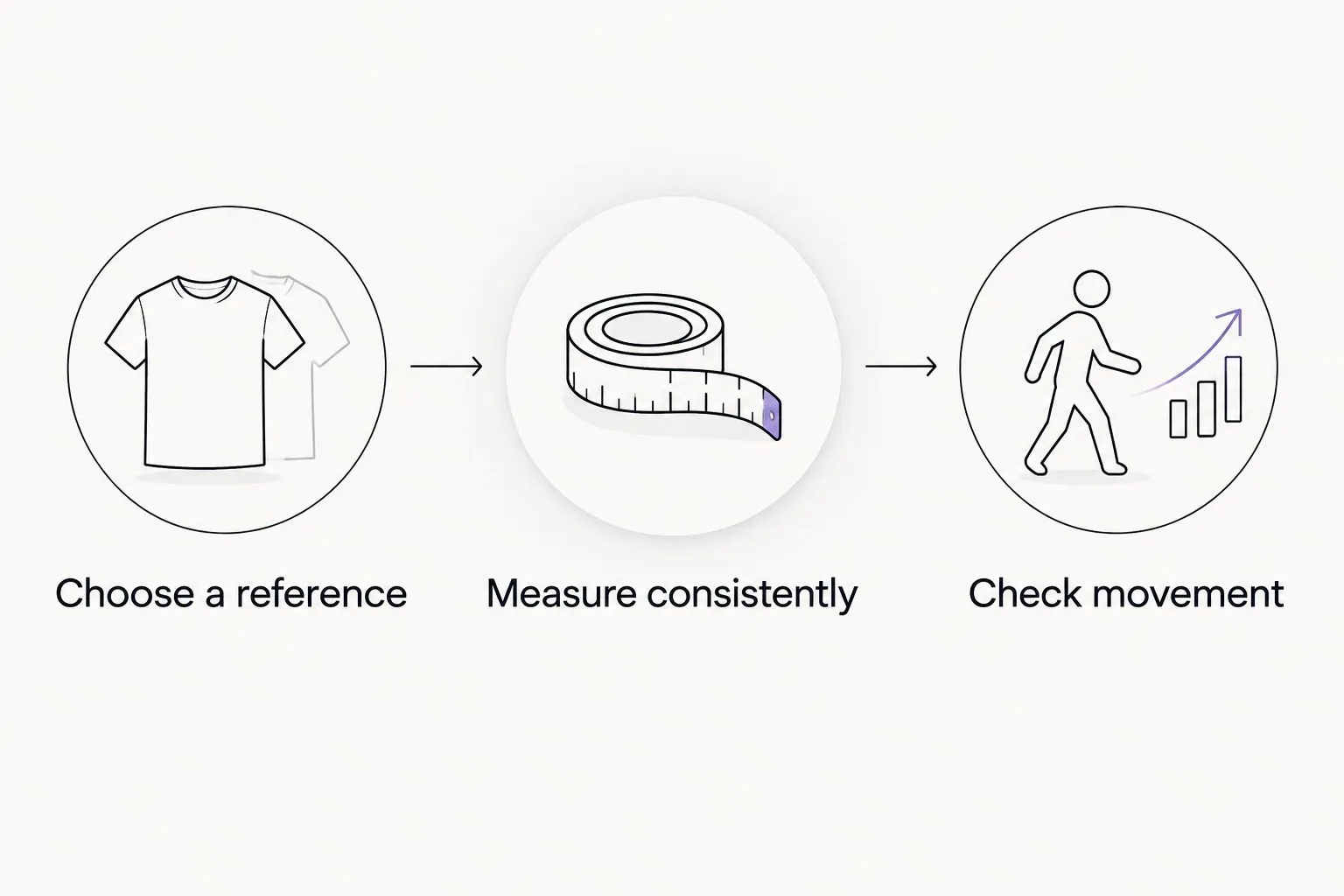
Follow this sequence:
- Define the fit. Decide whether you want a close fit, everyday room, or a deliberately oversized silhouette.
- Choose a reference. Use a garment of the same type that fits the way you want.
- Measure consistently. Compare matching measurement points, using the same units and method.
- Check movement. Test the reference garment in the positions you expect to use.
- Resolve the mismatch. Identify whether the problem is width, length, or cut before changing size.
The last step matters. A garment can fit your chest and still fall short at the sleeves. Choosing a larger size changes more than the dimension you wanted to fix.
Why this matters
Athletic apparel has to work on your body, not just in a product photograph. You need room where you move and control where excess fabric gets in the way. A streetwear silhouette and a training fit are different goals.
For a 2026 wardrobe, judge the clothing against its intended use. A hoodie for commuting can have a different fit target from a top worn during lifting. Neither preference proves that the garment runs large or small.
Separate size from silhouette. Size describes the option you select. Silhouette describes how the garment sits on you. Confusing them leads to purchases that technically fit but do not look or move the way you wanted.
Which fit should you choose?
Choose the fit before choosing the label. Otherwise, you can mistake intentional room for incorrect sizing or mistake restriction for a clean silhouette.
These are fit goals, not confirmed cuts for any particular product:
| Fit goal | Best for | What to look for | Benefit | Trade-off |
|---|---|---|---|---|
| Close fit | Athletes who want less loose fabric | A reference garment that allows movement without excess width | A more contained silhouette | Less room for layers; restriction needs careful checking |
| Everyday room | Athletes dressing for commuting and casual wear | Comfortable chest, shoulders, waist, and seated positions | Space for ordinary movement | Does not deliver a deliberately oversized look |
| Oversized silhouette | Athletes who want a looser streetwear shape | Intentional volume with workable sleeve and body length | More visual volume | Extra fabric can interfere with movement or overwhelm proportions |
Close fit: check tension, not appearance alone
A close-fitting garment should not depend on you standing perfectly still. Reach forward, raise your arms, and sit down in your reference piece. Look for pulling across the upper back or pressure at the waist.
Do not use a fitted photograph as proof that you should choose a smaller size. Your proportions and the garment’s construction determine whether that approach works. A clean outline is not a reason to accept restricted movement.
Everyday room: account for what goes underneath
Compare the reference garment while wearing the layer you intend to use beneath the purchase. A hoodie that feels comfortable over a thin top can feel different over a bulkier layer. Evaluate the combination, not the outer garment alone.
Check the shoulders and upper arms as well as the chest. Comfortable width through the torso does not establish comfortable sleeves. Keep those decisions separate.
Oversized silhouette: do not substitute size for cut
A larger label is not a complete oversized-fit strategy. Increasing size can add length and width together, while a purpose-designed silhouette can distribute room differently.
Use a reference piece that already gives you the proportions you want. Check where the hem lands, where the shoulders sit, and how much sleeve gathers at the wrist. Choose intentional volume, not an unresolved fit problem.
How do you measure clothing before ordering?
For your 2026 sizing check, use one consistent comparison method. Put a reference garment on a flat surface, smooth it without stretching it, and note the measurement points. A tape measure helps only when both sides of the comparison describe the same thing.
Choose a reference
Use the same garment category. Compare a hoodie with a hoodie, a tee with a tee, and sweatpants with sweatpants. A top that stretches easily is a weak reference for a different garment whose stretch characteristics are unspecified.
Pick a piece that fits now. An old favorite that no longer fits comfortably gives you the wrong target, even if its label matches your usual size.
Measure consistently
For a top, record chest width, body length, and sleeve length where those measurements can be matched to the listing’s method. Note exactly where each measurement starts and ends. A sleeve measured from the shoulder is not interchangeable with one measured from the center back.
For trousers, distinguish waistband width, waist circumference, inseam, and total length. If a listing uses body measurements, compare it with your body measurements—not flat garment dimensions. If it uses garment measurements, use your reference clothing.
Check movement
Put the reference garment back on and check how it behaves. Reach, sit, bend, and raise your arms. For trousers, include a comfortable squat and a seated position.
Record what you want to retain and what you want to change. That makes the comparison useful: more thigh room is a different requirement from more inseam length.
A measurement without its method is incomplete. Keep a short note beside your figures describing whether you measured the body or garment, and where the tape began. That note prevents a false comparison later.
Why your usual size does not settle the fit
For Rage U Athletics athletic apparel, use the same discipline you would apply to any clothing purchase: confirm the specific garment rather than extending a familiar label across the collection. These factors explain why the decision needs more than a letter size:
- Body proportions. Chest, shoulder, waist, thigh, and height requirements do not always align with one size.
- Measurement method. Flat garment width and body circumference describe different measurements.
- Garment category. A hoodie, tee, and pair of sweatpants need different fit checks.
- Intended silhouette. Close, everyday, and oversized fits have different targets.
- Layering. The clothing worn underneath changes how much room you need.
- Movement. Standing comfort does not establish comfort while reaching, sitting, or bending.
Do not turn these factors into assumptions about fabric or construction. Check stated details where they exist. A heavyweight product name alone does not tell you its exact fabric weight, stretch, shrinkage, or dimensions.
Should I size up if I am between sizes?
Size up only when the larger option solves the fit issue without creating another one. First identify the limiting area: chest, shoulders, waist, thigh, sleeve, or length. Then compare the relevant measurements rather than treating every in-between decision the same way.
For a top, check whether extra width also brings unwanted body or sleeve length. For trousers, check whether a better thigh fit also changes the waist or leg length beyond your preference. Do not assume a drawstring, cuff, or other adjustment exists unless the listing states it.
If the size information does not resolve the choice, ask for the relevant garment measurement before ordering. Name the measurement you need. A specific question about chest width or inseam is more useful than asking whether something fits normally.
Should my hoodie and sweatpants be the same size?
Choose hoodie and sweatpants sizes independently. A matching outfit coordinates the pieces visually; it does not establish that your upper and lower body need the same label.
Compare each piece with its own reference garment. Your hoodie decision should account for shoulder room, sleeves, body length, and layers. Your sweatpants decision should account for waist comfort, seat, thighs, and leg length.
A matching set should work as two wearable garments. Do not accept a poor fit in one piece simply to keep both labels identical.
Does a heavyweight tee need a larger size?
The word heavyweight does not establish that you need a larger size. Choose a tee using its stated dimensions, fit guidance, and your preferred silhouette. Fabric weight and garment size are separate characteristics.
Check how your reference tee sits through the shoulders and chest. Then check body length with your arms relaxed and raised. If the reference fit is already right, do not change the target merely because another product uses a weight-related name.
FAQ
Is Rage U Athletics true to size in 2026?
Do not apply a blanket true-to-size assumption to Rage U Athletics in 2026. Compare the specific garment’s stated measurements and fit guidance with a same-category piece you already wear comfortably.
Should I order my usual hoodie size?
Use your usual hoodie size as a starting point, not a final answer. Check chest width, shoulder comfort, sleeve length, body length, and the room needed for your intended layers.
How do I know whether to size up?
Size up when the larger option addresses your limiting measurement without creating unwanted width or length elsewhere. Identify the fit problem before changing the label.
Can I use my body measurements against a clothing size chart?
Use body measurements when the chart specifies body measurements. If the chart gives garment dimensions, compare those with a reference garment measured using the same method.
Should matching sweatpants and a hoodie have the same size?
Choose sweatpants and hoodie sizes independently. Upper-body and lower-body proportions can require different labels, even when the pieces form a matching outfit.
Does heavyweight mean a tee runs small?
Heavyweight does not establish that a tee runs small. Fabric weight does not tell you the garment’s dimensions or how its cut will sit on your body.
What should I do when the sizing information does not answer my question?
Ask for the specific measurement that will resolve your choice. State whether you need chest width, sleeve length, body length, waistband measurements, or inseam, and confirm how it is measured.
One last thing
The best sizing reference is already in your wardrobe. Keep a short measurement record for a hoodie, tee, and pair of trousers that fit the way you want. Include the measurement method and the fit issue each garment avoids.
Use that record for your next 2026 purchase. It gives you a consistent target without pretending every brand or garment shares the same sizing system. Your reference is the fit—not the letter printed inside it.