Is oversized fit flattering for smaller frames?

Yes, oversized fit can flatter smaller frames when the extra room looks deliberate rather than accidental. Choose width without unnecessary length, keep sleeves manageable, and make the outfit’s proportions intentional. The caveat: a garment can look right while standing still and become awkward when you sit, reach, or train.
TL;DR- Is oversized fit flattering for smaller frames? Yes: prioritize controlled length, manageable sleeves, and deliberate volume.
- Rage U Athletics athletic apparel is for disciplined athletes; choose individual garments by measurements, not brand identity alone.
- A purpose-cut oversized garment and a larger standard size are not interchangeable.
- Keep the volume you want. Reject fabric that blocks your hands, drags, or interrupts movement.
Why this matters
A smaller frame does not require tight clothing. It requires a clear decision about where the fabric sits and what shape you want. Short stature, narrow shoulders, and a short torso are different fit considerations; the same oversized top will not answer all of them.
For your 2026 wardrobe, start with a garment you already enjoy wearing. Compare its dimensions with the piece you want, rather than trusting a size letter. Use the guide to measuring yourself for an oversized hoodie fit before choosing a size.
Streetwear makes room for exaggerated shapes. You do not need to erase that character to dress a smaller frame. You need to distinguish deliberate exaggeration from a garment that keeps getting in your way.
Is oversized fit flattering for smaller frames?
Yes. Oversized fit works on smaller frames when you control garment length, sleeve coverage, and the relationship between the top and bottoms. Your height alone does not decide whether the silhouette works.
Start by choosing the effect you want. A broad, shorter top emphasizes width without extending as far down the legs. A longer top creates a more covered, continuous shape. Neither is inherently wrong, but they produce different outfits.
| Fit approach | Best for | What it offers | What to watch |
|---|---|---|---|
| Boxy, shorter top | Keeping volume above the hips | Room through the body without a long hem | The hem can rise when you reach |
| Longer oversized top | A covered, elongated top silhouette | More coverage and a deliberately loose shape | It can conceal the waistband and obscure the trouser shape |
| Oversized top with tapered bottoms | A defined contrast between upper and lower body | A loose top with a narrower lower outline | Very narrow bottoms can exaggerate the top’s bulk |
| Oversized top with wide bottoms | A deliberately roomy outfit | Consistent volume throughout the silhouette | Long hems and pooled fabric can make the outfit cumbersome |
Treat these as styling choices, not rules about which bodies deserve particular clothes. If your goal is a longer-looking leg line, avoid hiding more of the trousers than you intend. If your goal is a broad streetwear silhouette, keep the width and check the hems.
Boxy and shorter: best for controlled volume
A boxy top gives you room across the body without relying on a long torso section. That makes it a useful starting point when you like oversized clothing but dislike the feeling of wearing a garment that hangs too far down.
The trade-off is coverage. A shorter hem can lift when you reach overhead, particularly if you wear higher-volume trousers or move through a wide range of motion. Check that movement before deciding the length is right.
Look at the side view as well as the front. A top that holds away from the torso creates a different outline from one that falls close to the body. Choose the shape you actually want, not the shape a product photo suggests on someone else.
Recommendation: choose a boxy cut when you want width without a long hem. Do not assume that every garment described as oversized has that shape.
Longer and loose: best for deliberate coverage
A longer oversized top suits an outfit built around coverage. It also changes how much of your trousers remains visible, so judge the whole outfit rather than inspecting the top alone.
The benefit is a continuous, relaxed outline. The drawback is excess fabric around the hips or upper thighs, especially when the top meets roomy trousers. Sitting down will tell you more about that overlap than a mirror pose.
If the longer silhouette is the point, keep it. Smaller frames do not need every outfit to imitate taller proportions. The practical limit is whether the hem catches, bunches, or needs repeated adjustment.
Recommendation: choose a longer top for coverage, not as a substitute for the right chest width. More length does not solve every fit problem.
Why oversized fit varies on smaller frames
The oversized label does not describe a single set of proportions. These factors explain why apparently similar garments can sit differently:
- Body proportions. Shoulder breadth, torso length, and leg length affect where seams and hems land. Overall height does not capture those differences.
- Pattern shape. A garment designed with extra width can differ from a standard cut made in a larger size. Compare the dimensions rather than treating the labels as equivalents.
- Fabric behavior. Stiffer material holds a more pronounced outline; softer material falls closer to the body. Fabric weight alone does not tell you exactly how a garment will drape.
- Sleeve construction. A dropped shoulder changes where the sleeve begins. Judge the cuff position on your body instead of rejecting the seam simply because it sits below your shoulder.
- Hem placement. The top’s endpoint determines how much waistband and trouser leg remains visible. That placement changes the balance of the outfit.
- Layering. A tee under a hoodie adds another hem and another layer of fabric. Check the combined shape, not just each garment separately.
For a 2026 purchase, read available fabric and measurement information together. A heavier fabric is not automatically more flattering, more comfortable, or better suited to training. Judge the result against the intended use.
How do you check an oversized fit before keeping it?
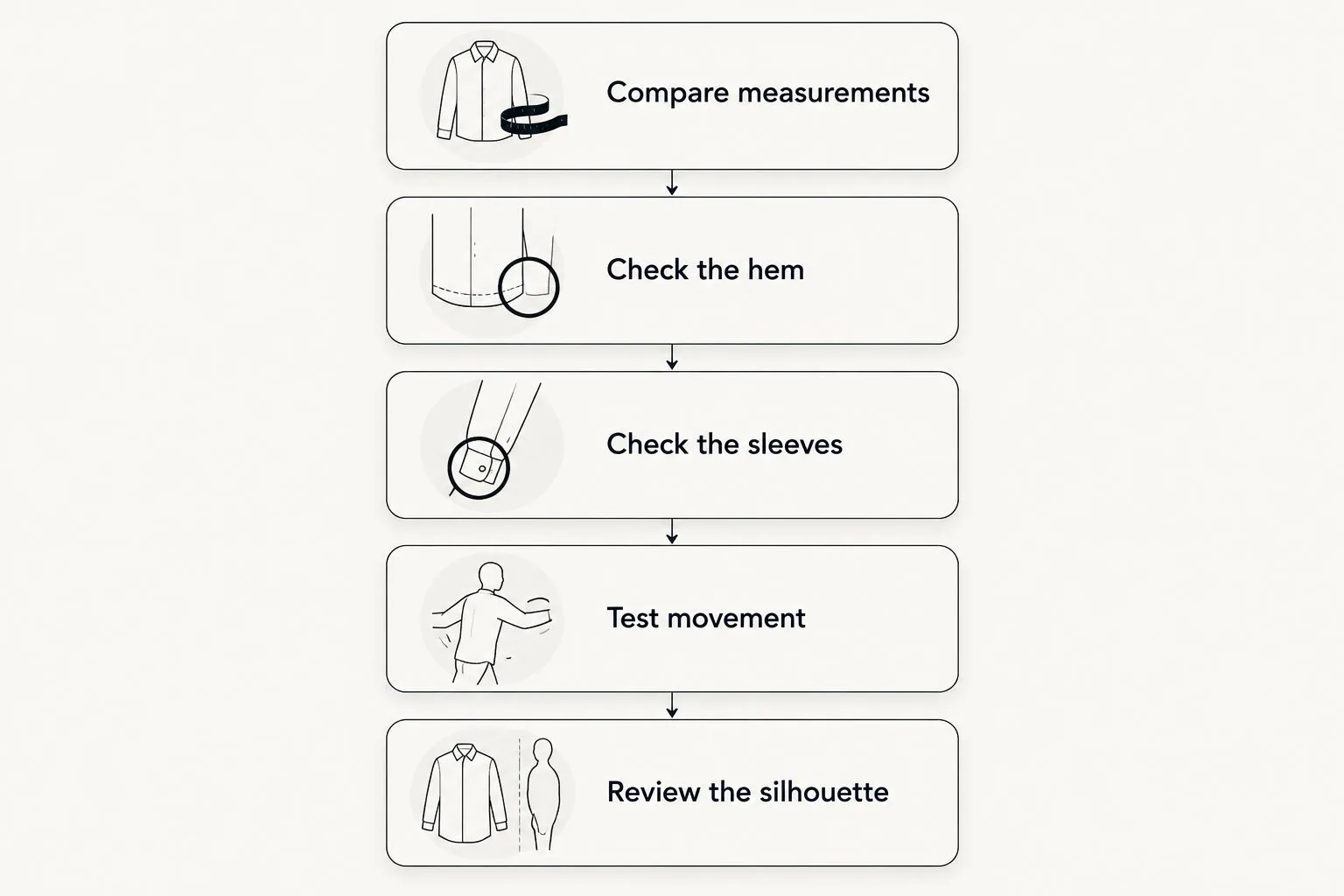
Use the same sequence for every candidate. Your reference garment, the outfit underneath, and normal movement give you a more useful answer than the size label alone.
- Compare measurements. Lay a familiar top flat and compare its body width, length, and sleeves with the candidate’s published garment measurements. Keep body measurements separate from garment measurements.
- Check the hem. Put on the trousers you expect to wear. Decide whether you want the waistband visible, covered, or revealed only when you move.
- Check the sleeves. Let your arms hang, then bend them. Decide whether the cuffs sit where you want without repeatedly pulling them away from your hands.
- Test movement. Sit, reach, and walk. For training use, rehearse the relevant movement without loaded equipment before assessing the outfit around actual equipment.
- Review the silhouette. Look from the front, side, and back. Keep the volume that serves the outfit; reject the fabric that only creates interference.
Do this with the shoes and layers you intend to wear. Changing the trouser rise or adding a long base layer changes the visible proportions. A fit decision made in isolation can become a different outfit once you get dressed.
Should smaller frames size up for an oversized look?
Not automatically. Start with the garment’s intended cut and compare measurements before changing sizes. A larger size can add length and sleeve coverage along with width, including dimensions you did not want to change.
An oversized design can already contain the room you need. Conversely, a standard-cut garment might not create your preferred shape even after sizing up. The question is not whether the label looks large enough; it is whether the actual dimensions suit your body and outfit.
Make this your 2026 buying rule: identify the dimension you want to change first. If the chest needs more room but the sleeves already cover your hands, a different cut deserves consideration before a larger size.
How do you balance oversized tops with trousers?
Start with the top’s hem and the trouser rise. Those meeting points determine whether the outfit reads as separate shapes or one continuous block. You do not have to show the waistband, but decide whether hiding it supports your intended look.
Tapered trousers offer contrast beneath a loose top. Wide trousers maintain volume throughout. Both approaches work; the table above sets out their trade-offs. Avoid choosing narrow trousers solely because someone says smaller bodies must compensate for oversized clothing.
Try the outfit with your intended shoes. A trouser hem that rests cleanly over one shoe can collect around another. Fix the hem relationship before adding accessories to solve a proportion problem.
For a 2026 outfit refresh, change a single element at a time. Keep the trousers and shoes fixed while comparing tops. You will see which difference comes from the garment rather than from an entirely new combination.
What should athletes check beyond the mirror?
A flattering fit still needs to work for the activity. Sleeves that require constant adjustment and hems that catch during movement are practical problems, even if the outfit looks deliberate in a photograph.
For lifting, check hand access and fabric clearance during the relevant movements. For walking or recovery wear, check whether the garment remains comfortable when seated and layered. Keep loose fabric clear of moving equipment.
Rage U Athletics athletic apparel is for disciplined athletes, not a substitute for checking fit. If you are considering the Starfall Hoodie, assess its current product information against your reference garment. Do not assume the name establishes its length, fabric weight, or suitability for your training.
The brand offers apparel and fragrances, but the apparel decision here remains specific: do the dimensions, coverage, and movement match your needs? Brand identity can guide what you like. It cannot answer where a sleeve ends on your arm.
FAQ
Can I wear oversized clothes if I’m short?
Yes, you can wear oversized clothes if you’re short. Choose the volume you want, then check that the garment length, sleeves, and trouser hems work with your proportions.
Will an oversized hoodie make my smaller frame look swamped?
An oversized hoodie can look overwhelming when its length and sleeves extend beyond your intended silhouette. Compare it with a top you like and check the outfit from the side as well as the front.
Is a boxy fit better than a long oversized fit?
A boxy fit is better for keeping width without a long hem; a longer oversized fit is better for deliberate coverage. Neither is universally more flattering, and each needs a movement check.
Should I buy a smaller size in an oversized hoodie?
Do not buy a smaller size solely because the hoodie is labeled oversized. Compare garment measurements first; sizing down can remove room you wanted while changing other dimensions.
Can I wear an oversized top with wide-leg sweatpants?
Yes, an oversized top can work with wide-leg sweatpants when you want volume throughout the outfit. Check the top’s endpoint and keep trouser hems from dragging or interfering with movement.
Does heavyweight fabric flatter smaller frames better?
Heavyweight fabric is not automatically more flattering on smaller frames. Assess how the material holds its shape, where it folds, and whether the resulting outline suits your intended outfit.
How should I choose Rage U Athletics apparel for a smaller frame?
Choose Rage U Athletics apparel by comparing the available garment measurements with a piece you already like. Check length, width, sleeves, and movement rather than assuming a brand-wide fit from a product name.
One last thing
The shoulder seam does not have to sit on your shoulder for a garment to fit as intended. A dropped shoulder is a construction choice, not automatic evidence that the top is too large.
For 2026, stop using the seam as your only checkpoint. Keep deliberate width. Correct unwanted length. Test movement. Your frame does not need fixing; the garment needs to serve the outfit.