
Is cotton fleece warm enough for winter training?

Cotton fleece is warm enough for winter training in dry, sheltered conditions when your effort stays low enough to keep the fabric from becoming sweat-soaked. It is not a dependable stand-alone choice for wet, windy outdoor sessions: warmth depends on staying dry, controlling airflow, and adjusting layers before you overheat.
TL;DR- Is cotton fleece warm enough for winter training? Yes for dry, sheltered sessions; not as stand-alone wet-weather protection.
- Cotton fleece holds moisture; remove your warm layer before heavy sweating, not after.
- Use a moisture-managing base layer and weather protection when outdoor conditions demand them.
- Rage U Athletics targets disciplined athletes; choose training apparel by fabric, fit, and conditions rather than appearance alone.
Is cotton fleece warm enough for winter training?
Yes for dry warm-ups, sheltered strength sessions, and travel between home and the gym. Choose a different setup for sustained outdoor effort in wet or windy weather. The fleece surface helps trap insulating air, but cotton absorbs moisture. A damp hoodie does not perform like a dry one.
The word fleece describes a fabric structure or finish, not a guarantee of weather protection. Check the fiber label before judging the garment. A cotton-rich sweatshirt and a polyester fleece can look similar while handling sweat differently.
For everyday fit and styling considerations, start with the guide to streetwear hoodies for athletes. For winter training, add a stricter test: does the garment help you stay dry through both movement and rest?
| Training layer | Best for | Main advantage | Main limitation |
|---|---|---|---|
| Cotton fleece | Dry warm-ups and sheltered lifting | Insulating loft and a familiar sweatshirt feel | Holds absorbed moisture; not rain or wind protection |
| Polyester fleece | Active layering where sweat management matters | Generally dries faster than cotton fleece | Ordinary fleece still needs protection from wind and precipitation |
| Merino wool base layer | Next-to-skin layering in changing conditions | Handles moisture differently from cotton and provides insulation | Fabric weight and construction affect warmth and durability |
| Weather-resistant outer layer | Windy or wet outdoor training | Reduces exposure to wind or precipitation, depending on construction | Traps heat and moisture if ventilation is insufficient |
These are category differences, not promises about every garment. Blends, knit density, thickness, and garment construction all matter. Read the actual label and care instructions.
Why this matters
Winter training has two different demands: producing heat while you move and retaining it when you stop. Your outfit must handle both. A sweatshirt that feels comfortable during a walk can become too warm during hard intervals, then feel cold during recovery.
For your 2026 winter training kit, prioritize adjustment over maximum thickness. You need a layer you can remove, an outer layer suited to the conditions, and dry clothing for the transition afterward. More fabric is not automatically a better system.
Dress for the session, not just the walk out the door. Indoor lifting, outdoor running, and standing between field drills do not create the same clothing demands.
Cotton fleece: best for dry, sheltered training
Cotton fleece earns its place when comfort and dry insulation matter more than rapid drying. Think gym arrival, mobility work, warm-ups, and strength sessions in a sheltered space. You can remove it as your body warms up rather than keeping it on through every set.
Its advantage is straightforward. A brushed interior provides loft, and the sweatshirt shape gives you coverage without needing a technical-looking outfit. The limitation is just as clear: once cotton absorbs substantial sweat, you have wet fabric against or near your body.
Check cuffs, hem, and the area around your neck. Large openings let warm air escape; excessively tight openings restrict movement or make removal difficult. The right fit balances coverage with access.
Do not treat a hood as a substitute for weather protection. It adds coverage, but an ordinary sweatshirt hood does not establish wind resistance, waterproofing, or suitability for exposed conditions.
Recommendation: use cotton fleece as an adjustable comfort layer, not your entire outdoor winter system.
Synthetic fleece: best for active layering
Polyester fleece is generally a better choice when drying speed matters. Polyester fibers absorb less water than cotton fibers, although moisture can still sit within the fabric structure. A synthetic fleece can still become wet, uncomfortable, or too warm.
The trade-off is wind exposure. Many fleece fabrics allow air through, which helps ventilation during activity but reduces warmth when wind pushes through the garment. A separate outer layer addresses that problem more directly than choosing a thicker fleece alone.
For a 2026 outdoor training wardrobe, judge synthetic fleece by its role under your outer layer. Check shoulder movement, sleeve bulk, and whether you can open or remove it easily. Fabric choice cannot fix a garment that binds during the movements you train.
Recommendation: choose synthetic fleece over cotton fleece when your session makes heavy sweating likely, then match weather protection to the conditions.
Layered clothing: best for changing effort and weather
A useful starting framework has 3 functional layers: a moisture-managing base layer, an insulating middle layer, and an outer layer suited to wind or precipitation. That is a planning framework, not a requirement to wear all three throughout every session.
Each layer has a job. The base layer manages moisture next to your skin. The middle layer holds insulating air. The outer layer limits environmental exposure without creating more heat buildup than you can manage.
Cotton fleece can fill the middle-layer role in dry, low-sweat conditions. It becomes a weaker choice when moisture accumulation is predictable. Do not put a shell over a sweat-soaked cotton hoodie and assume the problem is solved.
Your system must also fit together. A tightly compressed fleece loses loft, while bulky sleeves can interfere with movement under an outer layer. Test the complete outfit, not each garment separately.
Why cotton fleece warmth varies
There is no universal winter temperature rating for cotton fleece. The same garment feels different across weather, effort, and fit. These factors determine whether it belongs in your session:
- Moisture: cotton absorbs water. Sweat, rain, and wet snow change how the garment feels and how effectively your clothing system keeps you warm.
- Wind: moving air carries heat away. Fleece thickness alone does not establish wind resistance.
- Fabric construction: loft, thickness, knit density, and fiber blend affect insulation and airflow. Fabric weight is useful context, not a complete warmth rating.
- Training effort: hard movement generates heat and sweat. Standing still between efforts changes the demand from ventilation to insulation.
- Fit and coverage: gaps release warm air; excessive compression reduces insulating loft. Neck, waist, and sleeve openings all deserve attention.
- Layer compatibility: a base layer and outer layer change the performance of the outfit. Evaluate cotton fleece as part of that system.
Do not buy winter warmth by fabric weight alone. A heavier sweatshirt can still be the wrong garment for a damp, exposed session.
How should you layer cotton fleece for a winter session?
Use this sequence when planning a 2026 winter session. The goal is not to finish wearing everything you started with. The goal is to manage heat before moisture becomes the problem.
- Check conditions. Look at wind and precipitation as well as temperature. Decide whether the session is sheltered, exposed, or partly indoors.
- Choose the base. For sweat-producing outdoor work, use a next-to-skin layer intended to manage moisture. Avoid relying on a cotton T-shirt underneath cotton fleece for rapid drying.
- Test movement. Reach overhead, bend, and perform your main training pattern. Confirm that the combined layers do not pull at the shoulders or restrict your position.
- Adjust early. Open or remove the insulating layer as you warm up. Waiting until the fabric is soaked defeats the point of adjustment.
- Change afterward. Pack 1 dry top for the transition after training. Replace damp clothing rather than standing outside in it during your cooldown or commute.
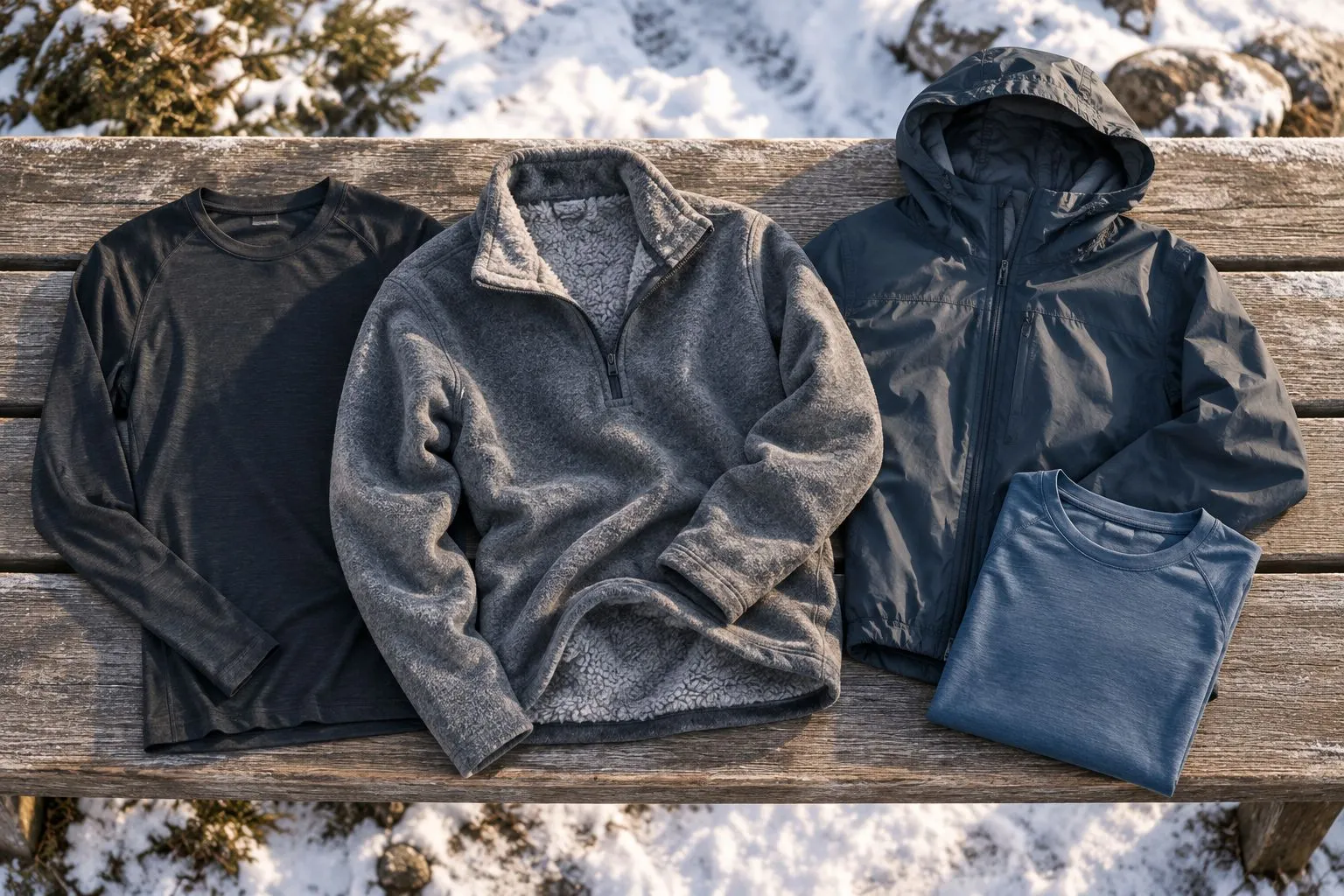
Lay out your base layer, fleece, weather layer, and dry change before leaving. Seeing the entire setup makes missing protection obvious. It also prevents your favorite hoodie from becoming the default answer to every forecast.
How do you check fit without buying unnecessary bulk?
Use 2 fit checks: movement and layering. First, perform the movements your session requires. Then repeat them while wearing the outer layer you intend to use.
For lifting, examine whether the hem rides up during overhead work and whether fabric bunches where it interferes with your setup. For running, check whether sleeves and the hood move distractingly. A relaxed silhouette is a style choice; unrestricted movement is a training requirement.
Fabric weight deserves inspection, but do not attach an unsupported temperature promise to it. Look for a stated composition, construction details, and care instructions. If the garment includes stretch fibers or a blend, judge the actual specification rather than calling every sweatshirt cotton fleece.
Durability also depends on construction and care. Inspect seams, cuffs, and areas that contact equipment. Follow the garment's washing and drying instructions instead of using high heat as a shortcut.
Where does Rage U Athletics fit into the decision?
Rage U Athletics athletic apparel is best for disciplined athletes who want clothing aligned with their training identity. That audience fit does not establish a winter performance rating. Apply the same fabric and movement checks you would use for any other brand.
If you are considering the Starfall Hoodie, verify its current fabric composition, fit information, and care guidance before assigning it a role in your winter kit. A hoodie name does not tell you whether the garment is cotton fleece, wind-resistant, or suitable for prolonged outdoor effort.
The practical buying rule for Rage U Athletics athletic apparel is simple: choose the garment for a defined job. Gym arrival and dry warm-ups are different jobs from wet-weather running. Identity can guide your style; conditions must guide your layers.
Can you wear cotton fleece for outdoor running?
Cotton fleece is not the default choice for sustained, sweat-heavy winter running. It absorbs moisture, and exposed routes add wind or precipitation to the equation. A moisture-managing layer with suitable weather protection gives you a more useful starting point.
For an easy outing in dry, sheltered conditions, assess comfort and moisture throughout the session. Do not turn that limited use case into a claim that the same outfit works for every winter run. Route exposure and effort change the decision.
Is heavyweight cotton fleece warmer than lightweight fleece?
Heavyweight cotton fleece can provide more insulation when its construction creates more thickness and loft. Weight alone does not prove that it is warmer than a lighter fleece with a different structure or fiber composition.
For your 2026 buying decision, compare construction and intended use before choosing the heaviest option. Extra insulation helps only when you need it. During hard effort, it can encourage the sweating you need to control.
Should you keep a fleece hoodie on during rest periods?
Keep a dry insulating layer ready for rest periods, especially when you stop moving outdoors. If your training hoodie is damp, replacing it with dry clothing is a better response than simply pulling up the hood.
Build that change into the session. Put the dry layer where you can reach it without unpacking everything. Consistent preparation beats improvising after you have already cooled down.
FAQ
Is cotton fleece warm enough for winter training in 2026?
Cotton fleece is warm enough for dry, sheltered winter training when it stays dry and your effort does not produce heavy sweating. It is not a dependable stand-alone layer for wet or windy outdoor sessions.
Is cotton fleece better than polyester fleece for winter workouts?
Cotton fleece suits dry comfort-focused use; polyester fleece generally suits sweat-producing activity better because it dries faster. Neither ordinary fleece fabric automatically provides wind or rain protection.
Can I wear a cotton hoodie as my base layer?
A cotton hoodie is not the preferred base layer for sweat-heavy outdoor winter training. Use a next-to-skin layer intended to manage moisture, then add insulation and weather protection as needed.
Does a heavier hoodie always keep you warmer?
A heavier hoodie does not always keep you warmer. Loft, construction, moisture, wind exposure, and the rest of your clothing system affect warmth.
Should I wear a wind-resistant jacket over cotton fleece?
A suitable outer jacket helps limit wind exposure, but it does not fix moisture trapped in a damp cotton fleece. Adjust insulation early and avoid overheating under the jacket.
What should I check before choosing a Rage U Athletics hoodie for winter?
Check a Rage U Athletics hoodie's fabric composition, fit information, and care guidance before choosing it for winter training. Match those details to your session rather than assuming the garment has a temperature or weather-protection rating.
What should I do if my fleece gets sweaty during training?
Replace damp fleece with dry clothing when practical, particularly before an outdoor rest period or commute. For the next session, reduce insulation or adjust layers earlier.
One last thing
Your winter outfit has to work when the session ends, not only while you are moving. The walk back, the wait outside, and the cooldown expose weaknesses that hard effort can hide.
For winter training in 2026, pack the dry change first. Then choose your fleece. The best hoodie is not the one that keeps you sweating; it is the one you can use without losing control of moisture and temperature.