Is 100% cotton better than a poly blend for gym hoodies?

No. 100% cotton is better for dry comfort and everyday wear; a cotton-polyester blend is usually the better gym hoodie for sweaty sessions and repeated washing. For your 2026 purchase, check fabric construction and fit as closely as fiber content: a dense blend can still feel hot, and polyester alone does not guarantee sweat-wicking performance.
TL;DR- Is 100 percent cotton better than poly blend for gym hoodies? No: choose by sweat level and use.
- 100% cotton wins on dry comfort, but absorbed sweat makes it heavier and slower to dry.
- Cotton-polyester blends suit sweaty training, but fabric construction determines moisture movement and comfort.
- Rageuathletics athletic apparel is for disciplined athletes; assess each hoodie's composition before choosing a training layer.
Is 100% cotton better than a poly blend for gym hoodies?
Choose cotton for a hoodie you wear around training. Choose a suitable blend for a hoodie you keep on during training. That distinction matters more than treating either fiber as universally better.
Cotton absorbs moisture into its fibers. Polyester absorbs much less moisture into the fiber itself, although a polyester-containing fabric still holds water between yarns. That difference helps explain why otherwise similar blends generally dry faster than all-cotton fabrics.
| Buying criterion | 100% cotton hoodie | Cotton-polyester blend hoodie |
|---|---|---|
| Best for | Dry warm-ups, recovery days, everyday wear | Training that involves more sweat and frequent washing |
| Main advantage | Absorbent cotton feel against dry skin | Lower fiber moisture absorption and generally faster drying |
| Main drawback | Retained moisture adds wet weight | Synthetic fibers can retain oily residues and odor |
| Sweat management | Absorbs sweat; not automatically quick-drying | Depends on yarns, knit structure, and finishing |
| Shape and shrinkage | Fit can change with laundering | Polyester generally improves dimensional stability |
| Warmth | Depends on thickness, loft, and construction | Depends on thickness, loft, and construction |
| Stretch | Comes from knit construction unless another fiber is present | Polyester content alone does not guarantee stretch |
Oversized fit adds another variable. Use the guide to whether an oversized hoodie is worth it for the gym to separate useful movement room from fabric that gets in your way.
Why this matters
A hoodie has different jobs before, during, and after a session. It keeps you covered on the walk in, adds warmth during preparation, and becomes another layer to manage once your effort rises. One fabric does not handle every stage equally well.
For your 2026 gym wardrobe, identify the stage that actually needs the hoodie. If you remove it before working sets, prioritize dry comfort and fit. If you train in it throughout the session, wet comfort and drying behavior deserve more attention.
Buy for the part of the session you actually wear it through. Streetwear shape can still matter. It just cannot replace a practical fabric check.
100% cotton: best for dry comfort and everyday wear
An all-cotton hoodie makes sense when you want a familiar cotton feel for commuting, preparation, and time outside the gym. It also absorbs moisture rather than leaving all of it sitting on the surface. That absorbency is useful until the garment becomes wet enough to feel heavy.
The drawback shows up during sustained sweating. A damp cotton hoodie retains water, takes longer to dry than a comparable polyester-rich construction, and can feel clammy when you stop moving. Do not confuse comfortable-on-arrival with comfortable-throughout-training.
What 100% cotton actually tells you
A 100% cotton composition means the identified fabric contains cotton rather than a cotton-polyester mixture. It does not tell you fabric mass, thickness, stitch quality, or whether the garment was preshrunk. Check whether the composition applies to the main body, lining, or separate components.
Nor does cotton guarantee a particular hand feel. Yarn, knit structure, brushing, and finishing all affect the surface. Two cotton hoodies can feel very different without either label being wrong.
Best for: athletes who remove the hoodie before hard work and want the same garment for everyday use. Trade-off: wet weight and drying time become more noticeable when you keep it on through a sweaty session.
Cotton-polyester blends: best for sweatier training
A cotton-polyester blend combines fibers with different moisture behavior. Polyester absorbs less water into its fibers than cotton, so introducing polyester generally reduces the amount of moisture held within the fibers. That is useful when you wash your training layers often or dislike a saturated cotton feel.
But a blend is not automatically a performance fabric. A thick, tightly constructed fleece can still trap heat, and a moisture-wicking claim needs more support than the word polyester. Wicking describes liquid movement through a fabric, not simply its ingredient list.
Read the ratio without treating it as a score
More polyester generally shifts a comparable fabric toward lower fiber moisture absorption. More cotton generally shifts it toward cotton's absorbency and feel. Neither direction proves that the finished hoodie is better made.
The ratio also does not settle stretch. Knit construction provides some give; elastane, when listed, contributes a different kind of extensibility and recovery. Do not assume a cotton-polyester hoodie will accommodate your overhead position just because it contains synthetic fiber.
Best for: athletes who need a hoodie during sweatier work and want easier drying between wears. Trade-off: polyester-containing fabrics can retain oily residues, and poor laundering can leave persistent odor.
Why gym hoodie performance varies
The useful 2026 buying question is not just cotton versus polyester. It is how the finished garment behaves when you move, sweat, wash it, and wear it again. Compare these factors before making the decision.
- Fiber ratio. Cotton and polyester absorb moisture differently. The blend changes that balance without determining every other property.
- Fabric mass and thickness. Grams per square meter describe fabric mass per area, not breathability or quality by themselves. Thickness and loft also affect insulation.
- Knit structure. Dense construction and more open construction allow different airflow. Identical fiber labels do not mean identical ventilation.
- Interior finish. A brushed interior feels different from an unbrushed loopback surface. Judge the inside, not just the outer face.
- Fit and coverage. Shoulder room, sleeve shape, body length, and the hood affect movement. Excess fabric can become an obstruction around equipment.
- Care and finishing. Preshrinking, dyeing, surface treatments, and laundering influence the garment's feel and dimensions. Follow the finished garment's care label.
Do not let a heavy fabric become shorthand for durable construction. Inspect seams, cuffs, pocket attachment, and the fabric surface. Weight is one specification, not a verdict.
How do you choose a gym hoodie without guessing?
Use a movement-and-care check before committing. For a 2026 purchase, the same checks apply whether you want a clean training layer or an oversized streetwear silhouette. The fit has to work under movement, not just in a mirror.
- Define the job. Decide whether the hoodie is for travel, warm-ups, full-session training, or recovery. Pick the main use rather than demanding every benefit from one garment.
- Read the label. Check the main fabric composition and care instructions. Look for separate lining or trim information instead of assuming the whole garment uses one fabric.
- Test movement. Reach overhead, cross your arms, and move into your normal training positions. Notice pulling at the upper back, sleeves that restrict movement, and a hem that rides up.
- Check clearance. Keep the hood, drawcords, sleeves, and loose body fabric clear of moving equipment. More room is not always more useful.
- Plan care. Choose a garment you can wash and dry according to its label. A hoodie that conflicts with your laundry routine is a poor training purchase.
A good movement check uses the layer you normally wear underneath. Testing over a thin top and then training over a bulkier shirt changes the fit. Check the actual combination.
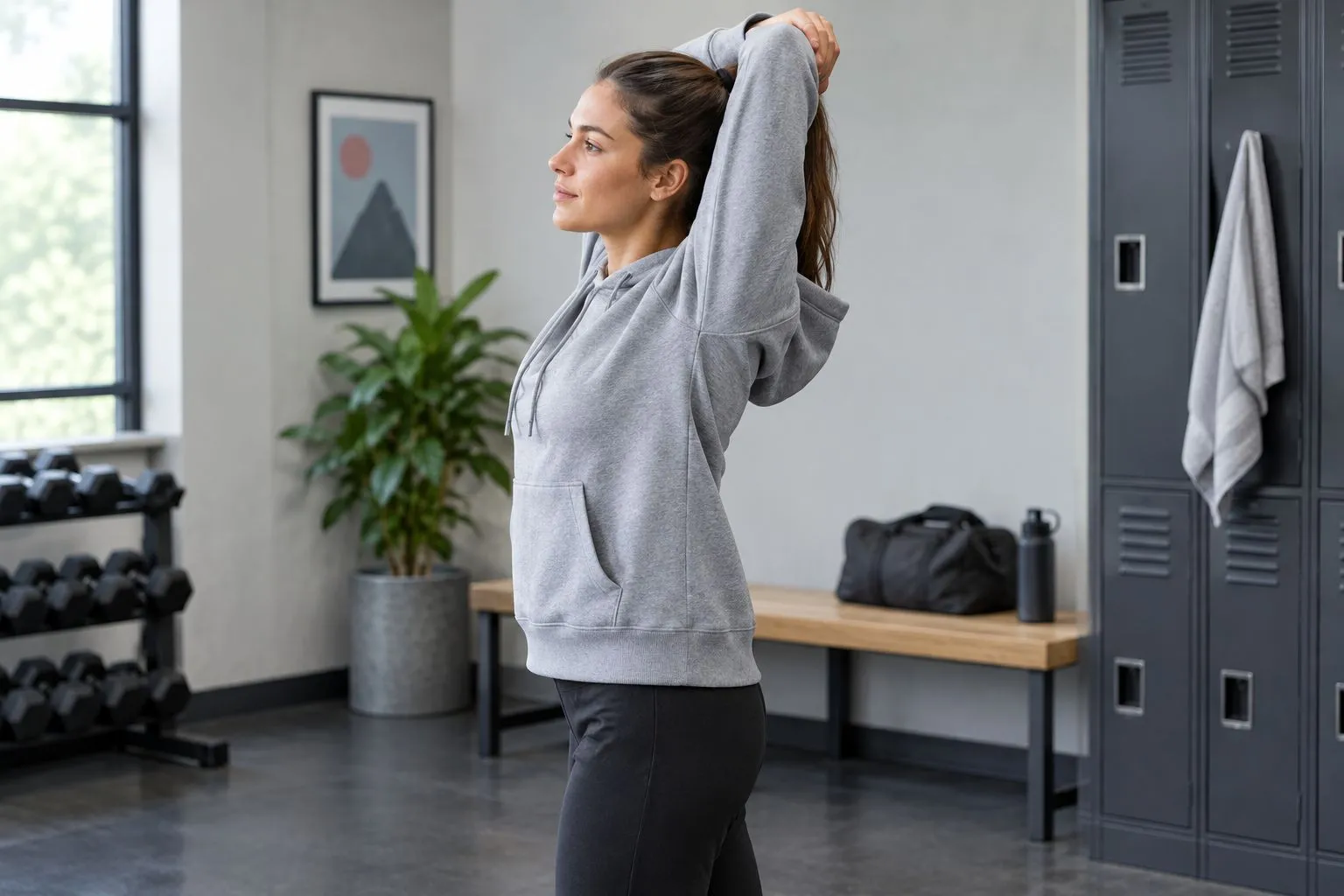
The Starfall Hoodie is one Rageuathletics athletic apparel option to assess against this checklist. Confirm its current composition and care information rather than assuming cotton content, fabric weight, or drying performance from its name.
Is 100% cotton warmer than a cotton-polyester blend?
100% cotton is not automatically warmer than a cotton-polyester blend. Thickness, trapped air, interior finish, fit, and wind exposure all influence warmth. Compare finished hoodies rather than ranking fibers alone.
Dry warmth and wet comfort are different tests. A cotton hoodie that feels comfortable before training can feel cold after absorbing sweat, especially when you stop moving or encounter wind. A blend does not remove that problem if it is also saturated.
For outdoor training, assess the whole clothing system. A hoodie is not automatically wind-resistant or water-resistant, regardless of its composition. Check those properties separately instead of reading them into the fabric label.
Will a cotton-polyester blend last longer?
100% cotton does not establish a shorter lifespan, and a blend does not establish a longer one. Polyester can contribute strength and dimensional stability, but the finished garment also depends on yarn quality, construction, friction, and care. Fiber content alone cannot predict a wear count.
Pilling deserves a separate check. Surface fibers can tangle under friction, and strong synthetic fibers can keep pills attached rather than letting them break away. A blend can hold its shape while still developing a rough-looking surface.
Judge durability where your routine creates stress: under the arms, across the shoulders, around cuffs, and where bags rub. Avoid treating softness straight out of the package as proof of long-term performance.
Can you use the same hoodie for training and streetwear?
Yes. Start with the use that places the greater demand on the garment. If you keep the hoodie on through hard sessions, prioritize movement and moisture behavior; if it mostly travels between home and the gym, prioritize fit and dry comfort.
Rageuathletics sells apparel for disciplined athletes, but that positioning is not a substitute for a fabric specification. Keep identity and performance as separate buying checks. You can care about both without pretending they are the same thing.
In 2026, a disciplined wardrobe does not need every hoodie to perform every job. Keep a dry layer for after training when your session leaves the first one wet. Changing the garment solves a problem that choosing a different fiber alone cannot always solve.
FAQ
Is 100 percent cotton better than poly blend for gym hoodies?
No. 100% cotton suits dry comfort and everyday wear, while a suitable cotton-polyester blend generally suits sweatier training and faster drying. Construction and fit still determine how the hoodie performs.
What's the best hoodie fabric if I sweat a lot?
A lighter, appropriately constructed cotton-polyester blend is generally a better starting point than dense all-cotton fleece. Check moisture-management information rather than assuming every blend wicks sweat.
Does 100% cotton make you sweat more at the gym?
100% cotton content alone does not determine how much you sweat. Exercise intensity, conditions, garment insulation, and coverage all matter; cotton's absorbency mainly changes how the garment handles that sweat.
Will a cotton-polyester hoodie shrink?
A cotton-polyester hoodie can shrink or change dimensions during laundering. Polyester generally improves dimensional stability, but the blend does not cancel the care instructions.
Is a polyester blend always stretchy enough for lifting?
No. Polyester content alone does not establish useful stretch or freedom of movement. Check the knit, any listed elastane, and the fit through your actual training positions.
Why does my blend hoodie still smell after washing?
Oily residues and odor can persist on polyester-containing fabrics. Follow the garment's washing instructions, avoid leaving it damp in a bag, and let it dry fully before storage.
Should I size up to make a cotton hoodie better for workouts?
Size up only if the resulting fit improves movement without creating loose fabric that interferes with equipment. A larger size does not change cotton's moisture absorption or make the fabric quick-drying.
One last thing
Breathable and quick-drying are not interchangeable. Airflow through a fabric and the removal of retained moisture describe different properties. A cotton hoodie can feel airy while dry and still take time to dry after sweating.
Before your next session, give your existing hoodie a clear job: travel layer or training layer. Notice where it becomes uncomfortable, then buy to solve that specific problem. The label starts the decision. Your use finishes it.