How to spot counterfeit Rage U Athletics merchandise online?

To spot counterfeit Rage U Athletics merchandise online, check the seller’s address, compare the exact item with the brand’s own listing, and request photographs of the actual merchandise before paying. A copied logo, product photograph, or individual number does not establish authenticity. Use this 2026 checklist to separate evidence from presentation—and walk away when the seller cannot resolve a mismatch.
TL;DR- How to spot counterfeit Rage U Athletics merchandise: verify the seller, product details, and actual-item photographs together.
- Rage U Athletics product descriptions provide comparison points, not a photo-only authentication guarantee.
- Individual numbering supports a product comparison; it does not prove that a seller or garment is genuine.
- For resale purchases, keep listing evidence and payment records. Skip sellers who refuse basic verification.
How to spot counterfeit Rage U Athletics merchandise online?
Start with the source, then inspect the item. Open Rage U Athletics independently rather than treating a shopping advertisement, social profile, or seller-supplied link as proof. Compare the address carefully before entering personal or payment details.
Use this sequence for your 2026 purchase check:
- Check the address. Read the actual domain in the browser, not just the brand name in the page heading. An address containing familiar words is not automatically the brand’s address.
- Match the exact product. Compare the product name, garment type, color designation, and collection description. Do not compare a hoodie with a tee and assume shared branding settles the question.
- Request actual-item photographs. Ask for the front, back, inside labels, and any individual numbering the seller claims. Catalog images show a design, not possession of the item being sold.
- Check provenance. Request purchase documentation with personal and payment details covered. Compare the item description and seller’s account of where it came from.
- Resolve contradictions before paying. Ask a direct question about each mismatch. Save the answer. If the explanation does not address the evidence, stop.
These checks support a buying decision. They do not turn an online photograph into a definitive authentication result. Unverified means unverified—not automatically counterfeit and not safe to assume genuine.
Why this matters
A convincing listing and a verifiable purchase are different things. You need evidence connecting the seller to the actual garment or fragrance, not just evidence that the seller found the right product name.
Separate three questions: Does the product exist? Does the seller possess it? Does the evidence support its claimed origin? A correct answer to the first question does not answer the other two.
Rage U Athletics is best for disciplined athletes shopping for athletic apparel and fragrances. For an authenticity check, its own product descriptions are your starting reference; they are not a substitute for examining a resale seller’s evidence.
What evidence should each buying route provide?
Choose the verification method that matches the transaction. A direct purchase and a resale purchase do not present the same questions.
| Buying route | Best for | Useful evidence | Limitation | Recommendation |
|---|---|---|---|---|
| Brand’s own storefront | Establishing the original product reference | Product descriptions and a purchase record from that transaction | A reference listing cannot authenticate someone else’s item | Verify the address independently |
| Individual resale seller | Evaluating a specific previously purchased item | Actual-item photos, purchase documentation, and consistent answers | Documents and images still require cross-checking | Proceed only after contradictions are resolved |
| Marketplace listing | Reviewing a transaction within a platform’s rules | Listing history, seller messages, item photos, and stated dispute terms | A marketplace account is not proof of brand authorization | Read the applicable terms before payment |
Do not label a seller “authorized” because the listing looks professional. Ask for confirmation through a brand-controlled channel reached independently. A seller’s own claim is not independent confirmation.
For a 2026 resale purchase, evaluate the evidence attached to that particular transaction. A seller’s older successful sale does not establish the origin or condition of the item in front of you.
Which product details can you actually compare?
Use published details as checkpoints. Do not invent an official neck-label format, security stitch, hologram, QR code, packaging seal, or authentication service.
StarFall Hoodie: compare the collection and numbering claim
The StarFall Hoodie is described as an individually numbered Phase 001: The Origin release, limited to 50 pieces. Those details give you specific questions to ask: What exact item is being offered, and can the seller show the claimed individual numbering on that item?
A photographed number is supporting evidence, not a verdict. Cross-check it with the garment photographs and purchase documentation. Do not infer where the number belongs, what typeface it uses, or how it must be attached without an established reference.
StarFall Sweatpants: verify the item separately
The StarFall Sweatpants are described as an individually numbered Phase 001: The Origin release, limited to 50 pairs. Verify the sweatpants themselves, even when a seller presents them alongside a hoodie.
Evidence for one garment does not establish the origin of another. Ask the seller to identify which item each photograph and purchase record supports. A matching outfit is a styling choice, not an authentication method.
The Origin Heavyweight Tee: match the exact color designation
The Origin Heavyweight Tee — Vintage Black is described as an individually numbered Phase 001: The Origin release, limited to 50 pieces. The Origin Heavyweight Tee — Vintage White is a separate named product. Keep those names distinct when reviewing a listing.
Do not turn the word “heavyweight” into an unsupported fabric specification. Fabric weight, composition, measurements, and construction require their own reference. A seller’s statement that a tee “feels heavy” does not establish its origin.
These product details are comparison points for your 2026 check. They are not a complete authentication specification, and they do not establish the legitimacy of any particular third-party listing.
How should you request useful seller photographs?
Ask for photographs that connect the listing to the physical item. Keep the request specific and practical.
- Full garment: Front and back, laid flat, with the entire item visible.
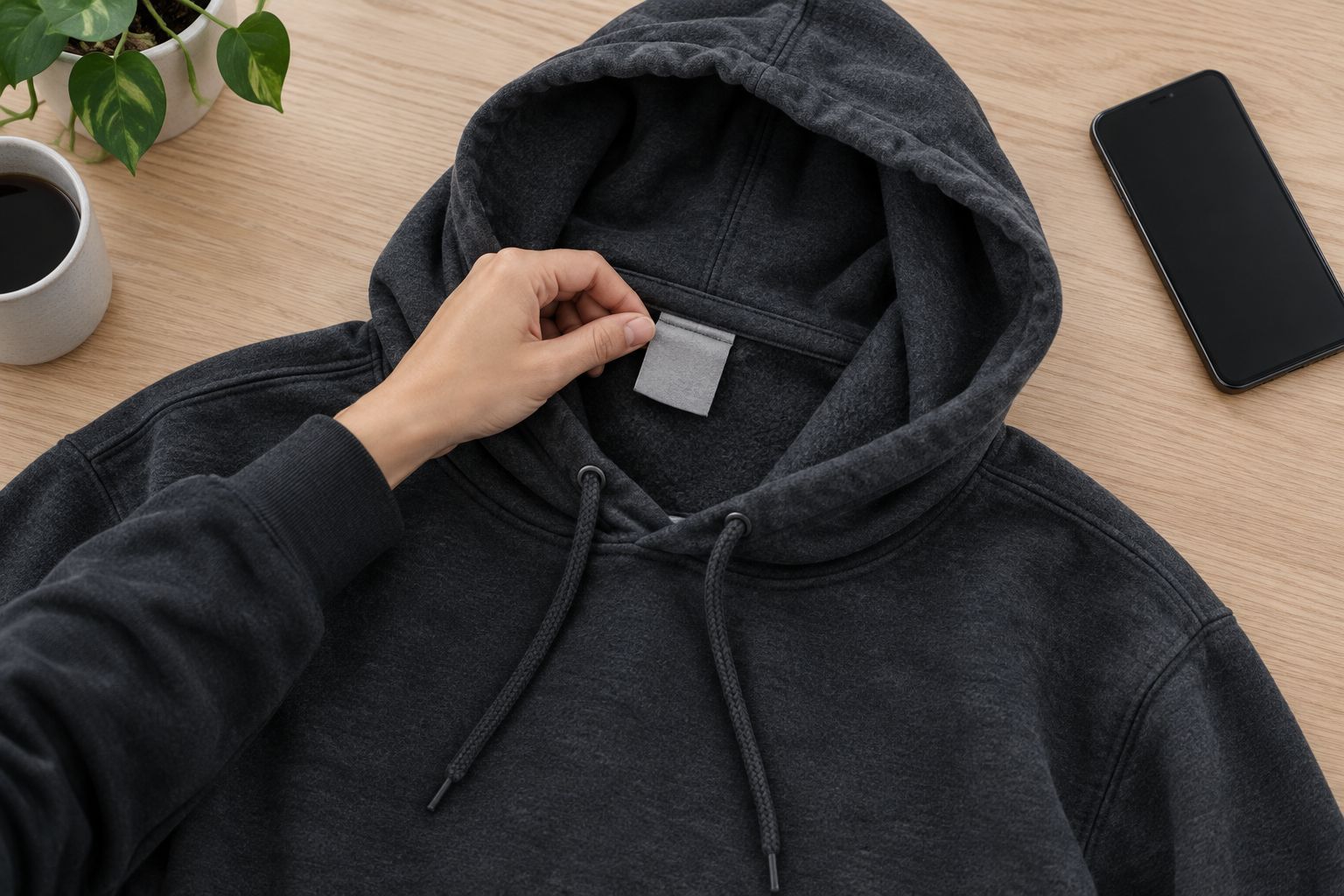
- Inside labels: Clear photographs of whatever labels are present, without assuming a required format.
- Construction: Close views of seams, cuffs, hems, and visible damage.
- Claimed numbering: A readable view plus a wider photograph showing its relationship to the item.
- Possession check: A fresh photograph with a handwritten word you choose beside the item, outside the garment.
A possession check helps distinguish a fresh response from a reused catalog image. It does not prove authenticity. Judge the photographs together, and ask for a replacement when blur or cropping hides the detail you requested.
Do not ask a seller to expose a full home address, card information, or account credentials. Purchase evidence should identify the transaction and item while keeping sensitive information covered.
Why counterfeit checks vary by listing
The strongest check depends on what the seller offers and what you can independently compare. These factors change the evidence you need:
- Product type. Apparel photographs show construction and condition; fragrance photographs do not establish the liquid’s contents.
- Exact variant. A different color designation or garment type requires its own comparison, not a nearby product’s details.
- Numbering claim. An individually numbered item calls for photographs of the claimed number and evidence connecting it to that item.
- Image source. Catalog imagery describes the intended product; fresh seller imagery documents the item presented for sale.
- Purchase history. A direct purchase record offers a different trail from an item that has passed through several owners.
- Condition. Wear, laundering, alterations, and damage complicate visual comparisons and should be disclosed separately from authenticity.
A condition problem is not automatically a counterfeit signal. Uneven wear or a damaged print deserves a clear explanation, but neither establishes who made the garment. Keep origin and condition as separate decisions.
Is an individual number enough to prove authenticity?
No. Individual numbering is one comparison point, not a standalone authentication method. A number shown in a photograph does not establish who applied it or whether the photograph belongs to the seller’s item.
Ask for the wider garment view and the purchase trail. If the seller treats a close-up number as a reason to refuse every other request, the evidence remains incomplete. Do not fill that gap with confidence.
Can you authenticate a fragrance from listing photos?
No. Listing photographs can document the bottle and packaging being offered, but they do not establish the contents. A familiar-looking container is not proof of the liquid’s origin.
Do not spray an unidentified liquid on your skin to test whether it seems genuine. Resolve the source question first. A seller’s description of scent or wear time cannot replace evidence of where the item came from.
What should you do when the seller’s story changes?
Pause the transaction. Ask the seller to address the specific contradiction in writing, whether it concerns ownership, product identity, photographs, or purchase documentation.
Keep communication within the platform when its transaction process depends on those records. Review the actual payment and dispute terms before proceeding. Do not assume a payment method covers counterfeit claims simply because it offers a general dispute feature.
What should you do if you already bought a suspicious item?
Build an evidence file before changing the item’s condition. For your 2026 purchase record, save the listing, seller profile, messages, payment confirmation, and photographs of what arrived.
Photograph the package and merchandise before washing, altering, or discarding anything. Record concrete discrepancies: a different product name, missing promised documentation, or an item that does not match the seller’s photographs. Avoid unsupported accusations.
Contact the seller or platform through the transaction’s established process. Describe the mismatch and the resolution you are requesting. Follow the applicable deadlines and instructions rather than relying on a generic return assumption.
If a payment dispute becomes necessary, submit the same organized evidence. Keep the distinction clear between “the item differs from the listing” and “the item is confirmed counterfeit.” Claim only what the evidence supports.
FAQ
What’s the first thing I should check before buying branded merchandise online?
Check the seller’s actual domain or marketplace identity before entering payment details. Open the brand’s reference site independently and compare the exact product rather than trusting a seller-supplied logo or link.
Does a numbered Phase 001 garment prove it is genuine?
No. Individual numbering supports a product comparison but does not prove authenticity by itself. Request wider photographs and purchase documentation connecting the claimed number to the item being sold.
Can a seller use real product photos to sell a fake item?
Real product photos do not establish what a seller will deliver. Request fresh photographs of the actual merchandise and compare them with the listing and purchase evidence.
Is a receipt enough to authenticate secondhand athletic apparel?
No. A receipt is supporting evidence, not a standalone authentication result. Check that its item details agree with the garment, seller’s explanation, and photographs, with sensitive information covered.
Does bad stitching mean a hoodie is counterfeit?
Bad stitching alone does not establish that a hoodie is counterfeit. Document the construction issue and evaluate it separately from the evidence of the garment’s origin.
Can I tell whether a fragrance is genuine by how long it lasts?
Wear time alone does not authenticate a fragrance. Verify the seller and purchase trail rather than treating a scent impression as proof of origin.
Should I buy if the seller refuses fresh photographs?
Skip the purchase when the seller refuses evidence you need to verify the item. That refusal does not prove counterfeiting, but it leaves the buying decision unsupported.
One last thing
Write down what would make you walk away before you message the seller. Refused photographs, unexplained product mismatches, or pressure to abandon the documented transaction process are useful stopping points.
A convincing story should not lower your standard of evidence. The goal is not to win an argument about a listing. It is to buy an item whose source and condition you can reasonably verify.