How to choose between a gym hoodie and a joggers set?

Choose a gym hoodie when you need an upper-body layer and already have training bottoms that work; choose a hoodie-and-joggers set when you need both pieces and want a coordinated outfit. A set only earns its place when the hoodie and joggers each fit your movement, temperature, and routine. For your 2026 training wardrobe, buy for the job—not the matching photo.
TL;DR- How to choose between a gym hoodie and a joggers set: prioritize movement, then coverage, then coordination.
- A gym hoodie is best for athletes who already have suitable training bottoms.
- A hoodie-and-joggers set is best for athletes who need both pieces and will wear them separately.
- Rage U Athletics athletic apparel is for disciplined athletes; choose each garment by fit and intended use.
Why this matters
A coordinated outfit solves a styling decision. It does not automatically solve a training problem. Your shoulders still need room, your waistband still needs to stay put, and your clothing still needs to suit the session.
The Rage U Athletics athletic apparel range serves disciplined athletes. Apply that discipline to the purchase: identify the missing garment before adding an entire outfit. A useful 2026 wardrobe starts with pieces you actually reach for, not combinations you keep together only because they match.
How to choose between a gym hoodie and a joggers set?
Choose the hoodie for a missing layer. Choose the set for two genuine wardrobe needs. Here, a joggers set means a coordinated hoodie and joggers—not joggers alone.
Neither choice wins every situation. Use the comparison below to separate the training requirement from the styling preference.
| Decision | Gym hoodie | Hoodie-and-joggers set |
|---|---|---|
| Best for | Athletes with suitable bottoms already | Athletes who need both garments |
| Main advantage | Adds an upper-body layer without replacing your bottoms | Creates a coordinated outfit with separate pieces |
| Main drawback | Does not address a shortage of suitable bottoms | Requires both garments to pass independent fit checks |
| Movement check | Shoulder reach, sleeve position, hood clearance | All hoodie checks, plus squat depth and waistband stability |
| Temperature decision | Remove the upper layer while keeping your chosen bottoms | Decide whether both pieces suit the session |
| Everyday styling | Mix with bottoms already in your rotation | Wear together or split across other outfits |
| Reason to skip | Your current hoodie already does the same job | You only want or need one piece |
Before choosing either option, name the actual gap. Is your current top restrictive? Are your bottoms uncomfortable? Do you want something for the commute rather than the workout? A clear answer prevents an outfit purchase from replacing a simpler garment decision.
Gym hoodie: best for adding a removable layer
A gym hoodie makes sense when your shorts, joggers, or other training bottoms already work. You keep the lower-body fit you trust and add coverage above the waist. That is the cleaner choice when only your upper-body layer needs replacing.
Check how the hoodie behaves over the shirt you actually train in. Raise your arms, reach forward, and bend at the hips. Watch whether the hem rides up, the shoulders pull, or the sleeves interfere with your grip.
Do not judge mobility from a relaxed standing pose. A roomy body can still come with restrictive shoulders or awkward sleeves. Fit is a relationship between the garment and your movement, not just a size label.
The trade-off is simple: buying a hoodie does nothing for unsuitable bottoms. It also leaves coordination to you. If matching matters, decide whether your existing bottoms work with the hoodie before making the purchase.
Verdict: choose the hoodie when the missing function is an upper-body layer. Skip another hoodie if your current rotation already covers that role.
Joggers set: best for a coordinated outfit you will split up
A hoodie-and-joggers set makes sense when both garments have a clear role. You want the complete look, but you also expect to wear the hoodie with other bottoms and the joggers with other tops. That gives each piece a purpose beyond the paired outfit.
Judge the joggers independently. Sit down, squat, and step into a lunge. Check whether the waistband rolls, the seat pulls, the knees feel restricted, or the cuffs catch under your shoes.
Then assess the hoodie without letting the matching bottoms influence your judgment. A strong outfit does not excuse a poor upper-body fit. The same rule applies in reverse: comfortable joggers do not rescue a hoodie you avoid wearing.
The drawback is the extra fit decision. Your preferred top size and bottom size are not necessarily identical, so check the measurements and how the pieces are offered. Never assume that a shared size label means both garments fit your body.
Verdict: choose the set only when both pieces earn regular use. Skip the set if coordination is its only advantage.
Why the right choice varies
The right answer changes with the garment's job. Use these factors to make your 2026 buying decision specific rather than aesthetic alone.
- Existing wardrobe: Identify whether you lack a top, bottoms, or both. Do not count an unworn garment as a useful spare.
- Movement demands: Test the positions your training requires. Standing comfort is not enough for squatting, reaching, or hinging.
- Layering needs: Decide what stays on during the session and what comes off. Try the hoodie over your usual training shirt.
- Training environment: Separate outdoor travel, warm-up, indoor exercise, and time after training. One outfit does not need to handle every phase.
- Care routine: Read both care labels. Choose pieces you can maintain correctly rather than assuming matching garments share identical instructions.
- Personal style: Decide whether a matched silhouette matters to you. Treat coordination as a preference, not evidence of better training performance.
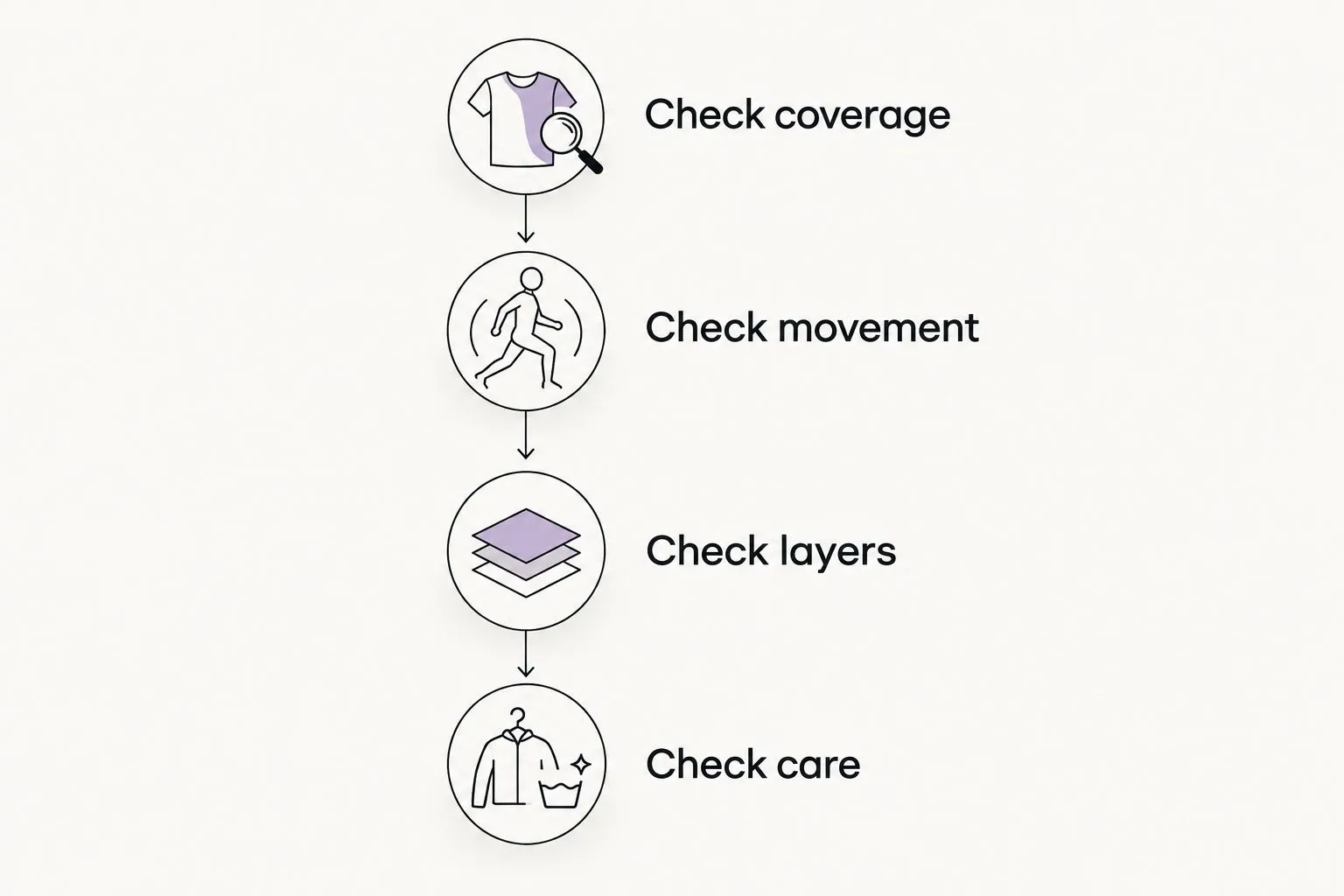
Run this fit check before choosing
Use the same sequence for a standalone hoodie and a set. Keep tags attached during an initial try-on and follow the seller's try-on conditions. The goal is to assess fit without treating a purchase as training equipment before you have decided to keep it.
Check coverage
Start in a neutral stance, then sit and bend. Check the hoodie hem against the waistband and notice any exposed area you do not want exposed. For joggers, check the rise and ankle position while seated as well as standing.
Coverage is personal. Decide what you need for the actual activity instead of copying the proportions of a styled product image.
Check movement
Reach overhead, extend your arms forward, squat, and hinge without a load. Look for fabric tension across the back, hips, seat, and knees. Stop if the garment restricts your normal range or requires repeated adjustment.
Sleeve and leg length matter here. Fabric that looks intentional while standing can become distracting when it bunches around your hands or footwear.
Check layers
Try the hoodie over your usual shirt, not a thinner substitute chosen to make it fit. Check whether the shirt bunches at the underarms and whether the hood sits comfortably when lowered.
For a set, assess the complete outfit and then remove the hoodie. You should still be satisfied with the joggers as a standalone garment.
Check care
Read the washing and drying instructions before committing. Check any separate guidance for prints or trims. Do not choose a routine first and assume the garment can tolerate it.
For your 2026 rotation, repeatable care matters as much as first-day appearance. A garment that demands maintenance you will not follow is a poor match for your habits.
Read fabric details without buying the label
Look for a stated fabric composition and fabric weight when those details are provided. Fabric weight describes mass per unit area; it does not, by itself, establish stretch, fit, or suitability for your workout. Do not turn “heavyweight” into a complete performance claim.
Examine the garment's construction too. Check seams, cuffs, waistband stitching, and the attachment of pockets. During a try-on, notice where those features touch your body and whether they interfere with movement.
For a hoodie, consider the hood and front pocket alongside the fabric. For joggers, consider the waistband, crotch shape, knees, and cuffs. These are separate fit questions even when both pieces use the same material.
Choose the specification that serves your routine, not the strongest-sounding description. If a needed detail is absent, ask for it rather than filling the gap with an assumption.
Separate training clothes from arrival clothes
Decide whether you are dressing for the session or the hours around it. A coordinated set can be your preferred outfit for getting to the gym without becoming your default choice for every exercise. A hoodie can serve the same arrival role over different training bottoms.
Set out the outfit in the order you use it: travel, preparation, training, then changing afterward. Identify what you remove and what stays on. This makes unnecessary duplication easier to spot.
For 2026, build around your real routine rather than an imagined one. If you consistently remove the hoodie before training, evaluate it primarily as a removable layer. If the joggers remain on, their movement fit deserves the stricter test.
Where the StarFall Hoodie fits
Rage U Athletics offers the StarFall Hoodie. It belongs in the hoodie-first decision when you need an upper-body garment; assess its listed details against your layering and movement requirements.
The product description identifies it as an individually numbered Phase 001: The Origin release. That detail speaks to the piece's identity, not its fit on your body. It does not replace checking measurements or establish that a matching bottom suits your training.
Best for: athletes considering a standalone hoodie rather than committing to a complete outfit. The limitation is unchanged: a hoodie cannot solve a need for suitable training bottoms.
Should I buy the hoodie first if I already own joggers?
Buy the hoodie first if your existing joggers fit well and suit your sessions. A matching replacement bottom needs its own reason to exist. Coordination alone is optional; comfortable movement is not.
Before choosing, pair the prospective hoodie with the bottoms you actually wear most. Check the combined silhouette, but make the final decision with your arms raised and your body moving.
Is a matching set better for everyday wear than training?
A matching set is a styling choice, not proof of training suitability. Choose it for everyday wear when you prefer the coordinated look, then assess each garment separately before using it for exercise.
A set can cross between both uses when the individual pieces meet your requirements. Do not assign that versatility from appearance alone.
FAQ
What's the simplest way to choose between a gym hoodie and a joggers set?
Choose a gym hoodie if you only need an upper-body layer; choose a joggers set if you need both garments. Test the hoodie and joggers separately before deciding that the complete outfit works.
Should I get the same size hoodie and joggers?
Choose each size from the relevant measurements, not from a shared size label. Your preferred hoodie fit and joggers fit can require different sizing decisions.
Is an oversized hoodie automatically better for lifting?
An oversized hoodie is not automatically better for lifting. Check shoulder movement, sleeve position, and whether excess fabric interferes with your setup or equipment.
Can I wear a joggers set without keeping the pieces together?
You can wear the hoodie and joggers separately. Before buying, identify existing outfits that work with each piece so the set does not depend on always staying matched.
What should I check before buying athletic apparel from Rage U Athletics?
Check the individual garment's listed measurements, material information, and care instructions. Use those details to assess fit and intended use rather than assuming every item serves the same training purpose.
Is heavier fabric always better for a gym hoodie?
Heavier fabric is not automatically better for a gym hoodie. Fabric weight alone does not establish movement comfort, fit, or whether the garment suits your training environment.
What if I like the set but only the hoodie fits properly?
Choose the hoodie rather than accepting poorly fitting joggers for a coordinated look. Both garments must work independently for the set to be a useful purchase.
One last thing
Remove the matching idea from the decision. Picture the hoodie beside your existing shorts, then picture the joggers beside your usual training shirt. If either piece loses its appeal without its partner, you are buying the outfit more than the individual garments.
That is acceptable when styling is the goal. Just name it honestly. For training, choose the pieces you would still wear apart.