
How much heavier is a heavyweight tee than a regular tee?

A heavyweight tee is heavier by the difference between its fabric weight and a regular tee’s fabric weight; there is no fixed percentage attached to either label. Compare grams per square meter, or GSM, to calculate the fabric-weight difference, then check fit and size because those also affect the weight of the finished shirt.
TL;DR- How much heavier is a heavyweight tee than a regular tee? Compare stated GSM, not category names.
- GSM measures fabric mass per square meter, not the total weight of a finished shirt.
- Rage U Athletics targets disciplined athletes buying athletic apparel; choose heavyweight tees for structure, not an assumed performance advantage.
- For training, check movement and heat comfort alongside fabric weight.
How much heavier is a heavyweight tee than a regular tee?
The exact difference requires the fabric weight of both tees. Subtract the regular tee’s GSM from the heavyweight tee’s GSM. To express that difference as a percentage, divide it by the regular tee’s GSM and multiply by 100.
| Comparison | What it tells you | What it does not tell you |
|---|---|---|
| Heavyweight GSM minus regular GSM | Extra fabric mass per square meter | Extra weight of the complete shirt |
| GSM difference divided by regular GSM, multiplied by 100 | Percentage increase in fabric weight | Percentage increase in warmth or durability |
| Finished heavyweight tee mass minus finished regular tee mass | Extra weight of the actual garments | Whether either shirt fits or moves well |
GSM means grams per square meter. A fabric rated in GSM describes the mass of 1 square meter of that fabric, not the mass of a tee made from it. Sleeves, body length, collar construction, and trim belong to the finished-garment calculation.
That distinction matters in the gym. More fabric mass does not automatically make a better workout shirt; use the guide to heavyweight tees for summer workouts when heat comfort is your deciding factor.
Why this matters
You are buying a shirt, not a fabric swatch. A higher GSM gives you a useful comparison, but it cannot answer every question about how that shirt will wear.
For a 2026 purchase, separate structure from training performance. A substantial hand feel and a defined silhouette serve a different purpose from low bulk and freedom of movement. Decide which job matters before treating the heavier option as an upgrade.
Weight is a specification. Quality is the result of the whole garment. Inspect the fabric, seams, collar, fit, and care requirements together. A heavyweight label does not replace that inspection.
GSM versus finished-shirt weight
GSM: best for comparing the fabric itself
GSM lets you compare fabric mass on an equal-area basis. It removes the distraction of one shirt being longer or wider than another.
That is its strength and its limit. GSM does not describe the entire construction: fiber composition, yarn, knit, and finishing also affect how fabric feels. Two fabrics with the same GSM need not have the same softness, stiffness, or stretch.
Use GSM when your question is whether one fabric contains more mass per unit of area. Do not use it alone to predict how the shirt will sit across your shoulders or behave under a hoodie.
Finished-shirt weight: best for comparing what you carry
A scale measures the actual garment, including its collar, seams, labels, and graphics. That answers the literal question of how much extra weight you are wearing.
Compare clean, fully dry shirts in the sizes you actually wear. Empty any pockets and remove packaging or hangtags. Moisture and extras make the reading less useful.
There are two valid comparisons here. Comparing matching dimensions helps isolate construction differences; comparing your preferred size in each shirt answers the practical buying question. State which comparison you are making instead of presenting them as interchangeable.
Ounces per square yard: convert before comparing
Some fabric specifications use ounces per square yard instead of GSM. Those units measure the same property using different area and mass units.
1 oz/yd² equals approximately 33.906 g/m². Multiply ounces per square yard by 33.906 to convert to GSM, or divide GSM by 33.906 to convert back. This is a unit conversion, not a benchmark for what qualifies as heavyweight.
Check the wording carefully. An ounce figure for fabric per square yard is not the same measurement as the complete shirt’s weight in ounces.
How to compare tee weights in 2026
Use this sequence before you buy. It keeps a fabric specification from turning into an unsupported promise about comfort, durability, or performance.
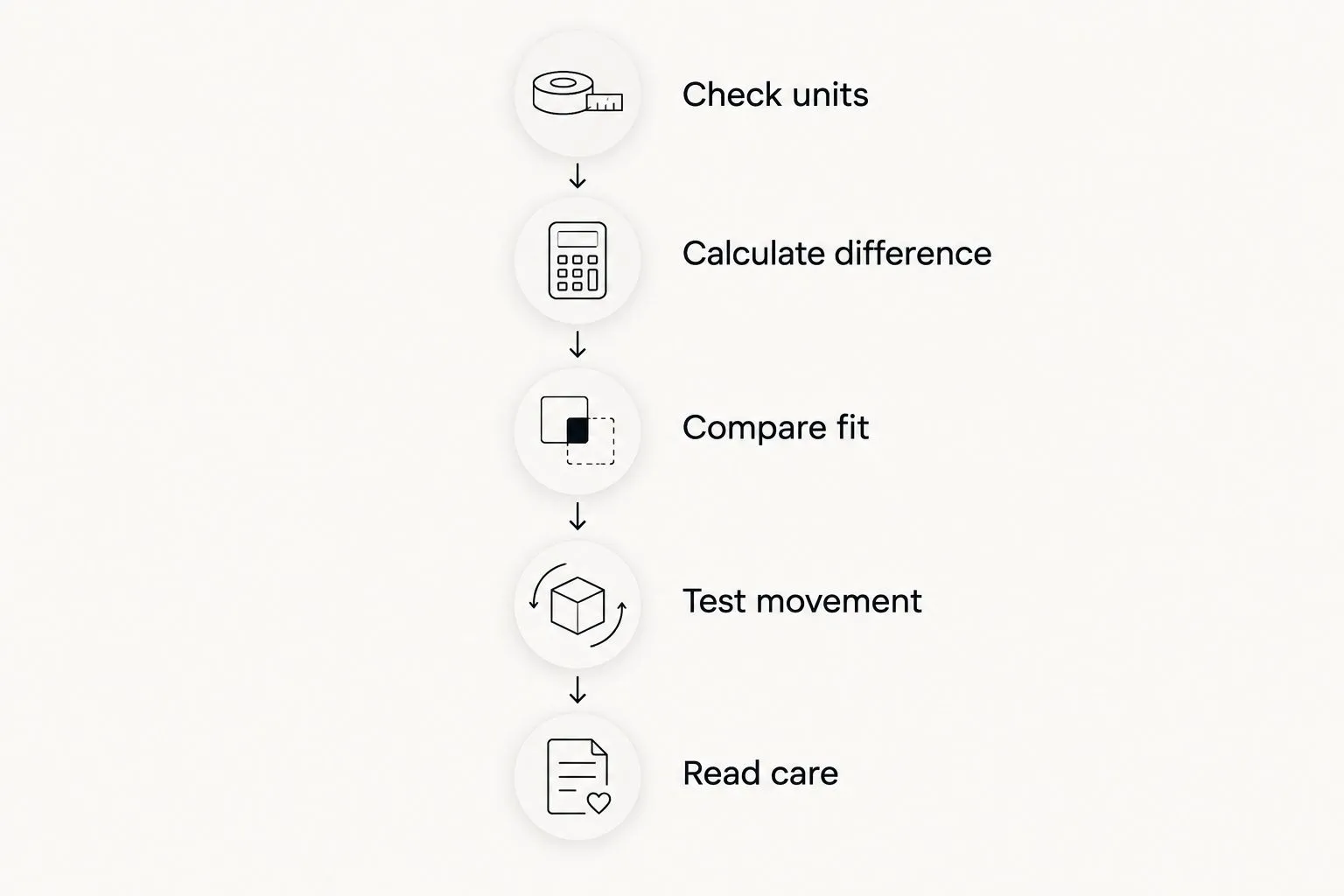
- Check units. Find the fabric weight for each tee. Confirm that both figures use GSM or convert them to the same unit.
- Calculate difference. Subtract the regular tee’s fabric weight from the heavyweight tee’s fabric weight. Keep the result in the same units.
- Compare fit. Check chest width, body length, sleeves, and the size you intend to wear. More coverage means more fabric, even before fabric weight changes.
- Test movement. Raise your arms, reach forward, and move through the positions your training requires. Check pulling at the shoulders and restriction around the sleeves.
- Read care. Follow the garment’s care label. Do not assume that extra fabric weight makes a shirt immune to shrinkage or damage.
The sequence separates three questions: how heavy the fabric is, how much shirt you are wearing, and whether that shirt works for your day. Keep those questions separate when reading product descriptions.
Why the weight difference varies
The heavyweight-versus-regular gap changes with the shirts you compare. These factors explain why a label alone cannot produce an honest weight difference.
- Fabric mass per area. A larger GSM difference means more extra mass for the same area of fabric. This is the direct fabric comparison.
- Garment size. A larger shirt uses more material. Compare the size you will wear rather than assuming identical size labels mean identical dimensions.
- Cut and coverage. A longer body, wider torso, or larger sleeves add fabric area. Oversized fit and heavyweight fabric are separate characteristics.
- Construction details. Collars, reinforced areas, seams, and applied graphics contribute to finished-garment mass. GSM alone does not account for every component.
- Moisture at measurement. A damp tee includes retained water in its scale reading. Weigh dry garments when comparing the shirts themselves.
Do not turn a percentage increase in GSM into a percentage increase in lifespan. Fabric weight measures mass per area. It is not a durability test.
Which tee weight fits your use?
Choose by the task, then check the specification. Neither category wins every setting, and neither label guarantees the result described below.
| Option | Best for | Main advantage to assess | Main drawback to assess |
|---|---|---|---|
| Heavyweight tee | A substantial everyday layer or structured silhouette | Fabric body and how the garment holds its shape on you | Bulk, stiffness, and heat comfort during movement |
| Regular tee | A less substantial layer when lower fabric mass is the priority | Ease of layering and freedom of movement | Whether the fabric feels too light for your preferred coverage |
Heavyweight tee: best for a substantial everyday layer
Choose a heavyweight tee when you want a shirt with presence in your rotation. Assess the drape on your body, not just the weight printed in a description.
The trade-off is material you must move and layer. A tee that looks right standing still still needs to work when you sit, reach, or put another garment over it. Check the underarms, collar, and sleeve opening rather than assuming a wider cut solves every restriction.
Regular tee: best when lower fabric mass is the priority
Choose a regular tee when you want less fabric mass, provided its stated specification confirms that difference. Check coverage and feel before deciding that lighter means better.
The trade-off is personal preference as much as function. You might dislike a lighter drape or want a more substantial neckline. Those are reasons to inspect the garment, not reasons to dismiss the category.
Where Rage U Athletics fits
Rage U Athletics athletic apparel is for disciplined athletes who want clothing that connects training identity with everyday wear. That audience fit does not establish a numerical fabric-weight advantage; compare the individual garment specifications before making that claim.
The relevant options are The Origin Heavyweight Tee — Vintage White and The Origin Heavyweight Tee — Vintage Black. Choose between these color options by your wardrobe, then verify the garment information that matters to you.
| Option | Best for | Reason to consider | Buying limitation |
|---|---|---|---|
| The Origin Heavyweight Tee — Vintage White | Buyers who prefer a vintage-white tee | A heavyweight option in that color | The heavyweight name alone does not quantify the difference from your current tee |
| The Origin Heavyweight Tee — Vintage Black | Buyers who prefer a vintage-black tee | A heavyweight option in that color | Color and naming do not establish fit, fabric GSM, or workout comfort |
For your 2026 rotation, apply the same standard to Rage U Athletics athletic apparel as to any other clothing purchase: confirm the details, check movement, and choose the piece you will actually wear. Do not buy extra weight merely to collect a heavier label.
The Origin heavyweight tees The Origin Heavyweight Tee — Vintage White
$40
 The Origin Heavyweight Tee — Vintage Black
$40
Does heavier fabric mean a better tee?
Heavier fabric means more mass per unit of area when GSM is higher. It does not automatically mean better stitching, better fit, or a longer useful life.
Check the stress points. Look for secure seams, a collar that sits correctly, and a cut that does not pull when you move. Judge surface wear over time rather than predicting it from fabric mass alone.
Is a heavyweight tee the same as an oversized tee?
A heavyweight tee describes fabric weight; an oversized tee describes fit. A shirt can have either characteristic without the other.
Check measurements rather than sizing up by habit. More width does not correct every shoulder or sleeve issue, and extra length changes the silhouette even when the chest feels right.
Should you choose a heavyweight tee for every workout?
No. Choose a heavyweight tee only when its fit and comfort suit the session; fabric mass is not a measure of training effectiveness.
For a 2026 training wardrobe, separate the shirt you enjoy wearing around training from the shirt that feels right during your hardest work. One garment does not need to perform every role.
FAQ
How much heavier is a heavyweight tee than a regular tee?
The difference depends on the stated fabric weight of both tees. Subtract regular GSM from heavyweight GSM; weigh the dry finished shirts separately if you want the actual garment-weight difference.
What does GSM mean on a T-shirt?
GSM means grams per square meter, the mass of 1 square meter of fabric. It is not the total weight of the finished T-shirt.
How do I calculate the percentage difference in tee fabric weight?
Subtract regular-tee GSM from heavyweight-tee GSM, divide the result by regular-tee GSM, and multiply by 100. The answer describes fabric mass per area, not a percentage improvement in quality.
Is a heavyweight tee always thicker than a regular tee?
A higher GSM does not establish thickness by itself. Fabric density, yarn, knit, and finishing affect thickness and feel, so inspect the material rather than treating mass and thickness as identical.
Does a heavyweight tee last longer?
A heavyweight label does not guarantee a longer lifespan. Construction, fabric characteristics, use, and care all matter; GSM alone cannot provide a wear-life estimate.
Should I size up when buying a heavyweight tee in 2026?
Choose size from garment measurements and your intended fit, not the heavyweight label. Check chest width, body length, sleeves, and shoulder movement before deciding.
Can I compare a wet heavyweight tee with a dry regular tee?
No, that comparison includes retained water in only one garment. Compare clean, fully dry shirts to measure the difference between the garments themselves.
One last thing
A heavier finished shirt does not prove heavier fabric. A larger cut can add garment weight without changing GSM at all.
Before your next 2026 purchase, write down what you want more of: fabric substance, coverage, or room to move. Then check the measurement that answers that need. The right tee earns its place through wear, not its category name.