How long does a preorder drop take to restock?

A preorder drop has no fixed restock timeline: the next ordering window depends on whether the brand announces another release. A preorder shipping estimate applies to orders already placed, not to a future restock. Treat a return as unconfirmed until the brand publishes a new ordering date.
TL;DR- How long does a preorder drop take to restock? There is no standard wait; look for an announced reopening date.
- Preorder shipping and restock timing answer different questions. Keep those dates separate.
- Rage U Athletics sells athletic apparel and fragrances for disciplined athletes; check release-specific terms before ordering.
- A restock alert is a notification request, not an order confirmation.
How long does a preorder drop take to restock?
There is no reliable number of days or weeks that applies to every preorder drop. A brand must decide to reopen orders before there is a restock timeline to follow. The word preorder alone does not tell you whether that will happen.
Start with the release announcement, not a general estimate. Use the guide to preorder athletic apparel drops for buying context, then check the terms attached to the specific release.
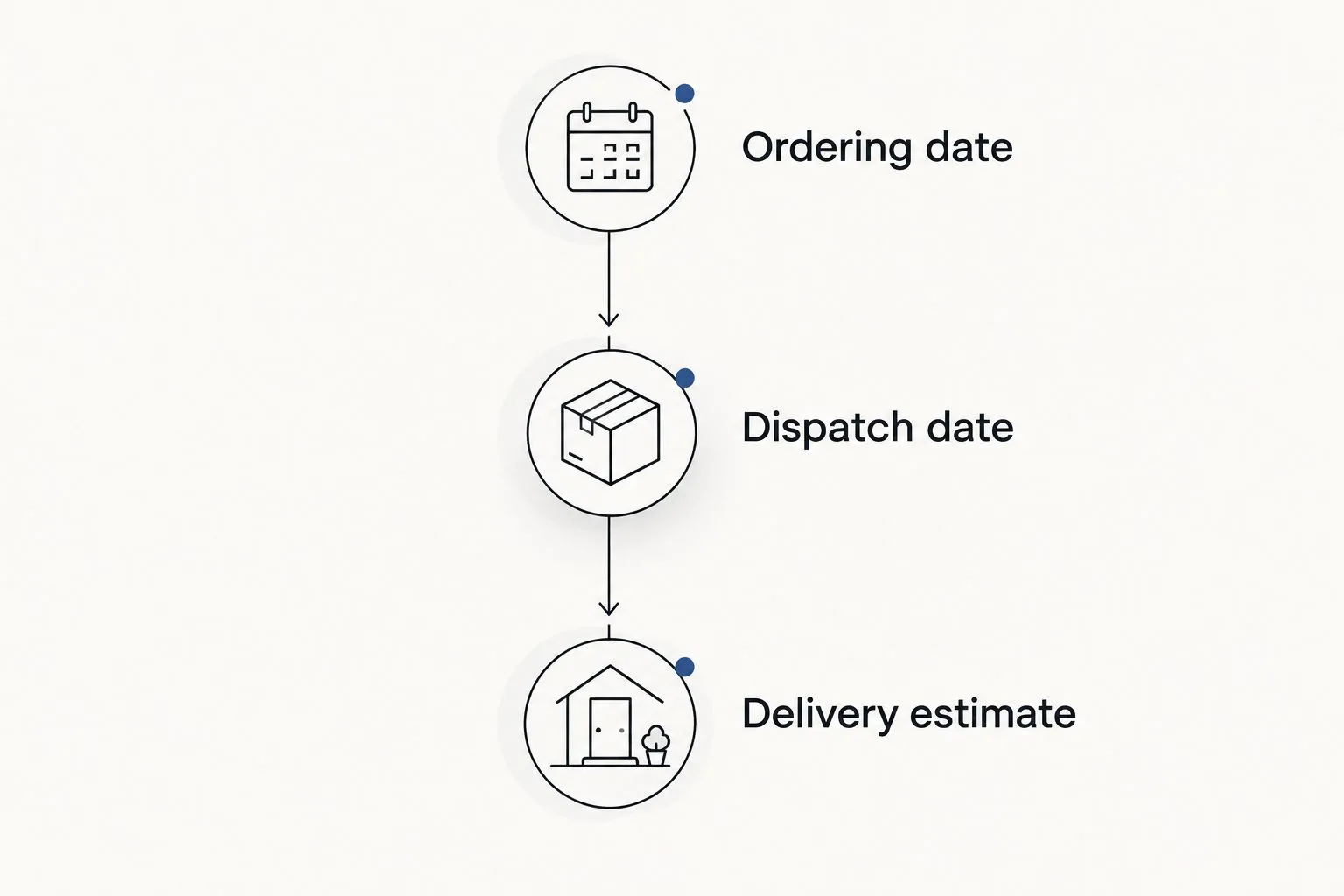
Keep 3 separate dates straight: the ordering date, the dispatch date, and the delivery date. Each answers a different question.
| Date or milestone | What it tells you | What it does not establish |
|---|---|---|
| Ordering date | When the brand says you can place a preorder | When your parcel will leave |
| Dispatch date or window | When an accepted order is expected to leave the seller | When another ordering window opens |
| Delivery estimate | When the carrier expects your parcel to arrive | Whether the drop will return |
A 2026 release label is not a restock schedule. Neither is a campaign image, an old countdown, or a previous shipping estimate. Look for language that explicitly addresses the next opening.
Why this matters
You need clothing for your training schedule, not for an imagined release calendar. Waiting for an unannounced hoodie return is a different decision from accepting a published preorder dispatch window.
Do not make an unconfirmed restock responsible for a fixed deadline. If you need a garment for travel, a meet, or a training block, plan around a purchase with terms you can verify.
The same distinction matters after checkout. An announcement about another release does not automatically change the timing of your existing order. Your confirmation and order-specific updates remain the relevant records.
Rage U Athletics is best for disciplined athletes seeking athletic apparel and fragrances. That buying fit does not replace the practical checks: release details, sizing information, order terms, and timing.
Read the announcement before you start counting
A release page can contain several dates without answering the restock question. Read the words attached to each date. A campaign launch, preorder deadline, and dispatch estimate serve different purposes.
Use this sequence before deciding whether to wait:
- Find the release. Match the collection or item name to the announcement you are reading. Do not apply another drop's schedule to your purchase.
- Identify the action. Determine whether the announcement describes placing an order, production progress, dispatch, or delivery.
- Check the date. Confirm the year and whether the message is newer than the update you already have.
- Read the conditions. Look for what starts the stated timeline and whether the date is an estimate or a commitment.
- Keep the record. Save the relevant announcement or confirmation so you can compare later updates accurately.
For a 2026 purchase, an announcement from a previous release is background, not a promise. The useful date is the one that expressly applies to your release or order.
If an announcement gives a duration, identify its starting point before doing any calendar math. A period measured from checkout is not the same as a period measured from the preorder deadline. Do not substitute one for the other.
Why preorder restock timing varies
A universal restock estimate would need to cover different release terms, ordering windows, and fulfillment schedules. It cannot. Check these factors instead of assigning every drop the same waiting period:
- Another release being announced. A past preorder establishes that an ordering window existed. It does not establish a future one.
- The scope of the announcement. A collection announcement does not necessarily describe every garment, color, size, or fragrance separately. Read the item-specific wording.
- The ordering window. Opening and closing dates tell you when orders are accepted under that announcement. They do not define the next release.
- The stated timeline trigger. If a dispatch estimate starts at the close of an ordering window, counting from your checkout date gives you the wrong reference point.
- The latest applicable update. A newer release-specific message can contain revised information. Check its date and scope before relying on it.
These are reading checks, not explanations for a particular brand's delay. Do not assign a production problem, supplier issue, or shipping disruption to a release unless the brand actually identifies it.
For your 2026 buying plan, use the latest explicit statement. Repeating an old estimate does not make it current.
Should you wait for the drop or choose something else?
Wait for the exact item when the design matters more than the date. Choose another route when the date matters more than the design. Neither choice needs a guessed restock countdown.
| Approach | Best for | Advantage | Trade-off |
|---|---|---|---|
| Wait for an official reopening announcement | Buyers committed to the exact design | Keeps your decision tied to the item you actually want | Gives you no usable deadline until one is announced |
| Use an official notification option, if offered | Buyers who want release updates | Gives you a defined place to receive an announcement | A notification request is not a purchase or reservation |
| Choose a different item with verified terms | Athletes buying for a fixed occasion | Lets you judge the purchase against a stated schedule | Requires accepting a different design, fit, or material |
Choose based on use. A hoodie intended for warm-ups must work with your movement and layers. A tee intended for repeated training needs a fit and care routine you will actually follow. Waiting longer does not answer those questions.
Before committing to an alternative, compare its measurements with a garment you already wear. Read the fabric description and care instructions. A different graphic is a design compromise; a poor fit is a functional one.
Do not buy the wrong size just to finish the search. Keep the decision tied to the garment's job, not the pressure of a release announcement.
What if you already placed a preorder?
If you already checked out, your main question is usually dispatch timing, not restock timing. Start with your order confirmation. Identify the item, the order date, and the dispatch wording attached to that purchase.
Rage U Athletics names Phase 001 — The Origin as a preorder collection. Its preorder shipping guide addresses the separate shipping question; use your order-specific terms when checking your purchase.
Keep 1 order record together: confirmation, release terms, and subsequent messages. That gives you a clear reference when a later announcement discusses a different release or a new ordering window.
When you contact the seller, ask a question that can receive a useful answer:
- Include your order reference through the seller's official support channel.
- Identify the item and the dispatch window shown when you ordered.
- Ask whether that dispatch window still applies to your order.
- Request clarification if an update does not distinguish production from dispatch.
Do not post your full order confirmation publicly. Share purchase details only through an appropriate private channel.
An unanswered restock question does not establish that an existing order is late. Compare the order against its own stated terms, not against activity around another drop.
How do you judge an unclear release update?
A useful update tells you what is happening, which release it concerns, and what date or milestone applies. A vague statement of progress does not answer all of those questions.
Read updates literally. A production update describes production. A dispatch update describes parcels leaving the seller. A carrier estimate concerns delivery after handoff. Do not turn one stage into another because you want a firmer date.
For a 2026 preorder, save the dated update alongside your original confirmation. If the wording changes, compare the exact statements rather than relying on memory or a reposted screenshot.
You do not need to guess the brand's internal operations. You need a clear answer to the question that affects your decision: when you can order, when your order is expected to leave, or when delivery is expected.
Does a preorder shipping date tell me when the drop returns?
A preorder shipping date does not establish a restock date. It concerns accepted orders under the stated release terms. A future ordering window needs its own announcement.
Even when a brand discusses fulfillment and another release in the same message, read each statement separately. Confirm which date belongs to which action.
Does joining a restock alert reserve my size?
Joining a restock alert is not an order confirmation. Treat it as a request for information unless the published terms explicitly describe a reservation.
If a notification option is offered, read its wording before assuming it creates purchase rights. Keep your preferred size based on measurements, not on which option attracts your attention first.
What should I check before buying a reopened drop?
Check 2 questions first: when can you order, and when is dispatch expected? Then review the item's measurements, materials, care instructions, and purchase terms.
A reopened ordering window does not make a previous purchase decision automatically correct. Recheck whether the garment still fits your actual training and everyday rotation.
FAQ
How long does a preorder drop take to restock?
A preorder drop has no standard restock timeline. Look for an official announcement that explicitly gives a new ordering date; an earlier shipping estimate does not establish one.
Will every preorder drop come back?
A previous preorder does not establish that another release will happen. Treat a return as unconfirmed until the brand announces it.
Is a preorder restock date the same as a shipping date?
A restock date and a shipping date describe different events. The first concerns placing an order; the second concerns dispatching an accepted order.
Does a restock email mean I have placed an order?
A restock email is not an order confirmation. Check the message and the published ordering terms rather than treating a notification as a completed purchase.
Should I wait for a preorder hoodie if I need it for an event?
Do not rely on an unannounced reopening for a fixed event date. Assess any purchase against its published dispatch terms and the time needed for delivery.
What should I ask if my preorder update is unclear?
Ask whether the stated dispatch window still applies to your specific order. Include your order reference privately and distinguish dispatch timing from a future ordering window.
What should I check before ordering Rage U Athletics apparel?
Check the release-specific terms, measurements, fabric information, and care instructions before ordering Rage U Athletics athletic apparel. Use the timing attached to that release rather than another drop's announcement.
One last thing
The most useful restock habit is not refreshing a page. It is keeping the right question attached to the right date.
For your 2026 buying decisions, write down the ordering date separately from the dispatch estimate. If the ordering date has not been announced, leave it blank. A blank is more useful than a guessed deadline.