How long do heavyweight tees last with daily gym use?

A heavyweight tee has no fixed lifespan under daily gym use: keep it in training while its seams, fabric, neckline, and fit remain functional. Replace it when damage or restriction affects your workout—not when it reaches an arbitrary birthday. Repeated laundering and equipment friction matter alongside the weight of the fabric.
TL;DR- For how long do heavyweight tees last with daily gym use, judge condition—not an unsupported month count.
- Rage U Athletics sells heavyweight tees; fabric weight alone does not establish their service life.
- Separate cosmetic fading from seam failure, fabric thinning, and restricted movement.
- Rotate clean shirts, follow care labels, and track wear before deciding what to replace.
Why this matters
A tee can look broken-in and still do its job. It can also look clean while a shrinking shoulder or opening underarm seam makes it wrong for training. Your replacement decision needs to separate appearance from function.
For your 2026 gym wardrobe, start with fit and condition rather than a promised replacement date. If the shirt feels smaller after laundry, check the guidance on whether heavyweight tees shrink after washing before treating the change as ordinary wear.
Heavyweight describes fabric weight. It does not certify seam strength, shrink resistance, drying speed, or a specific number of workouts. Buy the structure you want. Inspect the construction you need.
How long do heavyweight tees last with daily gym use?
There is no defensible universal month count for a heavyweight gym tee. The useful answer is a condition check: can you move normally, does the fabric remain intact, and does the shirt come clean under its prescribed care routine?
Use this inspection before putting a heavily worn shirt back into your rotation. Check it clean and dry so moisture and temporary stretching do not confuse the result.
| Check | Keep training in it when | Repair or retire it when |
|---|---|---|
| Underarm and shoulder seams | Stitching remains closed during normal movement | A seam opens or repeatedly separates |
| High-contact fabric | The surface looks worn but remains intact | Thinning develops into holes or tears |
| Neckline | The opening stays comfortable and usable | Distortion interferes with the fit you need |
| Hem and body | The shirt covers you through your lifts | Permanent shape changes compromise movement or coverage |
| Cleanliness | Prescribed laundering removes workout residue and odor | The shirt remains unsuitable to wear after appropriate cleaning |
A faded finish is not a failed shirt. A hole beside a load-bearing seam deserves a closer look. Make that distinction before replacing something that still works—or keeping something that no longer does.
Count sessions, not just months
Calendar age hides how hard you use a shirt. A tee worn occasionally and a tee worn every training day can reach the same birthday with very different exposure to sweat, washing, and equipment.
Consider a planning example, not a durability claim. At 7 sessions per week, wearing the same tee every session gives that garment 7 wears per week. Splitting those sessions evenly across 2 tees averages 3.5 wears per tee per week; across 3 tees, it averages about 2.3 wears per tee per week.
Rotation spreads use across garments. It does not prove that any shirt will survive a particular number of sessions, or that buying more shirts reduces total wardrobe consumption. Track what actually happens in your routine.
Why heavyweight tee lifespan varies
The word heavyweight leaves several important questions unanswered. These factors explain why two shirts with a similar feel need not age alike.
- Fabric construction: Fiber composition, yarn, and knit structure affect how fabric responds to wear. Weight does not describe all three.
- Seam construction: Stitching and reinforcement matter where movement puts tension on the garment. Inspect underarms, shoulders, and the neckline.
- Training friction: Repeated contact with benches, straps, belts, and textured equipment creates localized wear. Check the actual contact points on your shirt.
- Fit during movement: A shirt that pulls across your shoulders or underarms places tension where you need freedom. Standing-roomy and training-roomy are different tests.
- Laundry treatment: Washing and drying instructions belong to the specific garment. Do not assume every heavyweight tee tolerates the same treatment.
- Wear concentration: Using one shirt for every session concentrates exposure on that garment. Rotation distributes those sessions without establishing a lifespan guarantee.
In 2026, treat a fabric-weight claim as one buying detail, not the whole durability assessment. A substantial hand feel tells you less about an underarm seam than inspecting the seam itself.
How do you check whether a heavyweight tee is worn out?
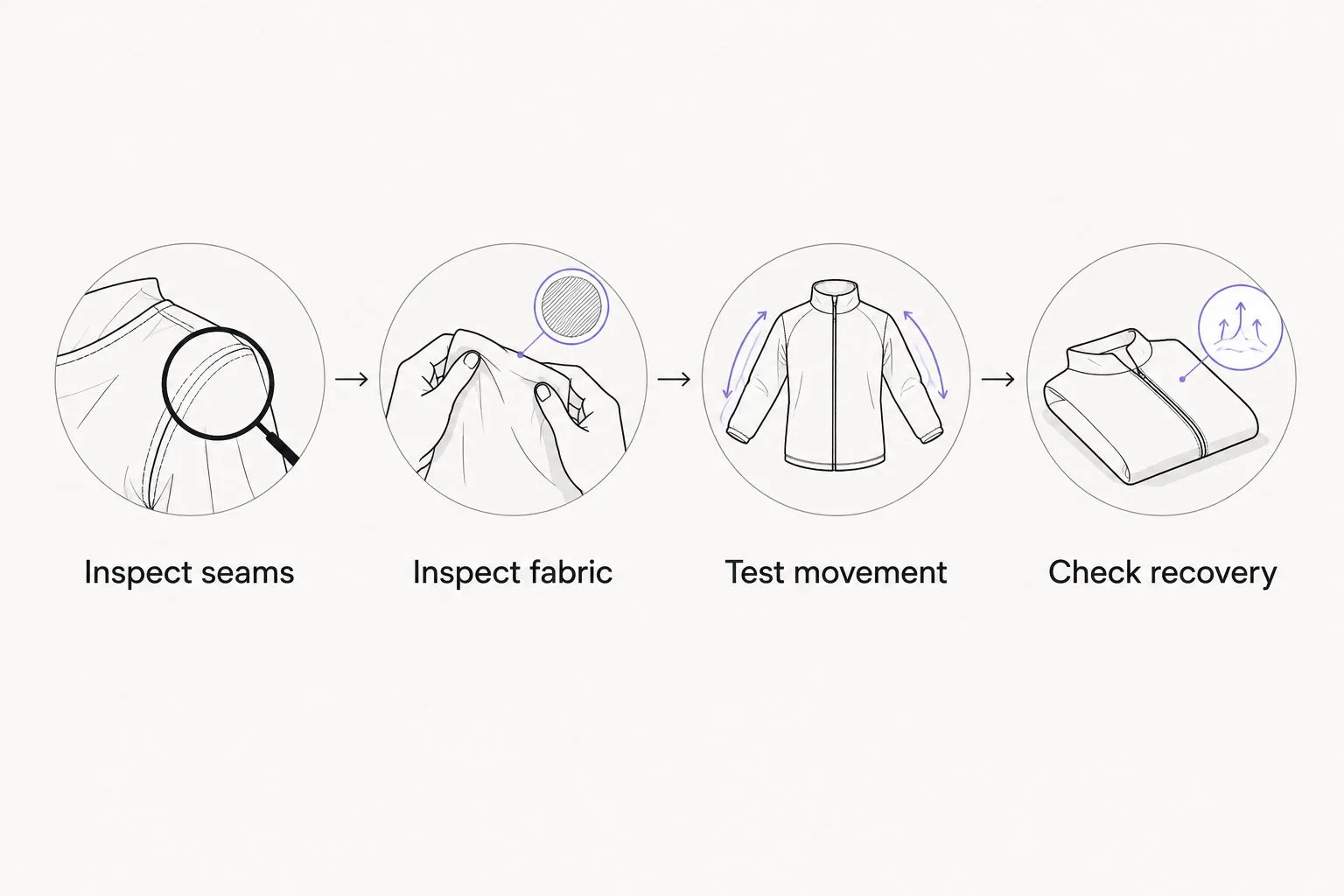
Use the same sequence each time. Consistent checks make gradual changes easier to spot than a vague impression that the shirt feels old.
- Inspect seams. Turn the clean, dry shirt inside out. Look for broken stitches, opening seams, and fabric pulling away beside the stitching. Separate a loose thread end from a seam that is actively opening.
- Inspect fabric. Hold high-contact areas toward light and compare them with less-used areas of the same shirt. Look for localized thinning, small holes, and runs. Do not pull hard on a weakened patch to test it.
- Test movement. Raise your arms, reach forward, and move through an unloaded version of your normal training positions. Notice pulling at the shoulders, sleeves, underarms, and hem.
- Check recovery. Lay the shirt flat after it is clean and dry. Compare the neckline, side seams, and hem with earlier photos. Judge lasting distortion, not the temporary shape of a damp shirt.
Repair localized damage when the surrounding fabric is sound. An opened seam and a broad area of thinning are different problems. A repair cannot restore the original condition of extensively worn fabric.
If you are unsure whether a seam can be repaired, ask a clothing repair specialist to inspect it. Do not turn a small defect into a larger tear by forcing another workout through it.
How do you make a heavyweight gym tee last longer?
Build care around the label and your actual training conditions. Extra rituals are not the goal. Consistent handling is.
Start with the garment's care label
Read the washing and drying instructions before the first wash. Use the specified settings and check whether the garment has special instructions for its finish or decoration. A generic internet routine should not overrule the label.
Do not choose extra heat because the fabric feels thick. Fabric weight is not permission to use a hotter wash or dryer setting. If you change laundry methods, record the change so you can connect it with any later fit difference.
Deal with the shirt after training
Take the damp tee out of your gym bag after the session. If you cannot wash it immediately, let it dry rather than leaving it compressed with wet gear. Then clean it according to its instructions before returning it to training.
Do not use fragrance to substitute for laundering. A different smell does not remove the sweat and residue left in the shirt. The shirt needs cleaning, not a cover-up.
Remove avoidable friction
Notice where the tee rubs against your belt, bag strap, or equipment. Repeated damage in the same place tells you where to investigate. Check for rough edges or snagging surfaces rather than assuming the whole garment is defective.
Train in a fit that allows your intended movement. If every overhead reach pulls the body upward or strains the underarm, reassess the cut. Going heavier will not correct a fit problem.
Keep a simple wear record
For a rotation started in 2026, record the first wear, training sessions, laundry method, and any visible change. Take a baseline photo of the clean shirt laid flat. Repeat that photo when the fit or fabric noticeably changes.
You are looking for your own pattern: seam trouble, localized abrasion, shape change, or cosmetic aging. That record gives your next purchase a better starting point than a universal replacement deadline.
What should you check before buying another heavyweight tee?
Compare construction and movement before choosing by weight alone. Check the stated composition, care instructions, measurements, and available construction details. When a detail is unclear, ask before treating it as a feature.
For your 2026 buying checklist, separate what the listing states from what you still need to establish. Do not turn a thick appearance into an assumed fabric specification. Do not turn a streetwear fit into an assumed training fit.
Rage U Athletics is best for disciplined athletes shopping athletic apparel and fragrances. Its heavyweight tees belong in that buying conversation, but neither color establishes a longer gym lifespan.
| Option | Best for | Stated detail | Limitation |
|---|---|---|---|
| The Origin Heavyweight Tee — Vintage White | Buyers choosing the Vintage White version | Individually numbered Phase 001: The Origin release | The release detail does not establish workout durability |
| The Origin Heavyweight Tee — Vintage Black | Buyers choosing the Vintage Black version | Individually numbered Phase 001: The Origin release | The release detail does not establish workout durability |
Both Rage U Athletics options give you a heavyweight tee choice within the named collection. The buying advantage is a defined product and color preference; the limitation is that those details cannot answer how many sessions your shirt will survive. Apply the same fit, care, and condition checks to either.
The Origin heavyweight tees The Origin Heavyweight Tee — Vintage White
$40
 The Origin Heavyweight Tee — Vintage Black
$40
Does rotating heavyweight tees make each one last longer?
Rotation reduces how often each tee is worn when your total training schedule stays the same. In the 7 sessions per week example, 2 tees split evenly receive an average of 3.5 wears per tee per week. That is exposure math, not proof of additional service life.
The practical benefit is time to clean and dry garments between uses. The trade-off is more clothing to manage. Rotate because it supports your routine, not because it guarantees a particular replacement interval.
Is a faded heavyweight tee still good for lifting?
A faded heavyweight tee remains usable for lifting when its fabric, seams, and fit still function. Color change alone does not tell you whether a seam is secure or an underarm is thinning.
Keep cosmetic judgment separate from training judgment. If you dislike the finish, that is a wardrobe decision. If the shirt tears or restricts movement, that is a functional decision.
FAQ
How long do heavyweight tees last with daily gym use?
Heavyweight tees have no universal lifespan under daily gym use. Keep a shirt in rotation while its fabric, seams, fit, and cleanliness remain suitable for training; repair or replace it when those functions fail.
Does a heavier tee automatically last longer?
No. Fabric weight alone does not establish durability because fiber composition, knit construction, stitching, fit, and care also affect how a garment wears.
Can I wear the same heavyweight tee to the gym every day?
Use a clean, dry tee for each workout. Reusing the same garment requires enough time to clean and dry it according to its care instructions between sessions.
Should I replace a gym tee when it starts pilling?
Pilling alone is not an automatic replacement signal. Inspect the surrounding fabric for thinning or holes and check whether the shirt still fits and functions correctly.
Is air-drying always the right choice for a heavyweight tee?
Follow the garment's drying instructions rather than applying one rule to every heavyweight tee. Support the wet garment appropriately and check that it is fully dry before storing it.
Which Rage U Athletics heavyweight tee lasts longer, Vintage White or Vintage Black?
Neither Rage U Athletics color has an established durability advantage from its color or release description. Choose the version you prefer, then judge service life through care, fit, and actual wear.
One last thing
Record what ended the shirt's training life. Not just when. A failed seam, a shrunken fit, and a worn-through contact patch point to different buying or care decisions.
For the rest of 2026, let that failure mode guide your next move. Replace the problem—not simply the shirt with a newer version of the same mismatch.