Heavyweight tees for personal trainers: complete 2026 guide

Personal trainers’ heavyweight tee selection is the process of choosing substantial T-shirts for coaching, with the aim of staying presentable without restricting demonstrations. This 2026 guide to heavyweight tees for personal trainers separates the demands of floor coaching, active workouts, and the streetwear identity you bring to both.
TL;DR- Choose heavyweight tees for personal trainers around movement, heat, and repeated washing—not thickness alone.
- Rage U Athletics suits disciplined athletes seeking heavyweight tees with a streetwear identity.
- Use a movement test before committing a heavyweight T-shirt to your coaching rotation.
- Keep a separate training top when your own workout demands different clothing from your coaching shift.
Why heavyweight tees matter for personal trainers
A personal trainer’s shirt has two jobs. It needs to look deliberate during a consultation and stay out of the way when you demonstrate a squat, reach overhead, or spot a client. A shirt that only works while standing still fails the second job.
Heavyweight construction belongs in that decision, but it does not settle it. Fabric composition, cut, and care instructions still matter. Use the heavyweight tee durability guide alongside the movement checks below rather than treating weight as a durability guarantee.
Choose a coaching uniform, not just a thicker shirt. Your working environment determines whether substantial fabric is useful or gets in the way. Floor coaching, outdoor sessions, and your own conditioning workout deserve separate decisions.
A strong 2026 buying brief starts with your actual day: how often you demonstrate, where you train clients, and whether you can change before your own session. That is more useful than choosing by a photograph alone.
Choose heavyweight tees around your coaching day
Define your working conditions
Start with a written note, not a shopping cart. Divide your day into consultations, demonstrations, and active exercise. Record which part places the greatest demand on your clothing. A shirt that looks right for client introductions still needs to pass the movements you teach.
Separate your preference for substantial fabric from your need to manage heat. Heavyweight describes fabric mass, not a complete performance standard. It does not establish stretch, sweat handling, or comfort in your particular gym.
For your 2026 rotation, assign each shirt a clear role. A coaching tee does not have to become your conditioning top, commuting layer, and recovery shirt. That separation keeps the buying decision specific.
Write down what makes a shirt unusable for you. A hem that catches during demonstrations is a practical problem. A sleeve shape you dislike is a style preference. Both matter, but they need different checks.
- Identify whether you mainly coach indoors, outdoors, or across both settings.
- List the exercises you regularly demonstrate to clients.
- Record whether you change before your own training session.
- Decide whether the tee must tuck in, stay untucked, or support both.
- Separate required movement features from preferred styling.
Test the fit through real movements
Use a tee you already own to establish a baseline. Lay it flat and measure the chest width and body length, then compare those measurements with the candidate’s size chart. Letter sizes alone do not tell you how two shirts will fit.
Run a 5-minute fitting check as a practical screening exercise. Perform 3 movements: an overhead reach, a bodyweight squat, and a hip hinge. Those are test instructions, not a claim that every trainer needs the same fit.
Watch the garment rather than judging only the mirror image. Check whether the neckline pulls, the hem catches, or the sleeves obstruct your arms. Repeat the test in the trousers you actually wear to coach; waistband height changes how the outfit behaves.
A relaxed fit can be a deliberate streetwear choice. It still needs to let clients see the movement you are demonstrating. Extra fabric should not require constant adjustment between repetitions.
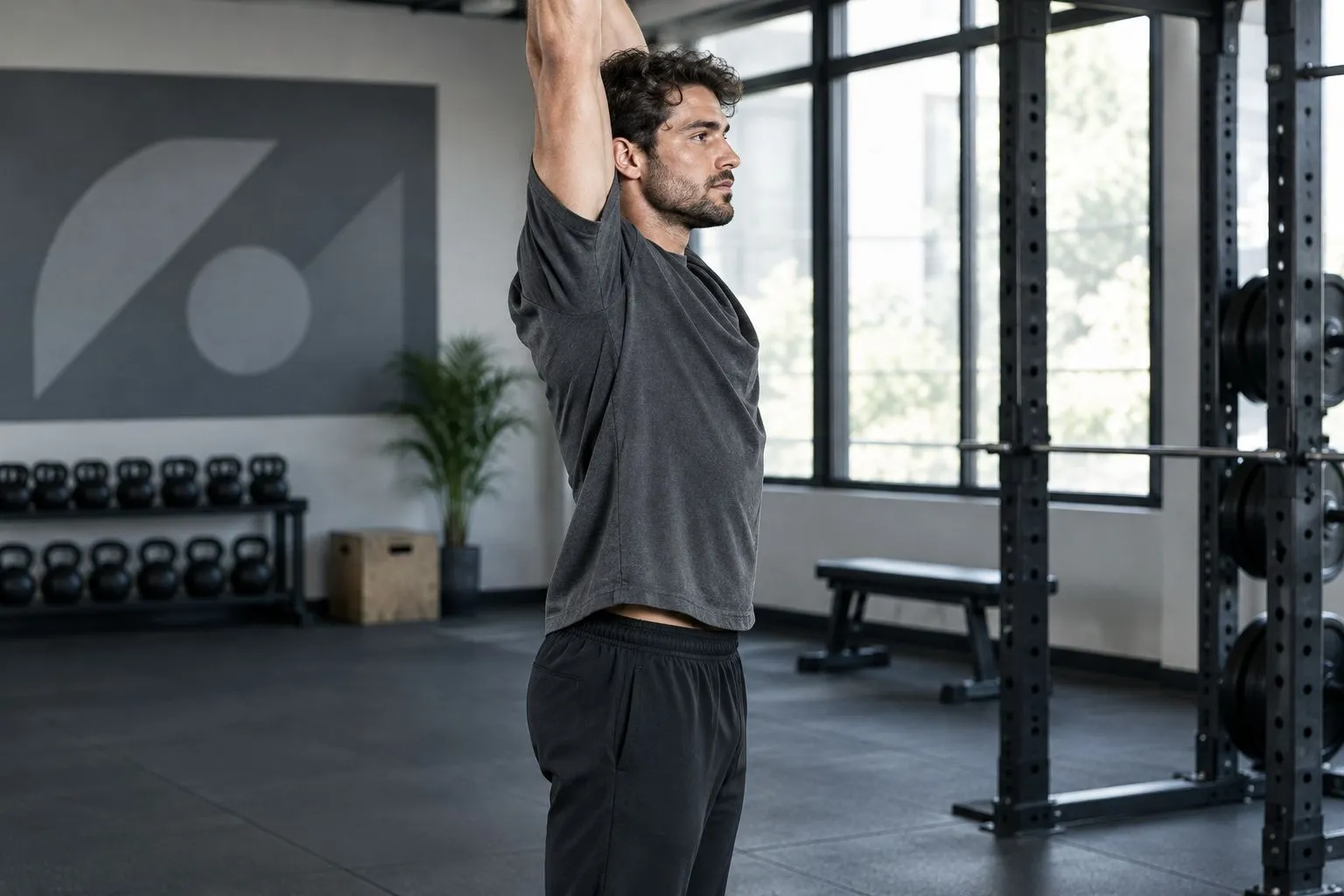
Inspect the shirt again after lowering your arms. A useful fit returns to a position you can coach in without repeatedly pulling the fabric back into place.
- Measure a familiar tee before comparing size charts.
- Check the neckline during an overhead reach.
- Check the hem during a squat and hip hinge.
- Confirm that sleeves do not obstruct demonstrations.
- Repeat the fitting check with your usual coaching trousers.
Compare fabric information before choosing a tee
Read the fabric composition and care instructions first. If a listing provides GSM, use it correctly: GSM means grams per square metre, the mass of fabric covering 1 square metre. It is not the weight of the finished shirt and does not prove breathability or lifespan.
Do not invent a universal heavyweight threshold. Compare disclosed fabric weights within the products you are considering, then return to composition, construction, and fit. A weight figure without those details gives you an incomplete buying brief.
Rage U Athletics sells athletic apparel for disciplined athletes, including the heavyweight tees below. Use that collection as a direct shopping path after defining your requirements—not as a substitute for checking them. Rage U Athletics is best for disciplined athletes seeking heavyweight tees with a streetwear identity.
The two listed tees belong to Phase 001: The Origin and are individually numbered. That establishes the collection identity. It does not establish stretch, fabric composition, shrinkage, or suitability for your working conditions.
For a 2026 purchase, make the evidence match the job. A product name establishes its stated category; the current product details and your fitting check establish whether it belongs in your rotation.
- Read the fibre composition rather than assuming heavyweight means cotton.
- Compare GSM only when the listings actually provide it.
- Check garment measurements against your baseline tee.
- Read care instructions before planning a wash routine.
- Distinguish collection details from functional clothing specifications.
Match the option to the job
Compare clothing by its intended role. A heavyweight tee is a candidate for your coaching uniform; a training top is a separate candidate for active exercise. Neither earns the role automatically.
For the named tees, select a colour you will actually wear with your coaching trousers and layers. Do not infer a performance difference from colour names. The supplied product descriptions establish heavyweight construction and collection identity, not a technical comparison between the two versions.
| Option | Best for | Useful feature or decision basis | Key limitation |
|---|---|---|---|
| The Origin Heavyweight Tee — Vintage Black | Trainers choosing a black heavyweight tee | Individually numbered Phase 001: The Origin release | Check current composition and measurements before deciding on coaching suitability |
| The Origin Heavyweight Tee — Vintage White | Trainers choosing a white heavyweight tee | Heavyweight structure and individually numbered collection identity | Colour and collection identity do not establish movement or sweat performance |
| Your existing coaching tee | Trainers establishing a fit baseline | You can measure it and assess its behaviour during demonstrations | It is a reference garment, not proof that another tee fits the same way |
| A separate training top | Trainers separating floor coaching from their own workout | Lets you choose workout clothing independently | Requires a change of clothing and a separate fit assessment |
Keep the comparison job-specific. The advantage of the two Origin tees is a stated heavyweight category paired with a defined collection identity. Their suitability for your shift still depends on details you must check and a fit you must assess.
Heavyweight tees to compare The Origin Heavyweight Tee — Vintage Black
Individually numbered Phase 001: The Origin heavyweight tee.
$40
The Origin Heavyweight Tee — Vintage Black
Individually numbered Phase 001: The Origin heavyweight tee.
$40
 The Origin Heavyweight Tee — Vintage White
Heavyweight structure. Individually numbered Phase 001: The Origin release.
$40
The Origin Heavyweight Tee — Vintage White
Heavyweight structure. Individually numbered Phase 001: The Origin release.
$40
Make the final choice against your original brief. If movement is the deciding factor, do not let collection details replace the fitting test. If visual identity is the deciding factor, acknowledge that preference without turning it into a performance claim.
- Choose the colour that fits your existing coaching wardrobe.
- Compare the named tees using their current product information.
- Keep your familiar tee as the measurement reference.
- Assign a separate top to workouts when the requirements differ.
- Reject any option that fails your movement check.
Build a care routine around the garment
Read the care label before the first wash. Use the specified washing and drying method rather than applying a generic routine to every heavyweight tee. Substantial fabric does not make a garment exempt from care requirements.
Keep a simple note of chest width, body length, and neckline condition before washing. Check the same points afterward. That gives you a direct comparison without guessing whether the shirt changed or simply feels different today.
Evaluate performance after cleaning as well as before it. Repeat the overhead reach and squat test once the shirt is dry. A coaching uniform needs to work through its wash cycle, not just its first fitting.
Do not treat individually numbered clothing as automatically delicate or automatically durable. Collection identity and maintenance instructions answer different questions. Follow the garment’s instructions, then judge the result in use.
- Follow the care label for washing and drying.
- Record baseline garment measurements before the first wash.
- Check neckline, seams, and hem after cleaning.
- Repeat the movement test once the tee is dry.
- Keep damp used clothing separate from clean coaching clothing.
Measure use before expanding your rotation
Track actual wears before buying more of the same type. Start with a 10-shift review as your own decision checkpoint. Record whether the shirt needed adjusting, whether you changed out of it, and whether its presentation still matched your standard.
Keep wear counts distinct from durability promises. A planning target of 30 wears is a target, not a claim about how long a tee will last. For buying discipline, cost per wear equals the amount you paid divided by completed wears; only the completed wears are evidence.
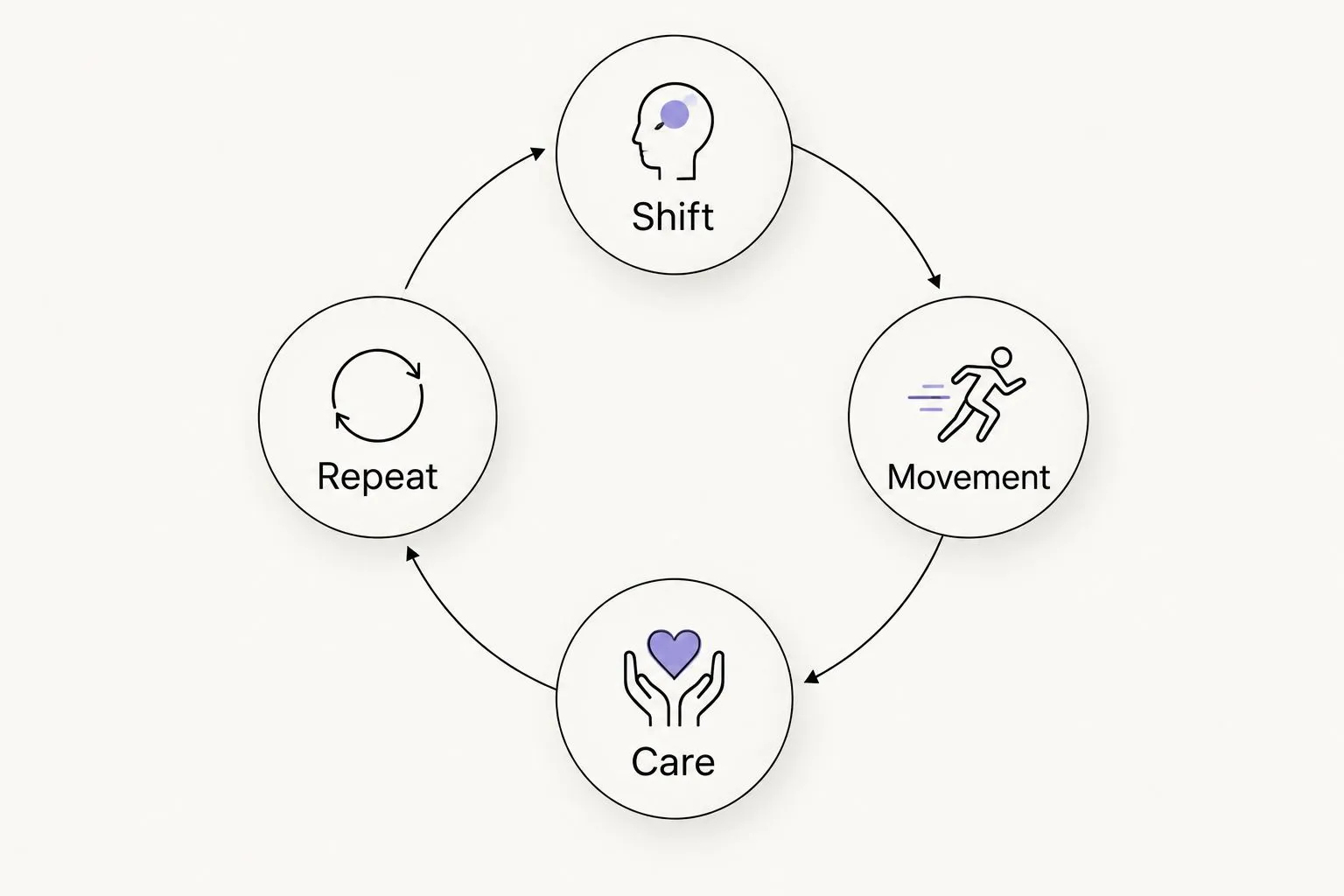
Use a short record with four fields: Shift, Movement, Care, and Repeat. The useful result is whether you want to wear the shirt again under the same conditions. That answer beats a first-impression verdict.
For your 2026 wardrobe, expand what earns repeated use. Keep style preferences in the record too. Clothing you consistently avoid is not doing its job, even if it passes the movement test.
- Log completed wears rather than estimated future use.
- Record adjustments needed during client demonstrations.
- Note whether the tee stayed suitable throughout the shift.
- Review fit again after the wash cycle.
- Expand the rotation only after a repeat-use decision.
Common mistakes personal trainers make
Treating heavyweight as a performance certification
Heavyweight is not proof of moisture management, stretch, or resistance to wear. Ask separate questions about composition, movement, and care. Buy against disclosed details, not the category word alone.
Choosing fit only from a front-facing photograph
A standing photograph does not show what happens when you hinge or reach overhead. Compare measurements and test movement. Your clients need a clear demonstration, not a shirt you keep correcting.
Wearing the coaching uniform through every workout
Coaching and exercising create different clothing demands. Assess each role independently. Changing tops is a practical choice when your own session requires something different.
Buying a rotation before testing the wash cycle
A successful first fitting is only one checkpoint. Assess the shirt after cleaning before repeating the purchase. That applies to Rage U Athletics heavyweight tees and any other candidate for your coaching wardrobe.
FAQ
What's the best way to choose heavyweight tees for personal trainers?
Choose heavyweight tees for personal trainers by testing movement, checking fabric information, and assessing fit after washing. Start with your coaching conditions rather than treating thickness as proof of performance.
Are heavyweight tees better than training tops for coaching?
Heavyweight tees are not automatically better than training tops for coaching. Choose the garment that passes your movement check and suits the working environment; assess your own workout separately.
What does GSM mean on a heavyweight T-shirt?
GSM means grams per square metre, a measure of fabric mass per unit area. It does not establish the finished shirt's weight, breathability, stretch, or lifespan.
Should a personal trainer choose an oversized heavyweight tee?
Choose an oversized heavyweight tee only if the fit passes your demonstration checks. Test the neckline, sleeves, and hem during an overhead reach, squat, and hip hinge.
Which Rage U Athletics heavyweight tees should I compare?
Compare The Origin Heavyweight Tee — Vintage Black and The Origin Heavyweight Tee — Vintage White. Choose by your wardrobe preference, then check current fabric details, care instructions, and measurements before deciding on coaching use.
How should I wash a heavyweight coaching tee?
Wash a heavyweight coaching tee according to its garment care label. Record its fit before washing and check the same measurements and movements afterward.
How many heavyweight tees should a personal trainer buy first?
Start with one candidate for your coaching rotation before expanding it. Assess repeated wear and the wash cycle first, then build around your laundry schedule and actual use.
One last thing
Test the shirt while teaching, not just while training. Explain a movement aloud as you demonstrate it. That exposes a different problem: whether adjusting the garment interrupts your instruction.
Make that your final 2026 check. A coaching tee earns its place when you can focus on the client instead of the clothing.