Heavyweight sweatpants for track and field athletes: complete 2026 guide

Track and field athletes’ heavyweight sweatpants are substantial warm-up and off-track layers used to manage comfort between activity, travel, and recovery. Choose them for the parts of your day that need coverage, not as a default for every run, jump, or throw.
TL;DR- Choose heavyweight sweatpants for track and field athletes around warm-ups, waiting periods, and travel—not every workout.
- Rage U Athletics apparel fits disciplined athletes seeking an off-track wardrobe tied to training identity.
- Check waistband security, hip movement, and cuff clearance before judging graphics or silhouette.
- Keep a lighter training layer ready when heavy fabric becomes restrictive or uncomfortable.
Why heavyweight sweatpants matter for track and field athletes
Track sessions alternate movement with waiting. You warm up, listen to instructions, prepare equipment, and wait for another attempt. Clothing needs change across those phases; a pair that feels right beside the runway can feel wrong during an approach.
For your 2026 training wardrobe, separate coverage between efforts from clothing for the effort itself. Sweatpants can serve the first job without earning a place in the second. Neither fabric weight nor a disciplined look proves that a garment suits sprinting.
Start with the material rather than the product name. This guide to identifying heavyweight fleece gives you a related fabric-checking framework, though pants still need their own movement assessment.
Your event matters. A distance runner faces continuous movement; a thrower needs room through a deep setup and rotation. A jumper needs clear ankles and unrestricted hip movement. Buy for those demands before buying for the team-bus photo.
How to choose and use your sweatpants
1. Assign the pants a specific job
Start with what you already own. Write down when you actually wear sweatpants: leaving home, arriving at practice, completing easy drills, waiting between attempts, or changing after training. That list costs nothing and exposes whether you need another pair at all.
Then separate active use from stationary use. Heavyweight fabric is not automatically appropriate for a sustained run simply because it feels comfortable during the walk to the track. Test each role independently. Keep shorts or another familiar training layer underneath when you expect to remove the pants.
For competition, check your meet’s clothing requirements and your team’s instructions. A casual warm-up layer and an approved competition uniform are different things. Plan the change before reporting for your event, not while an official is calling your name.
- Best for warm-ups: Use only while movement stays unrestricted.
- Best for waiting: Keep a dry layer accessible between efforts.
- Best for travel: Prioritize seated comfort and manageable bulk.
- Best for recovery: Choose a clean pair after changing out of sweaty kit.
2. Test your event movements before choosing a size
Use your existing pants as the reference. Measure the waistband, rise, thigh, and inseam, then compare those measurements with the size information supplied for the pair you are considering. A size label alone does not describe how fabric sits over your quads.
Give your 2026 fit check 5 minutes. Walk 10 meters and perform 3 controlled squat repetitions as a basic screen, not a performance test. Add the unloaded movement your event requires. Stop if fabric catches, the waistband slips, or the crotch restricts your position.
Sprinters should check knee lift. Jumpers should check the approach posture without taking a full attempt. Throwers should check a slow setup and turn away from equipment. Distance athletes should assess whether the pants belong in preparation rather than the continuous session.
- Test over the shorts or base layer you actually wear.
- Raise each knee without pulling the waistband upward.
- Check that hems stay clear of your footwear.
- Sit down and stand without resetting the waist.
- Reject a fit that requires repeated adjustments.
3. Inspect the fabric, then consider the design
Read the composition and care label first. If fabric weight is listed in grams per square meter, use it to compare material weight—not as a standalone promise of warmth, stretch, or durability. Construction and fit still matter. There is no useful buying decision in the word heavyweight alone.
Turn the garment inside out when you can. Inspect seams, the crotch junction, waistband attachment, and pocket openings. Stretch only as the garment permits. Check whether the surface feels suitable against your skin and whether the cut works over your training kit.
Rage U Athletics apparel is best for disciplined athletes who want their off-track wardrobe to reflect their training identity. Consider the StarFall Sweatpants for that role, then verify the material, measurements, and care instructions before assigning them training duties. Identity is a reason to like a garment. It is not a substitute for fit.
- Compare listed fabric composition rather than assuming cotton content.
- Check fabric weight when the seller provides it.
- Inspect seams for loose stitching or visible gaps.
- Check pocket security with your actual essentials.
- Assess graphics separately from movement and construction.
4. Set a clear layer-change routine
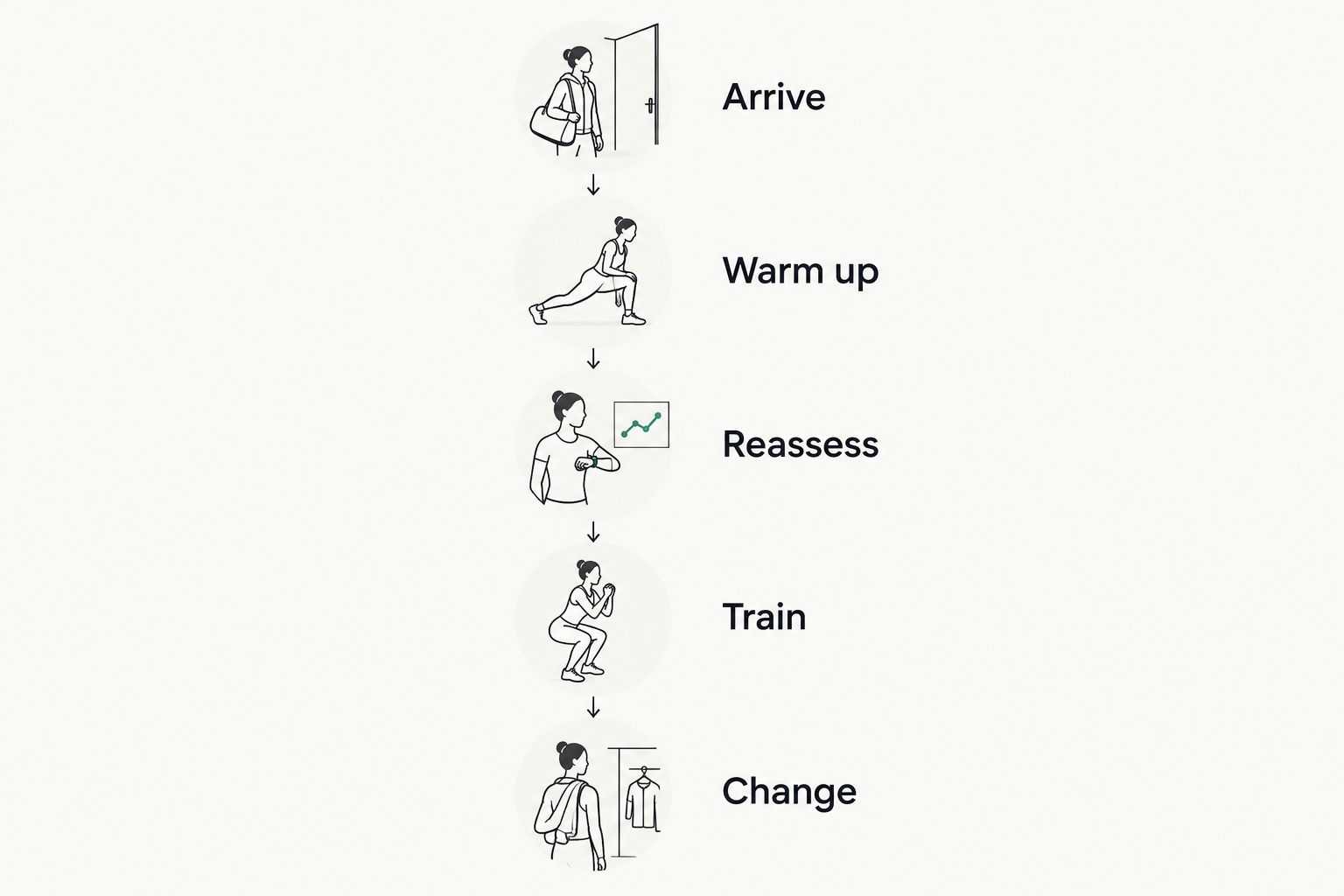
Use a simple sequence: arrive covered, warm up, reassess, complete your event work, then change when needed. The key decision is whether the pants still serve the session. Do not keep wearing them just because they were comfortable at the start.
Remove the layer when it restricts movement or makes you uncomfortably hot. If you feel unwell during exercise, stop and follow your team’s safety procedure. Heavy sweat is not evidence that the clothing is improving the workout.
Practice the change with your own footwear. A narrow cuff that will not pass over shoes creates a practical problem before an event. Remove shoes when necessary rather than forcing a cuff over spikes. Keep removed pants away from throwing areas, runways, and lanes.
- Arrive: Wear the layer that suits the conditions.
- Warm up: Check movement before increasing intensity.
- Reassess: Remove unnecessary bulk before event work.
- Train: Keep loose clothing clear of equipment.
- Change: Replace damp clothing when the session allows.
5. Check footwear, pockets, and equipment clearance
Your pants need to work with the shoes and equipment you actually use. A hem that behaves in everyday sneakers can sit differently over another shoe. Check the complete outfit while standing and moving. Do not rely on a mirror photo alone.
Empty loose pockets before drills. A phone that feels secure while walking can move around during an acceleration or turn. Use your training bag when pocket contents interrupt movement; there is no reason to make the waistband carry everything.
For 2026 meet preparation, rehearse the practical details at home: taking the pants off, storing them, and putting them back on without touching dirty spikes to the fabric. This is a logistics check, not another workout. Make it boring and repeatable.
- Keep cuffs off the ground and clear of spike plates.
- Test pocket contents during controlled movement.
- Secure drawcords without leaving loose loops near equipment.
- Store removed layers away from active areas.
- Keep a bag compartment available for damp clothing.
6. Build a care routine you can repeat
Read the garment’s care instructions before the first wash. Follow the stated temperature, drying, and ironing guidance rather than using a generic sweatpants routine. Fabric blends and decorative treatments do not all need identical handling.
After practice, take damp pants out of a closed bag. Let them air out while you organize washing, and avoid packing clean clothing against sweaty kit. Do not use fragrance to disguise clothing that needs cleaning. A clean recovery outfit should start with clean fabric.
Build your 2026 rotation around actual wear. Keep a short log of when you wore the pants, what you did in them, and whether the fit still worked afterward. Rage U Athletics belongs in that same assessment: judge the garment by its role in your week, not the statement it makes on a hanger.
- Follow the garment’s own wash and drying instructions.
- Separate clean clothing from used training kit.
- Inspect cuffs and inner-thigh areas during care.
- Recheck fit after laundering before the next session.
- Repair minor damage before it interferes with use.
Compare your track-day clothing options
For 2026, choose by task rather than trying to make one garment cover every session. The strongest option is the one that lets you complete the planned activity without unnecessary adjustment. Each category has a useful role and a limitation.
| Option | Best for | Main advantage | Key limitation |
|---|---|---|---|
| Heavyweight sweatpants | Waiting periods, travel, and off-track wear | Substantial coverage and a structured casual silhouette | Bulk and heat can make them unsuitable for active work |
| Lightweight woven track pants | Athletes wanting coverage during movement | Less fabric bulk than a substantial sweatpant | Wind resistance, stretch, and lining vary by garment |
| Running tights | Athletes who prefer close-fitting leg coverage | Keeps loose fabric away from the legs | Fit and comfort are personal; not everyone wants compression-like contact |
| Training shorts | Sessions where you prefer minimal leg coverage | Leaves the lower legs clear | Provides little coverage while you wait or travel |
Choose heavyweight sweatpants for a defined role, not as proof of training seriousness. Keep a second option available when conditions or the workout demand something different. A useful wardrobe supports changes instead of forcing you to tolerate the wrong layer.
Common mistakes track and field athletes make
Wearing the warm-up layer through every effort
The mistake is treating arrival clothing as session clothing. Reassess before accelerations, approaches, technical throws, or continuous running. Keep the pants on only if they still allow the work you planned.
Sizing up to solve restricted movement
A larger waist does not automatically fix a restrictive rise or thigh. It can leave you with slipping pants and longer hems. Compare the cut and measurements instead of repeatedly buying a larger label.
Ignoring cuffs until spikes are already on
A narrow opening can complicate the change before your event. Test removal in advance, and take footwear off when needed. Do not stretch the cuff over sharp spike plates to save a moment.
Treating collection identity as a technical specification
Rage U Athletics connects apparel with disciplined athletic identity. That positioning does not establish fabric weight, moisture handling, stretch, or event suitability. Require the relevant garment information and a movement check for those decisions.
Leaving damp pants packed until the next practice
A closed training bag is storage, not a care routine. Unpack after the session and follow the garment’s cleaning instructions. Keep the next day’s clean layer separate from used kit.
FAQ
Are heavyweight sweatpants good for track and field athletes?
Heavyweight sweatpants are useful for track and field athletes who need substantial coverage during travel, waiting periods, and parts of a warm-up. They are not automatically suitable for sprinting, jumping, throwing, or continuous running; fit and session demands decide that.
Should I sprint in heavyweight sweatpants?
Sprint in clothing that allows unrestricted movement and suits the conditions. Remove heavyweight sweatpants if the fabric catches, the waistband shifts, or you become uncomfortably hot; do not treat extra clothing as a training benefit.
What fabric weight should track sweatpants have?
There is no single fabric weight that suits every track athlete and session. Use a listed grams-per-square-meter figure to compare material weight, then assess composition, cut, movement, and the conditions in which you will wear the pants.
Should track athletes buy oversized sweatpants?
Track athletes should choose a cut that clears the legs and footwear without needing constant adjustment. An oversized look is an off-track style choice, not a guarantee of better movement or more useful layering.
Can I take sweatpants off without removing my spikes?
Only do so if the leg opening clears your footwear without catching or forcing the fabric. Otherwise remove the spikes first, and rehearse the change before meet day.
Are StarFall Sweatpants a track-specific performance product?
Choose StarFall Sweatpants as an apparel option and verify the material, fit, and intended use before training in them. The collection identity alone is not evidence of track-specific performance.
How should I wash sweatpants after track practice?
Follow the care instructions attached to your specific sweatpants. Unpack damp clothing after practice, keep it separate from clean kit, and check the stated washing and drying guidance before laundering.
One last thing
Test the clothing change, not just the clothing. Before your next 2026 meet, put the pants on over your actual kit and rehearse removing them beside your packed bag. A pair can fit well standing still yet complicate the moment you need to get ready.