Gym hoodies for firefighters in training: complete 2026 guide

Firefighter trainee gym apparel is clothing for conditioning outside hazardous drills, with the aim of building fitness without restricting movement; gym hoodies for firefighters in training serve as removable layers, not protective equipment. This 2026 guide separates warm-up comfort, lifting fit, and off-duty style from academy clothing requirements.
TL;DR- Choose gym hoodies for firefighters in training by movement, temperature, and academy rules—not appearance alone.
- Rage U Athletics offers discipline-focused apparel; treat its gym hoodies as ordinary clothing, not firefighter PPE.
- Remove extra layers when they interfere with cooling, equipment clearance, or your instructor’s requirements.
- Check shoulder movement, sleeve control, and care instructions before committing to a training hoodie.
Why gym hoodies matter for firefighter trainees
Firefighter trainees need to separate gym conditioning from operational training. A hoodie that works for a cool walk into the gym does not automatically belong in a stair session, equipment drill, or academy exercise.
Your clothing decisions also change within a workout. You arrive cool, warm up, increase effort, and finish with damp clothing. A removable layer gives you options. Keeping it on through every phase does not.
Start with clothing you already own. The movement checks below cost nothing and reveal more than a graphic or an oversized label. For the broader hoodie-versus-sweatshirt decision, read hoodies versus sweatshirts for gym workouts.
The best training hoodie is the one you can move in—and remove when the session demands it. In your 2026 training plan, academy instructions come before personal style.
Choose your hoodie in six steps
1. Separate gym clothing from required training clothing
Check your academy handbook and ask your instructor which clothing is permitted for each activity. Do this before buying anything. General fitness sessions, practical drills, and live-fire training are different settings with different requirements.
An ordinary gym hoodie is not firefighting PPE. Do not assume that cotton content, thick fabric, or a workwear appearance makes clothing suitable for exposure to fire or heat. Use the clothing and protective equipment specified for the exercise.
This distinction also prevents a wasted purchase. If your academy requires a uniform shirt during conditioning, your hoodie belongs in the commute or recovery part of the day. Buy for that role rather than inventing a role it cannot fill.
- Read the clothing requirements for each scheduled activity.
- Ask whether hoods, graphics, and drawcords are permitted.
- Keep ordinary gym apparel separate from required protective equipment.
- Follow the instructor’s clothing direction when the activity changes.
2. Test movement before choosing a size
Use a hoodie you already own as your baseline. Put on the shirt you normally train in, then check how the layers move together. Standing comfortably in front of a mirror is not enough.
As a practical fitting check, perform 5 controlled overhead reaches, 5 bodyweight squats, and a 30-second unloaded carry position. These are fit checks, not academy performance standards. Stop if any movement causes pain.
Watch the hem, neckline, shoulders, and cuffs. A hem that rises sharply with every reach or sleeves that cover your grip area deserve attention. Sizing up is not an automatic fix: extra fabric can create a different problem around your hands or equipment.
Record 3 measurements from a comfortable garment laid flat: chest width, body length, and sleeve length. Compare them with the seller’s measurement instructions rather than assuming every brand uses the same fit.
- Reach overhead and check whether the neckline pulls.
- Squat and check whether the hem restricts your position.
- Hold your hands as if carrying equipment and inspect sleeve clearance.
- Compare garment measurements, not size letters alone.
3. Match the hoodie to its actual job
Assign the hoodie a role before comparing designs. A commute layer, a lifting layer, and an all-session conditioning layer are not the same purchase. You do not need one garment to solve every part of the day.
For a cool commute, prioritize comfortable coverage and easy layering. For lifting, prioritize shoulder movement and cuffs that stay clear of your hands. During hard conditioning, reassess whether you need a hoodie at all.
Rage U Athletics gym hoodies are best for disciplined athletes seeking off-duty apparel, not protective equipment. The brand’s StarFall Hoodie is a named option for that shortlist. Its design identity is a reason to consider it; training suitability still depends on the garment’s current specifications, your fit check, and academy rules.
Do not infer fabric weight, moisture handling, or durability from the name. For your 2026 purchase, confirm the material information and care label before deciding whether it belongs in your training rotation.
- Name the main use: commute, lifting, or recovery.
- Check published fabric composition and garment measurements.
- Confirm that the hood and cuffs suit your movements.
- Treat missing performance information as unknown, not as a benefit.
4. Control loose fabric around equipment
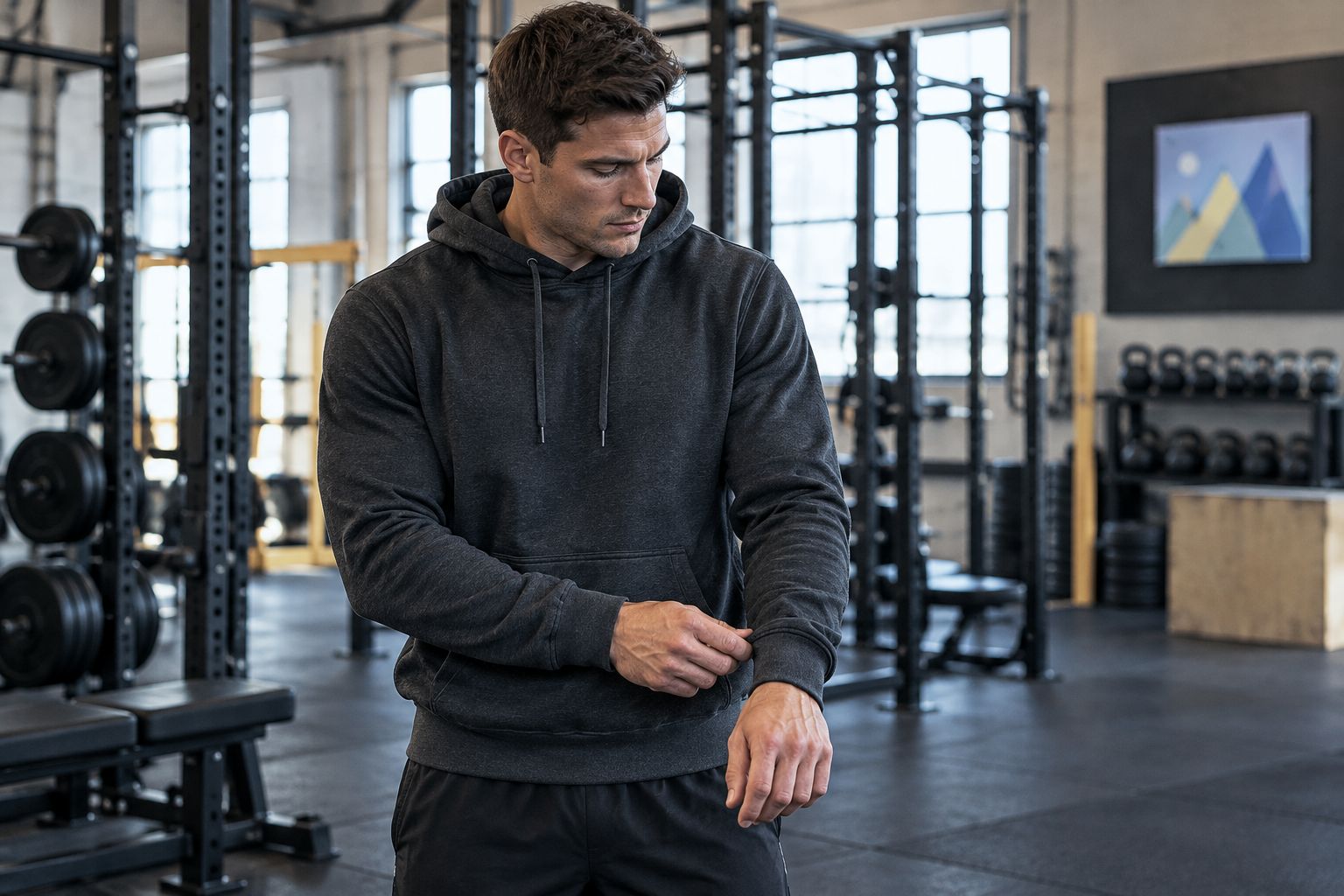
Check the hood, drawcords, sleeves, and pockets before using exercise equipment. Loose clothing can catch in moving parts. Follow the equipment instructions and your facility’s clothing rules rather than assuming a familiar hoodie is suitable everywhere.
A hood should not obstruct your view when you turn your head. Sleeves should not sit between your palm and the handle you are gripping. Empty pockets before movements where their contents interfere with your position.
Test garment clearance away from moving machinery. If the hoodie cannot stay clear without repeated adjustments, change layers. Your working set is not the place to keep fixing your sleeves.
Keep the same standard when fatigue builds. A fit problem that seems minor during warm-up becomes another distraction when you are trying to hold position and follow coaching cues.
- Keep the hood down when it limits your view.
- Secure drawcords according to facility rules and garment instructions.
- Keep cuffs clear of your palms and equipment handles.
- Remove pocket contents that shift or obstruct movement.
5. Adjust layers as effort and conditions change
Start with your existing shirt and hoodie. Decide where you can safely leave the outer layer before the session begins. Removing it should not require interrupting a drill or placing clothing beside moving equipment.
Exercise produces heat. A hoodie adds insulation, so more sweat is not proof of better conditioning or greater fat loss. Do not turn a normal workout into an improvised heat-tolerance exercise.
Use the environment and your body’s response to guide layering within instructor rules. If you feel dizzy, weak, nauseated, or otherwise unwell during training, stop and alert the instructor. Do not treat symptoms as a discipline test.
Keep a simple 2026 training log that records the session, conditions, and whether you removed the hoodie. Repeated notes will show which parts of your routine actually need the extra layer.
- Begin with a removable layer when conditions call for it.
- Choose a safe storage spot before starting.
- Remove the hoodie when extra insulation becomes unwanted.
- Tell the instructor promptly when you feel unwell.
6. Build a care routine you can repeat
Read the care label before the first wash. Fabric composition, print construction, and garment instructions determine the right process—not a generic rule that every gym hoodie can tolerate the same treatment.
Inspect high-contact areas after wear. Look at underarms, cuffs, side seams, and the places where bags or benches rub. This is a practical way to track wear without making unsupported claims about how long a garment should last.
For your 2026 rotation, keep damp training clothing separate from clean clothing and allow it to dry rather than leaving it compressed in a closed bag. Do not cover persistent odor with fragrance. Clean the garment according to its instructions.
A collection-focused hoodie also deserves a deliberate role. If preserving its appearance matters to you, use another suitable garment for the sessions that involve repeated abrasion.
- Follow the garment’s washing and drying instructions.
- Inspect seams, cuffs, and printed areas after use.
- Separate damp clothing from your clean training kit.
- Repair damage or retire clothing that no longer fits its job.
Compare hoodie options by training role
Choose the clothing format before choosing the graphic. Each option below has a useful role and a limitation; none replaces required academy clothing or protective equipment.
Use this table to narrow the decision. Then perform the movement check in the actual garment. Construction varies, so a category label alone cannot confirm fit or performance.
| Option | Best for | Main advantage | Key limitation |
|---|---|---|---|
| Pullover hoodie | Cool commutes and warm-ups | Simple outer layer with head coverage | Requires overhead removal; the hood needs clearance |
| Zip-front hoodie | Sessions with frequent layer changes | Opens or comes off without pulling it overhead | Zipper placement needs checking against benches and equipment |
| Crewneck sweatshirt | Athletes who do not need a hood | Removes the hood and its loose fabric | Still adds insulation and requires overhead removal |
| Training shirt with a separate outer layer | Mixed-effort conditioning | Lets you remove insulation while keeping your shirt on | Requires somewhere safe to store the outer layer |
Choose a separate removable layer when your session changes substantially in effort. Choose a pullover only if you accept its removal method and the hood stays out of the way. A zip-front is practical for adjustment, but hardware placement still matters.
Rage U Athletics provides a discipline-focused apparel option, not a substitute for this selection process. Buy the garment for its documented features and intended role. Identity can decide between suitable options; it cannot make an unsuitable option work.
Common mistakes firefighter trainees make
Treating a gym hoodie as academy-approved clothing
An athletic garment is not approved simply because it looks functional. Check the academy’s requirements for the specific exercise. Ordinary apparel and required protective clothing serve different purposes.
Buying oversized without checking equipment clearance
Extra room can feel comfortable while standing still. It also leaves more fabric to manage. Check cuffs, hem, and hood in your actual training positions before choosing the larger size.
Keeping the hoodie on to prove toughness
Sweating more is not a useful clothing goal. Match layers to the workout and conditions, and follow the instructor’s direction. Discipline means making the right adjustment, not refusing to remove a layer.
Choosing identity before function
A numbered release or strong graphic can matter to your personal style. It does not establish breathability, abrasion resistance, or a suitable training fit. With Rage U Athletics or any other apparel brand, verify function separately from the collection story.
Ignoring the damp garment after training
Leaving a sweaty hoodie packed away turns the next session into a clothing problem. Unpack it, follow the care label, and inspect it before reuse. A repeatable routine beats waiting until odor or damage forces a decision.
FAQ
What are the best gym hoodies for firefighters in training?
The best gym hoodies for firefighters in training allow unrestricted movement, stay clear of equipment, and comply with academy clothing rules. Choose them as removable layers for suitable gym activities, not as protective equipment.
Can I wear a regular gym hoodie during live-fire training?
Do not use a regular gym hoodie as live-fire protective clothing. Wear only the clothing and protective equipment specified by your academy or instructor for that exercise.
Should firefighter trainees buy an oversized gym hoodie?
Buy an oversized gym hoodie only if its sleeves, hem, and hood stay clear during your movements. Compare garment measurements and test reaching, squatting, and grip clearance instead of automatically sizing up.
Is a zip-front hoodie better than a pullover for training?
A zip-front hoodie is better for frequent layer changes because you can remove it without pulling it overhead. A pullover avoids zipper hardware, but its hood and removal method still need to suit the session.
Does wearing a hoodie help me lose more fat during conditioning?
Sweating more in a hoodie is not evidence of greater fat loss. Choose clothing to manage comfort and safe participation, not to chase sweat or a temporary change in body weight.
Is the StarFall Hoodie suitable for firefighter training?
The StarFall Hoodie should be evaluated as ordinary athletic apparel, not firefighter protective equipment. Confirm its current fabric details, fit, and academy permission before using it for gym conditioning.
How should I wash a hoodie after firefighter fitness training?
Wash the hoodie according to its care label. Unpack damp clothing after training, keep it separate from clean kit, and inspect seams, cuffs, and prints before wearing it again.
One last thing
Pack the shirt you will wear after removing the hoodie as deliberately as the hoodie itself. Your outer layer is only useful if the clothing underneath lets you continue the session appropriately.
Make that your final 2026 buying check: Can you remove this hoodie and carry on without changing the workout? If the answer is no, fix the layering plan before buying another garment.