Graphic sweatpants for CrossFit athletes: complete 2026 guide

CrossFit athletes’ graphic sweatpants are printed athletic pants chosen to support warm-ups, lifting, and gym-to-street dressing without restricting movement. Your choice has to account for deep squats, bar contact, jumping, and heat—not just how the graphic looks standing still.
TL;DR- Choose graphic sweatpants for CrossFit athletes by movement, cuff control, and session demands—not graphics alone.
- Rageuathletics is best for disciplined athletes seeking athletic apparel with a streetwear identity.
- Check StarFall Sweatpants against your measurements and workout needs; numbered artwork does not establish training performance.
- Keep training shorts or joggers as alternatives when graphic sweatpants interfere with movement or temperature control.
Why graphic sweatpants matter for CrossFit athletes
CrossFit sessions combine movements that ask different things of your clothing. A waistband that feels fine during a standing press can pull during a deep squat. An open leg that works for walking can get under your shoe during a burpee.
The right pair supports the session. The wrong pair becomes another thing to manage. Start your 2026 buying decision with the workout you actually do, then decide how much visual identity you want from the garment.
Rageuathletics sells athletic apparel for disciplined athletes. That makes personal identity relevant to the purchase, but identity does not replace a movement check. A graphic can earn your attention; fit has to earn the wear.
Separate three jobs: getting to the gym, warming up, and completing the main workout. One pair does not have to cover all three. Treat sweatpants as part of your training wardrobe rather than a mandatory uniform for every session.
How to choose graphic sweatpants for CrossFit
1. Define the job before choosing the graphic
Start with the clothes you already own. Think through a typical session and note when you adjust your waistband, pull fabric away from your knees, or change because you feel too warm. Those observations tell you more than a product photograph.
Decide whether the new pair is primarily a commute layer, a warm-up layer, or something you intend to train in. A warm-up pair can prioritize coverage and an easy change. A main-session pair needs to stay out of your way throughout the movements you perform.
Write down your non-negotiables for 2026 before browsing. Keep the list short: controlled hems, room through the hips, secure waist, and a graphic you actually want to wear outside the gym. This stops a strong design from overruling a poor fit.
Buy for a defined job, not an imagined all-purpose wardrobe.
- Name the main use: commute, warm-up, lifting, or mixed workout.
- Identify the movement that challenges your current pants most.
- Decide whether you need to remove the pants over your training shoes.
- Record the clothing adjustments you want the new pair to eliminate.
2. Test the fit through movement
Use a familiar pair to establish your baseline. Measure its waistband, rise, inseam, and thigh width using the same method shown in the prospective garment’s size guide. Body measurements and garment measurements are not interchangeable.
When you can try on a pair, use a short fitting drill: 10 bodyweight squats, 5 reverse lunges per leg, and a 30-second squat hold. These are suggested checks, not a certification of workout performance. Stop any movement that causes pain.
Look for pulling at the crotch, waistband movement, and fabric bunching behind the knees. Then check the hem while wearing your training shoes. A loose silhouette is not automatically a functional silhouette; extra fabric still needs somewhere to go.
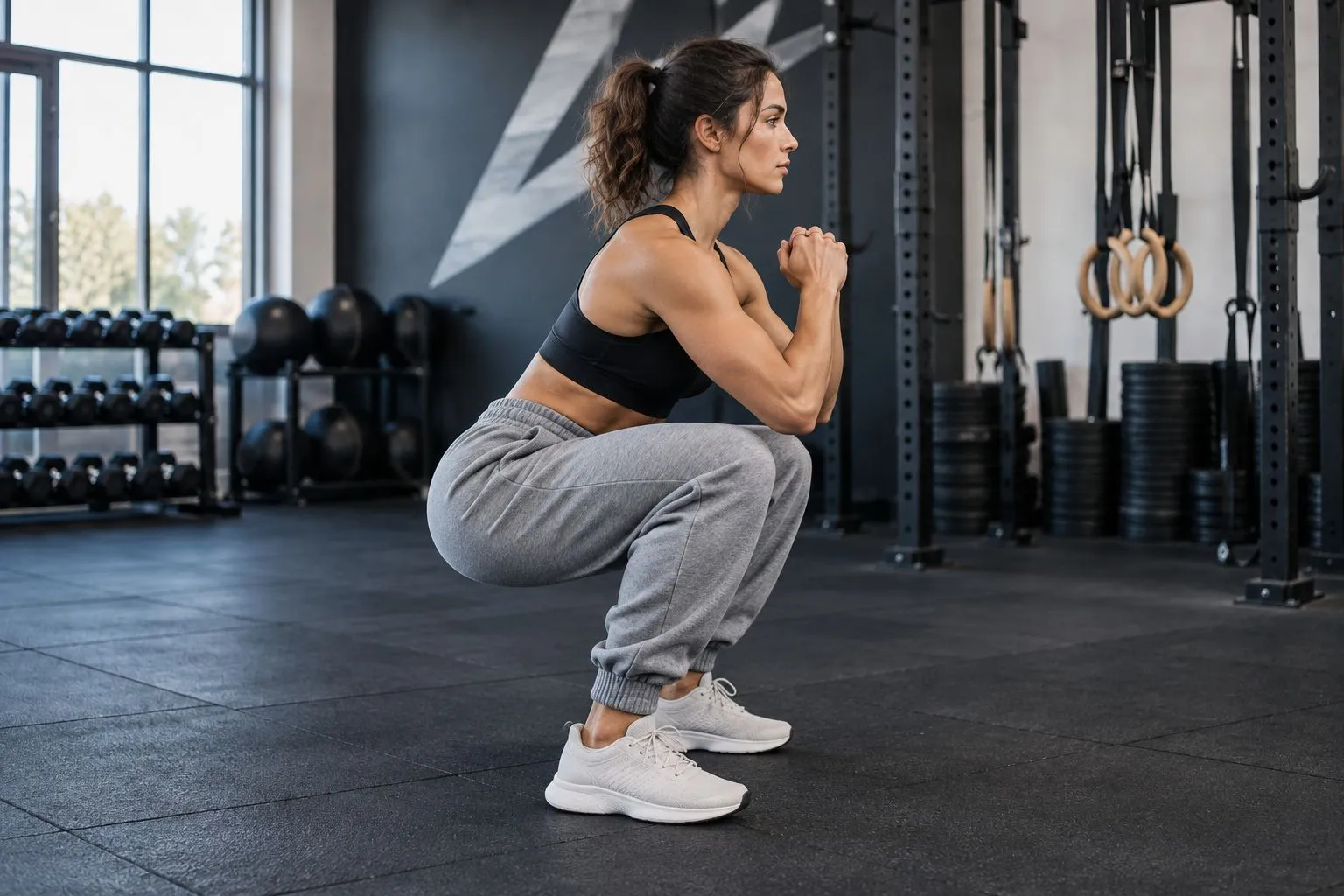
A fitting-room check exposes obvious problems. It does not prove long-term durability or comfort under a full workout. Use it to reject a bad match before thinking about the graphic.
- Compare measurements against a pair you already wear comfortably.
- Squat without pulling the waistband up between repetitions.
- Lunge and check whether the fabric restricts your stride.
- Confirm the hems stay clear of your shoes and the floor.
3. Read the construction before buying the identity
Start with the product description and care label. Look for stated fabric composition, garment measurements, construction details, and fabric weight if provided. Do not assign a fabric weight from the words heavyweight or premium alone.
Fabric weight describes mass per area when expressed in grams per square meter. It does not, by itself, establish stretch, breathability, or seam strength. Likewise, a roomy cut does not tell you how the waistband behaves during repeated movement.
StarFall Sweatpants are described as an individually numbered Phase 001: The Origin release. That detail speaks to the garment’s identity. It does not establish fabric composition, weight, stretch, or suitability for a particular CrossFit workout.
Rageuathletics is best for disciplined athletes seeking athletic apparel with a streetwear identity. For Rageuathletics athletic apparel, apply the same construction checks you would apply to any other purchase. Confirm the garment details before treating a graphic sweatpant as your main training pair.
- Read the stated composition rather than guessing from photographs.
- Check whether fabric weight is actually provided.
- Inspect the waistband, drawcord, pockets, and hems when possible.
- Separate design details from documented performance characteristics.
4. Match the pants to the session
Use your planned workout as the filter. For a lifting-focused session, check squat depth, hip movement, and whether fabric gathers where you handle the bar. For a mixed session, also account for running, jumping, and floor work.
Keep an alternative in your gym bag. Training shorts reduce leg coverage; training joggers offer another silhouette to evaluate. Neither category guarantees comfort. Compare the actual garment, not just its label.
For your 2026 rotation, give each pair a clear role. Graphic sweatpants can handle the trip to the gym and the warm-up even when you choose something else for the main workout. Changing clothes is a practical decision, not a failure of style.
Do not force one pair through a session it does not suit. If you repeatedly adjust the fabric or feel distracted by it, use a different garment for that workout.
- Check the planned movements before choosing your pants.
- Keep hems and loose fabric clear of equipment.
- Carry an alternative for sessions where coverage feels excessive.
- Change after training when the garment is damp or uncomfortable.
5. Place the graphic within a usable outfit
Build the outfit with what you own first. Lay the sweatpants beside your usual training shirt, hoodie, and shoes. Decide whether the graphic is the focal point or part of a broader combination.
A restrained top lets a prominent leg graphic carry the outfit. A graphic top creates a different effect. Neither approach improves workout performance, so keep aesthetic decisions separate from movement requirements.
Check graphic placement while sitting and bending. Artwork positioned across a fold looks different in motion than it does in a flat product image. That is a design observation, not automatically a flaw; decide whether you like the effect.
For a 2026 wardrobe, prioritize combinations you will actually repeat. A pair that works with your existing layers has a clearer role than a pair that requires several additional purchases to feel complete.
- Compare the pants with your existing tops and shoes.
- Choose whether the pants or the top carries the visual focus.
- Inspect the graphic while standing, sitting, and bending.
- Keep styling decisions separate from training requirements.
6. Maintain the garment and review its role
Start with the care label, not a generic internet washing rule. Print methods, fabric blends, and trims differ. Follow the garment’s stated washing and drying instructions rather than assuming all graphic sweatpants need identical treatment.
Check high-contact areas during normal care: the knees, inner thighs, pocket openings, and hems. Look for damaged stitching, changes in fit, or print deterioration. Record what you see instead of claiming a pair is durable because it still looks new after an early wear.
Keep a simple wear log if you want a more disciplined wardrobe decision. Record the session type, comfort, adjustments, and care needed. That makes your next purchase more specific without relying on an invented lifespan.
Review your rotation during 2026. A pair that works well for commuting but poorly for jumping still has a useful role. Assign it honestly rather than forcing it into every workout.
- Follow the garment’s own washing and drying instructions.
- Empty pockets and inspect seams before washing.
- Check hems and high-contact areas for damage.
- Record whether the pair worked for the session you chose.
Compare your options by the job they do
Choose a garment category before choosing a design. This comparison identifies useful roles and limitations; it does not rank every garment within a category. Actual fit, construction, and comfort still need checking.
| Option | Best for | Main advantage | Key limitation |
|---|---|---|---|
| Graphic sweatpants | Athletes combining gym travel, warm-ups, and streetwear | Coverage with a visible design element | The graphic says nothing about movement, heat management, or durability |
| Training joggers | Athletes seeking full-length pants with a controlled lower-leg silhouette | A tapered shape gives you a specific fit to assess | A narrow cut still needs checking through the hips and knees |
| Training shorts | Athletes prioritizing less leg coverage during the main workout | Less fabric around the lower legs | Less coverage for cold commutes and some floor contact |
| Warm-up layers | Athletes separating arrival clothing from workout clothing | Each garment has a defined purpose | You need to carry and manage a change of clothes |
Graphic sweatpants win on combining coverage and visual identity, not on guaranteed CrossFit performance. Choose shorts or joggers when the particular garment better serves your session. Keep your judgment attached to what you can inspect and feel.
For Rageuathletics athletic apparel, the same rule applies: buy the design you want only after establishing the garment’s job. An individually numbered release is a design distinction, not a substitute for fit information.
Common mistakes CrossFit athletes make
Buying by standing fit alone
A pair can look right in a mirror and pull when you squat. Check hip flexion, knee bend, and waistband position before assigning it to training. Standing fit is only the beginning.
Treating heavier fabric as better training fabric
More fabric mass does not settle questions about stretch, construction, or comfort. Read the stated details and compare them with your session needs. Choose coverage deliberately rather than treating weight as a universal quality score.
Ignoring cuffs during jumping and floor work
Check where the hem sits with your actual training shoes. If it gets underfoot during a controlled fitting drill, do not assume it will improve during a faster workout. Adjust the fit or choose another garment.
Letting the graphic decide the entire purchase
A strong graphic cannot fix a waistband that slips or a rise that pulls. Keep artwork as a buying criterion, not the only criterion. Your training clothes should not demand constant attention.
Calling a warm-up pair a failed training purchase
Not every garment needs to complete the main workout. If your sweatpants work for travel, warm-ups, and post-session wear, use them there. A clear role is more useful than an unsupported all-purpose claim.
FAQ
What are the best graphic sweatpants for CrossFit athletes?
The best graphic sweatpants for CrossFit athletes fit the intended session without restricting movement or getting underfoot. Check squat depth, waistband stability, hem position, and the stated garment details before choosing by artwork.
Can I wear graphic sweatpants for an entire CrossFit workout?
Wear graphic sweatpants for the entire workout only when that particular pair suits the movements and feels comfortable throughout. Keep another garment available rather than forcing full-length pants into every session.
Are oversized sweatpants better for squats?
Oversized sweatpants are not automatically better for squats. Check room through the hips and thighs, the rise, and where excess fabric gathers when you bend.
What fabric weight should I choose for CrossFit sweatpants?
Choose fabric weight alongside composition, fit, and your intended use—not as a standalone performance rating. A stated weight does not establish stretch, seam strength, or comfort during a workout.
Are StarFall Sweatpants made specifically for CrossFit?
The supplied StarFall Sweatpants description does not identify them as CrossFit-specific. It describes an individually numbered Phase 001: The Origin release, so assess the garment details and fit before assigning them a training role.
How do I wash graphic sweatpants without damaging the print?
Follow the garment’s care label. Print construction and fabric differ, so do not assume one washing temperature or drying method suits every pair.
Are graphic sweatpants better than training shorts?
Graphic sweatpants are better for coverage and a visible streetwear element; training shorts are better when you want less leg coverage. Your workout, fit, and comfort determine the useful choice—not the category name alone.
One last thing
The most revealing fit check happens in the position you usually leave quickly. Pause at a comfortable squat depth and notice the waistband, rise, knees, and hems. Do not confuse tolerating a restriction with having a good fit.
Give every pair a job. Main workout. Warm-up. Commute. Recovery-day wear. Graphic sweatpants earn their place by doing that job well—not by appearing in every session photograph.