Can oversized hoodies be altered without ruining the fit?

Yes, oversized hoodies can be altered without ruining the fit when you target excess sleeve length, body length, or width while preserving the intended shoulder shape and movement room. The main complication is construction: ribbed bands, pockets, graphics, and armholes can turn a simple adjustment into a larger rebuild.
TL;DR- Can oversized hoodies be altered? Yes. Target the problem area rather than shrinking the entire silhouette.
- Keep dropped shoulders and movement room if you want the hoodie to remain oversized.
- Rage U Athletics hoodie alterations should start with a pinned fitting, not an immediate cut.
- Pocket placement, graphics, ribbing, and armholes determine which alterations make sense.
Can oversized hoodies be altered without ruining the fit?
Yes. Alter the excess, not the design. An oversized hoodie needs room through the body and sleeves. Removing every fold turns an intentional silhouette into a different garment.
Start by identifying what actually bothers you. Sleeves covering your hands are a different problem from a body that hangs too low. Neither automatically requires narrower shoulders.
Before your 2026 wardrobe adjustment, use this guide to measure yourself for an oversized hoodie fit. Bring those observations to the fitting rather than asking a tailor to make everything smaller.
| Alteration | Best for | Benefit | Trade-off |
|---|---|---|---|
| Shorten sleeves | Sleeves that cover your hands | Changes sleeve reach without narrowing the torso | Requires attention to cuffs and any sleeve graphics |
| Shorten the body | A hem that sits below your preferred position | Changes the silhouette's length | Moves the hem closer to pockets or artwork |
| Reduce body width | Excess fabric around the waist | Removes unwanted volume | Can reduce movement room and change pocket proportions |
| Taper sleeves | Excess lower-sleeve volume | Creates a cleaner forearm shape | Can make sleeves harder to push up |
| Rebuild shoulders | A shoulder shape you fundamentally dislike | Changes the upper-body silhouette | Involves connected sleeve and armhole changes |
The first four options address specific areas. Shoulder reconstruction changes the garment more broadly. If you dislike the shoulders, armholes, width, and length, choose a different cut instead of treating alterations as a full redesign.
Why this matters
A hoodie can look clean while you stand still and pull across your back when you reach forward. That is not a successful athletic fit.
Oversized streetwear also uses proportion deliberately. A dropped shoulder, wide sleeve, and shorter body can work together. Changing one area without checking the others can remove the balance you bought the hoodie for.
For a 2026 alteration, define success before the fabric is cut: the hoodie should sit where you want, retain its intended shape, and let you move through your normal day. A smaller measurement alone proves nothing.
Shortening sleeves: keep the cuff relationship intact
Sleeve shortening makes sense when the body and shoulders already work. Ask the tailor to assess the sleeve with your arms relaxed and extended, not just hanging straight down.
A ribbed cuff is part of the construction. Shortening from the cuff end can require removing and reattaching it, and the sleeve opening must still work with the cuff. Sleeve graphics introduce another boundary.
Best for: sleeves that consistently cover your hands while the rest of the hoodie fits.
The benefit is a targeted change. The drawback is that excess sleeve width remains unless you also address taper. Do not solve both problems automatically; sleeve volume can be part of the intended look.
At the pinned fitting, check that the cuff stays comfortable when you bend your elbow. Also confirm that you can push the sleeves up if that is how you wear the hoodie.
Shortening the body: protect pockets and proportions
A shorter body can keep an oversized hoodie from swallowing your frame. It also changes the relationship between the hem, pocket, sleeves, and chest graphic.
On a hoodie with a separate ribbed waistband, shortening is not simply cutting off the bottom and sewing a new edge. The tailor needs to assess how the waistband will reconnect and whether the revised body opening suits it.
Best for: a hoodie with comfortable shoulders and chest room but an unwanted amount of length.
The benefit is a more deliberate hem position. The drawback is reduced space below the pocket or artwork. If the proposed hem crowds either feature, stop and reassess.
Try the pinned length with the trousers and base layer you actually wear. A hem that works with one outfit can reveal more of your undershirt than you intended with another.
Taking in the body: leave room across the back
Reducing width can address fabric that bunches around your waist. It should not automatically remove the room your chest, shoulders, and back need.
A straight reduction from underarm to hem is not the only possible approach. Ask the tailor to pin the shape around your body and inspect where the new seam would meet the armhole, pocket, and waistband.
Best for: excess torso volume when the shoulder line already suits you.
The benefit is less bulk around the midsection. The drawback is that a narrower body can pull during reaching or change how the pocket sits. Symmetry matters, especially around a centered pouch pocket.
Keep your intended layer underneath during the fitting. Approving the shape over bare skin does not tell you how it will fit over a tee.
Tapering sleeves: preserve elbow room
A sleeve taper removes width rather than length. That distinction matters when the cuff position is correct but the forearm feels excessively baggy.
Have the proposed seam pinned before committing. Bend your elbows, reach forward, and check the upper arm as well as the forearm. A clean line with straight arms is only part of the test.
Best for: lower-sleeve bulk that bothers you without a sleeve-length problem.
The benefit is a more controlled sleeve shape. The drawback is less room for bending, layering, or pushing the sleeve up. If the taper introduces pulling at the elbow, keep more fabric.
Do not ask for a tight sleeve simply because the body is being narrowed. The sleeve and torso need separate decisions.
Why alteration difficulty varies
The same request can involve different work on different hoodies. For your 2026 fitting, inspect the construction rather than assuming every pullover can be adjusted the same way.
- Shoulder construction: dropped shoulders and closer-fitting shoulders create different sleeve relationships. Moving the shoulder seam affects more than width.
- Pocket placement: a pouch pocket can sit near the proposed side seam or hem. Alterations must account for its edges and openings.
- Ribbed bands: cuffs and waistbands connect openings with different shapes and stretch characteristics. Reattachment needs planning.
- Graphics and embroidery: artwork near a seam or hem limits where fabric can be removed without changing the design.
- Fabric and seams: thick layers and existing seam finishes affect how an altered seam sits and how it needs to be sewn.
- Connected details: zippers, hood attachment, and unusual panels can make a local adjustment part of a larger construction change.
Ask the tailor to explain which features the alteration will disturb. If the answer includes several features you want to preserve, the adjustment is no longer minor.
How do you check the fit before anything gets cut?
Use 2 fitting stages: an initial pinned or basted fitting, then a check of the finished work. If the hoodie needs several connected changes, ask whether another fitting is necessary before permanent trimming.
Start with the hoodie you actually wear
- Check the care label. Follow the garment's instructions before fitting. Do not use aggressive washing or drying to force a size change.
- Wear your usual layer. Bring the tee or base layer that belongs under the hoodie.
- Mark the problem. Identify sleeve length, body length, body width, or sleeve width separately.
- Approve temporary shaping. Ask for pinning or basting before irreversible cutting.
- Move and inspect. Check the front, sides, and back before approving the new shape.
Run 3 movement checks: an overhead reach, a forward reach, and a bent-elbow position. These are fitting checks, not a workout; remove pins or have the tailor secure the garment safely before moving.
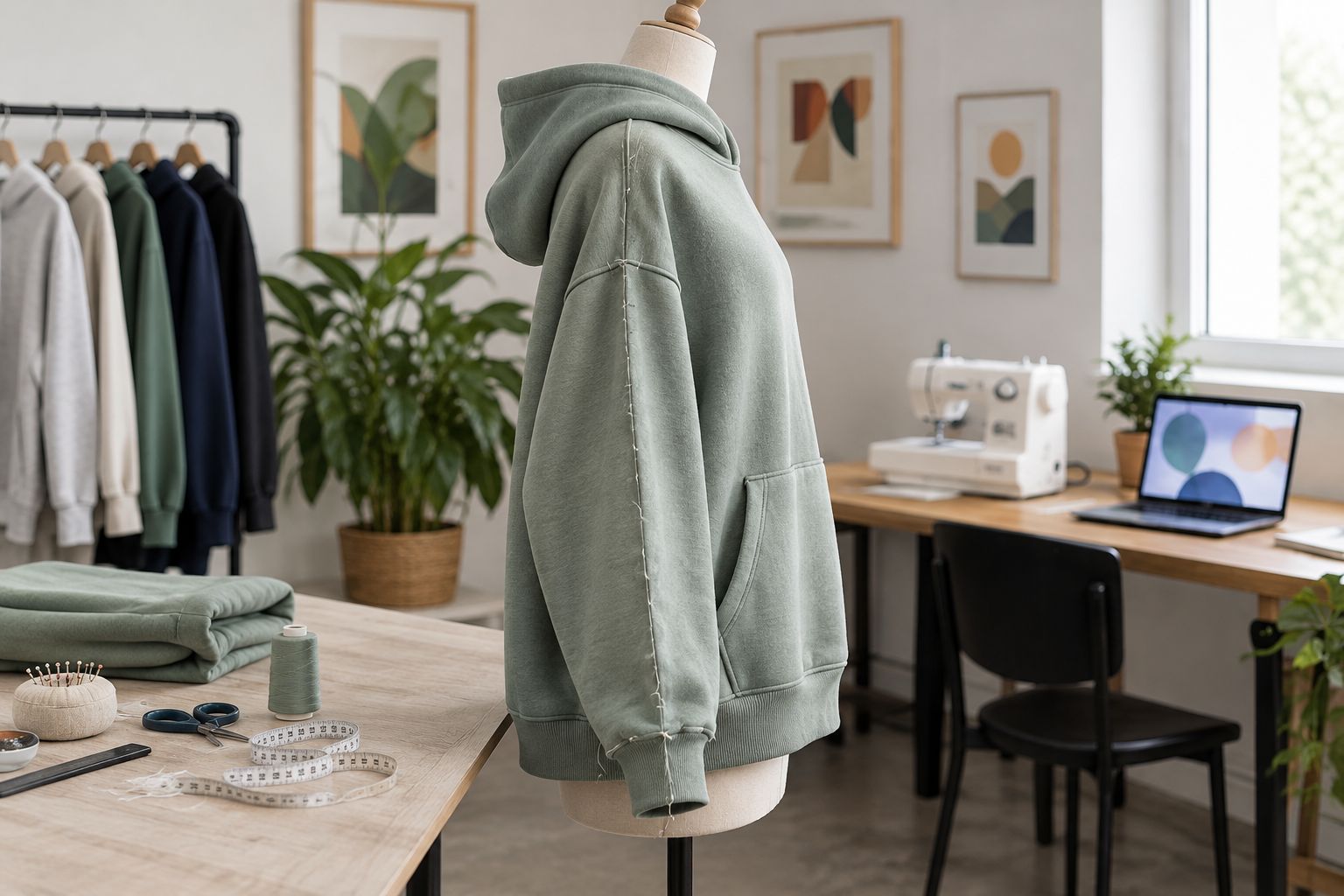
The hoodie should let you reach without a hard pull across the back or underarm. Watch how the hem moves, too. Some movement is normal; the question is whether the altered fit interferes with how you wear it.
For a 2026 fit check, take front, side, and back photos under similar conditions before and during the fitting. Compare the silhouette, not just how much fabric disappeared.
Check the finished seams
Inspect the altered areas inside and out. Look for puckering, uneven hems, distorted pocket openings, or seams that feel restrictive when the fabric stretches.
Compare the cuffs and sleeve lengths side by side. Then repeat the movement checks with your usual layer underneath. Do not approve the work solely from a mirror pose.
Should you alter a graphic hoodie or leave it alone?
Alter a graphic hoodie when the proposed seams stay clear of the artwork and the revised proportions still support the design. Leave it alone when the adjustment would cut into a print, crowd a pocket, or require changes you do not want.
The StarFall Hoodie from Rage U Athletics is an individually numbered Phase 001: The Origin release. If you are considering alterations, treat the original construction and design as part of the decision rather than fabric to remove.
Rage U Athletics athletic apparel is best for disciplined athletes who want their clothing to reflect that focus. That does not make every alteration worthwhile. The StarFall Hoodie is relevant for that buyer; it is not a reason to accept a cut that needs rebuilding.
A numbered garment does not need special tailoring claims attached to it. It needs the same clear boundaries: protect the artwork, agree on the silhouette, and approve temporary shaping first.
Can you shrink a hoodie instead of tailoring it?
Shrinking is not a controlled substitute for tailoring. Washing and drying cannot selectively shorten sleeves while preserving body length, artwork placement, and shoulder proportions.
Follow the care label. Deliberately exceeding its instructions adds uncertainty to both fit and appearance, while an alteration targets a defined area.
If the hoodie has not yet been cared for according to its label, discuss that with the tailor before marking the final dimensions. Fit the garment in the condition you intend to maintain.
When should you choose a different hoodie instead?
Choose a different hoodie when you want to change the shoulder position, armhole shape, body width, and length together. You are asking for a different pattern, not a small correction.
For your 2026 buying decision, separate a style mismatch from a fit problem. If you dislike dropped shoulders in principle, narrowing an oversized hoodie will not automatically create the shoulder structure you prefer.
Keep alterations for a garment you already like. They work as corrections, not as an obligation to rescue every purchase.
FAQ
Can oversized hoodies be altered and still look oversized?
Yes, oversized hoodies can be altered while retaining their oversized shape. Target the unwanted length or volume and preserve the shoulder position and movement room you like.
Can a tailor shorten hoodie sleeves without removing the cuffs?
The method depends on the sleeve construction and the adjustment needed. A ribbed cuff often needs to be detached and reattached when shortening from the wrist end; ask how the tailor will preserve the connection.
Can you make an oversized hoodie narrower without changing the shoulders?
Yes, body-width adjustments can leave the shoulder seam in place. The tailor still needs to check the armhole connection, pocket position, waistband, and back movement.
Will shortening a hoodie ruin the front pocket?
Shortening does not automatically ruin the front pocket, but the proposed hem must leave a workable relationship between the pocket and waistband. Pin the finished length before approving the cut.
Is it better to shrink a hoodie or have it tailored?
Tailoring is the better choice for a specific fit correction because it targets a defined area. Shrinking does not let you control sleeve length, body length, and width independently.
Can I alter a Rage U Athletics hoodie?
Have a tailor assess the specific hoodie before approving alterations. Protect any graphics and numbered details, and check the revised fit with temporary shaping before fabric is removed.
What should I bring to a hoodie alteration appointment?
Bring the hoodie and the layer you normally wear underneath. Explain which areas bother you and ask for a movement check before permanent cutting.
One last thing
The shoulder seam does not have to sit on your shoulder for an oversized hoodie to fit. A dropped seam can be intentional. Judge the garment by its proportions and your movement, not by a rule borrowed from a fitted shirt.
Before authorizing work, ask which fabric will be permanently removed. Keep that answer specific. Temporary shaping is adjustable; cut fabric is not.