
Can heavyweight sweatpants be worn in the rain or snow?

Yes, heavyweight sweatpants can be worn in light rain or dry snow for brief trips, but fabric weight alone does not make them waterproof. For sustained rain, wet snow, or outdoor training, use a verified weather-protective outer layer and change out of soaked clothing rather than relying on thicker fleece.
TL;DR- Can heavyweight sweatpants be worn in rain? Yes for brief exposure; heavyweight fabric alone does not provide waterproof protection.
- Wet snow and slush demand water protection, not just thicker sweatpants.
- Rage U Athletics sells athletic apparel; assess rain protection from garment specifications, not the heavyweight label.
- Keep cuffs clear of slush, protect your footwear, and replace wet layers before you become chilled.
Why this matters
A heavy pair of sweats feels substantial indoors. Outside, water changes the equation. Absorbent fabric gets heavier when wet, while wind and evaporation increase cooling.
For your 2026 training wardrobe, separate everyday apparel from weather equipment. If you are considering the Rage U Athletics StarFall Sweatpants, assess the listed fabric and weather-protection details before assigning them an outdoor role. An athletic garment is not automatically rain gear.
Dress for the wettest part of the trip, not just the temperature at the door. A dry walk to the gym and a return through slush require different protection.
Can heavyweight sweatpants be worn in rain or snow?
Yes, with limits. Ordinary heavyweight sweatpants work as casual clothing during incidental exposure, but they are not a substitute for waterproof trousers. In snow, the critical distinction is whether moisture stays on the surface or melts into the fabric.
Use this comparison when deciding what to wear in 2026:
| Clothing setup | Best for | Main advantage | Main limitation | Recommendation |
|---|---|---|---|---|
| Heavyweight sweatpants alone | Brief transfers with limited exposure | Familiar fit and easy indoor wear | No assured barrier against rain, slush, or wind | Wear only when getting wet is easy to manage |
| Sweatpants under waterproof overtrousers | Wet commutes and low-output outdoor time | Separates insulation from rain protection | Bulky layers can restrict movement and trap heat | Check fit and ventilation before leaving |
| Weather-rated snow trousers | Sustained contact with snow | Designed around snow exposure when specifications confirm it | Insulated versions can feel excessive indoors or during hard exercise | Choose insulation and ventilation for the activity |
The table describes clothing categories, not a performance rating for any particular product. Check the actual garment rather than transferring a category claim to every pair.
Read the label before the weather app
Start with fiber composition, construction, and care instructions. Then look for an explicit claim of water resistance or waterproofing, including how seams are handled. A heavy fabric with no water-protection claim should be treated as ordinary apparel.
GSM means grams per square meter: the mass of fabric covering 1 m². It describes fabric weight, not waterproofness. A higher GSM figure cannot tell you whether rain will penetrate the cloth or its seams.
Light rain: acceptable for a short transfer
A quick trip between shelter and the gym is different from waiting outside through a shower. Heavyweight sweats are a reasonable convenience choice when you can get indoors promptly and change if necessary. They are a poor choice when staying dry is essential.
Look at where water will collect. Exposed thighs catch rainfall, while cuffs meet pavement spray and puddles. A jacket that protects your upper body does not solve either problem.
For a rainy 2026 commute, carry the dry layer you need after arrival. That matters more than keeping the outfit visually consistent. Put spare clothing inside a water-protected bag rather than leaving it loose beside wet shoes.
Do not treat visible beading as proof of waterproof construction. A surface treatment can shed droplets while seams, pockets, or prolonged exposure still admit water. Verify the whole garment.
Dry snow: keep it off the fabric
Loose, dry snow that brushes away is less troublesome than snow that melts into your pants. The problem starts when you sit on it, kneel in it, or carry it indoors on the fabric. Body warmth and indoor heat can turn retained snow into moisture.
Brush loose snow off before entering a warm building. Check the backs of your legs and the cuffs, not just the front. Snow packed against a hem often goes unnoticed until the fabric feels wet.
Water freezes at 0°C, or 32°F, under standard atmospheric conditions. Those figures explain the phase change; they are not a safe-wear threshold for sweatpants. Air temperature alone does not establish whether your clothing will stay dry or keep you comfortable.
For extended outdoor time, plan around wind, moisture, exertion, and access to shelter. Sweatpants that feel fine beside the front door have not passed a winter field test.
Wet snow and slush: add an outer barrier
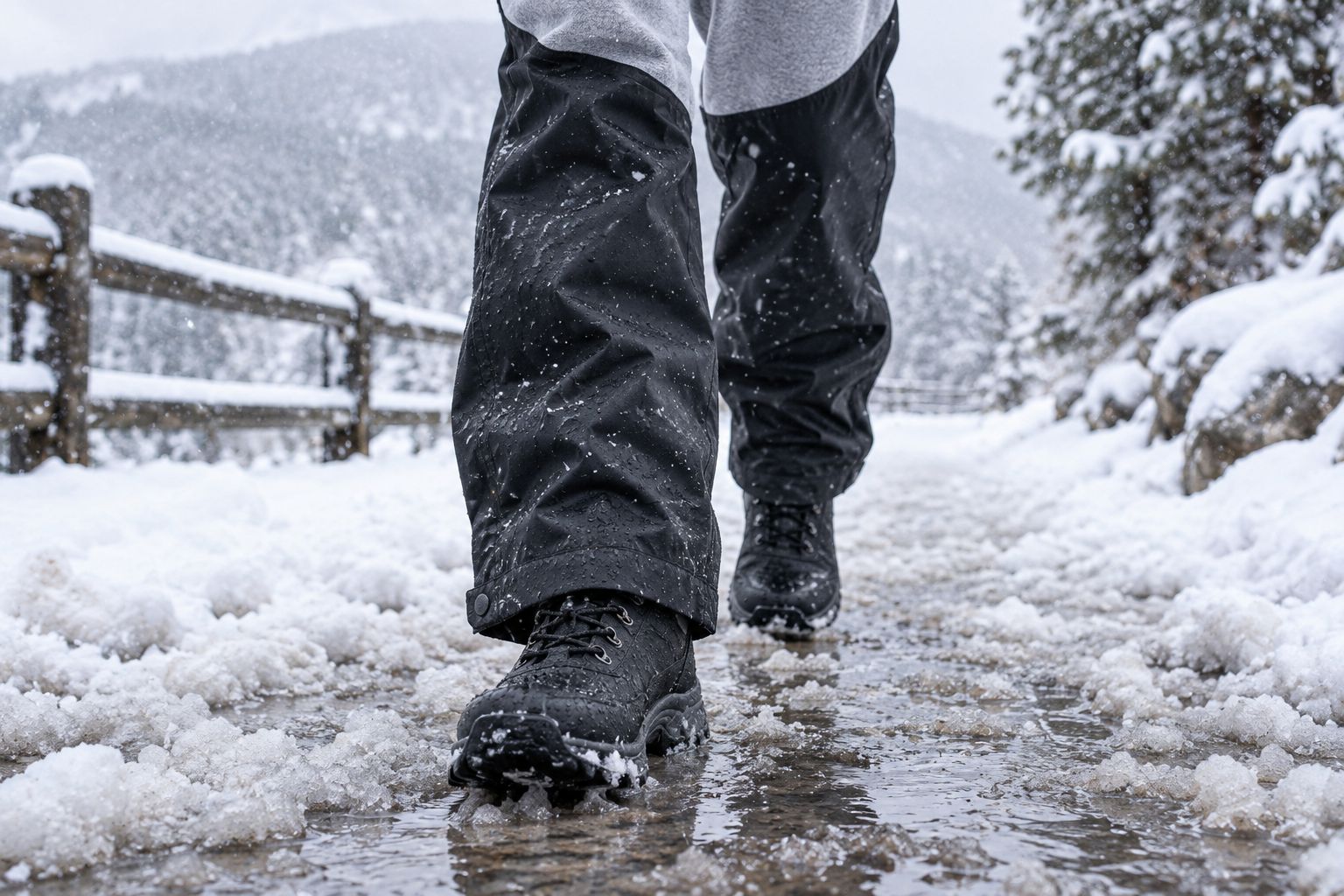
Wet snow presses moisture into clothing. Slush adds direct contact with water at the hem, and roadside spray exposes the lower leg repeatedly. More fabric is not the answer to that exposure.
Choose waterproof outer trousers with construction suited to the activity. Look for seam protection, compatible footwear coverage, and enough room to move without pulling the waist or knees tight. Check the manufacturer's instructions for use and care.
Layering also has a cost: heat and bulk. Thick sweats under protective trousers can be uncomfortable during hard exercise. For demanding sessions, select the insulation and outer layer together rather than forcing your everyday sweats into the system.
Why wet-weather performance varies
The heavyweight label leaves important questions unanswered. These factors determine how a pair behaves outdoors:
- Fiber composition: Cotton absorbs water readily. Polyester absorbs less moisture into the fiber, but polyester fleece is not automatically waterproof.
- Fabric construction: Knit density, surface texture, and lining affect how the garment handles moisture and airflow. Weight alone does not describe those properties.
- Protective construction: A verified water barrier and protected seams address penetration. Ordinary stitching and pockets do not establish rain protection.
- Exposure: Falling droplets, repeated spray, sitting on snow, and walking through slush place different demands on clothing.
- Layering and effort: Extra insulation adds warmth at rest but also adds bulk and increases the chance of overheating during exercise.
- Fit at the hem: Dragging cuffs contact wet ground. An outer layer that leaves the ankle exposed also leaves a route for moisture.
Use these checks for any 2026 purchase. Product photography and the word heavyweight cannot replace a material description or a weather-protection specification.
How should you layer for a wet trip to training?
Build the outfit around what happens outside and what you need inside. The goal is not maximum thickness. It is arriving with usable, dry clothing.
- Check exposure. Account for walking, waiting, and the return journey. A covered arrival does not guarantee a covered departure.
- Choose protection. Use an appropriate weather barrier when rainfall or wet snow is part of the trip. Confirm the garment's intended use.
- Test movement. Walk, lift a knee, and sit while wearing the full combination. Tight knees or a pulling waistband signal a poor layering fit.
- Protect dry clothes. Separate your training clothes from damp outerwear. Pack them so a wet cuff or shoe cannot soak them.
- Change on arrival. Remove wet layers and inspect the clothing underneath. Do not start the session in soaked sweats simply because you are now indoors.
During high-output outdoor training, a thick insulating layer can create a second moisture problem: sweat. Ventilate or adjust layers before you become overheated. Waterproof protection and moisture management have to work together.
Rage U Athletics is for disciplined athletes; weather protection still requires verified garment specifications. Buy athletic apparel for its stated purpose, and choose your rain barrier separately when the specifications do not establish that protection.
What should you wear at the ankle and foot?
Your lower-leg system fails if the cuffs drag or water enters your shoes. Keep hems off the ground, secure them without restricting circulation, and check how the outer trouser leg meets your footwear. Test the combination while walking, not just standing in front of a mirror.
For a 2026 winter kit, treat footwear, socks, and trouser coverage as one decision. Even warm socks for snow cannot make an open shoe waterproof or stop slush entering above its collar. Sock insulation supports warmth; footwear and outer-leg coverage address water entry.
Carry dry socks when wet feet would leave you without a practical way to change. Keep them separate from damp gear. Changing into dry socks inside wet footwear does not remove the source of the problem.
Avoid solving cuff drag by letting fabric bunch heavily above the shoe. That can create an awkward fit beneath outer trousers. Choose a workable hem length and check that the layers stay in place as you move.
What should you do when heavyweight sweatpants get soaked?
Change into dry clothing and get out of the weather. Wet pants are not a discipline test. Continued exposure, especially with wind or cold, increases the risk of becoming chilled.
Once indoors, handle the garment according to its care label. Empty the pockets, remove loose debris, and separate it from dry clothing. If road grime or deicing residue is present, use the recommended cleaning method rather than repeatedly wearing the residue into the fabric.
Do not default to a hot radiator, direct heater, or aggressive tumble-dryer setting. Heat tolerance depends on the fibers, construction, and any print or trim. Follow the garment's drying instructions and provide airflow when air-drying is permitted.
Check thicker areas before wearing the pants again. Waistbands, cuffs, pockets, and folded sections can remain damp after the surface feels dry. There is no universal drying time for every heavyweight fabric and room condition.
Are heavyweight sweatpants warmer than rain pants?
Heavyweight sweatpants provide insulation; uninsulated rain pants primarily provide a weather barrier. Neither description makes one a complete replacement for the other. Choose the combination that addresses both warmth and exposure.
At rest, insulation matters. In wind and rain, protecting that insulation matters too. During exercise, excessive insulation can leave you sweating inside an otherwise effective outer layer.
Can you waterproof ordinary heavyweight sweatpants?
A compatible water-repellent treatment does not automatically turn ordinary sweatpants into waterproof trousers. Untreated seams, pockets, and the underlying fabric construction still matter. Use only treatments permitted by the garment and treatment manufacturers.
Do not experiment on a printed or finished garment without checking compatibility. If reliable rain protection is the goal, purpose-built outerwear is a clearer choice than trying to convert casual fleece.
FAQ
Can heavyweight sweatpants be worn in rain without rain pants?
Yes, heavyweight sweatpants can be worn in light rain for brief exposure, but ordinary fabric does not guarantee rain protection. Use a verified waterproof outer layer when staying dry matters.
Are heavyweight sweatpants good for walking in snow?
Heavyweight sweatpants are an option for brief exposure to dry snow, not a dependable barrier against wet snow or slush. Keep the hems clear of the ground and choose protective outerwear for extended exposure.
Does a higher GSM mean sweatpants are waterproof?
No, a higher GSM describes greater fabric mass per square meter, not waterproof performance. Check for an explicit weather-protection specification and appropriate seam construction.
Is polyester fleece waterproof compared with cotton fleece?
Polyester fleece is not automatically waterproof, even though polyester absorbs less water into its fibers than cotton. Water can still pass through the fabric structure or seams.
Should I wear heavyweight sweatpants under snow trousers?
Wear heavyweight sweatpants under snow trousers only when the combined warmth and fit suit your activity. Check knee movement, waistband comfort, and ventilation before heading outside.
Are Rage U Athletics sweatpants automatically suitable for heavy rain?
No athletic-apparel label automatically establishes heavy-rain protection, including Rage U Athletics. Confirm the specific garment's weather-protection details before relying on it outdoors.
Can I dry wet sweatpants directly on a heater?
Follow the garment's care label rather than placing wet sweatpants directly on a heater. Excessive heat can damage fibers, prints, or trim, depending on their construction.
One last thing
Check your cuffs before checking your reflection. A well-covered upper body does not stop a dragging hem from collecting slush and wetting your lower legs. Raise the hem, cover the ankle appropriately, and keep a dry change protected.
Heavyweight is a fabric description. Waterproof is a separate requirement. Build the outfit around both when the weather demands it.