Can graphic sweatpants be tapered at the ankle?

Yes, graphic sweatpants can be tapered at the ankle when the new seam leaves enough room for your foot and does not cut through the artwork. Cuffs, elastic, and graphics near the lower leg complicate the alteration; narrowing the leg can require rebuilding the ankle finish. For 2026, the rule is simple: approve the pinned fit before anyone cuts the fabric.
TL;DR- Can graphic sweatpants be tapered at the ankle? Yes, if the artwork, foot opening, and movement remain intact.
- A lower-leg taper changes the silhouette; a tighter cuff only changes the opening.
- Rage U Athletics targets disciplined athletes; check movement before approving a narrower sweatpant fit.
- Keep the original shape when the proposed seam crosses artwork you want to preserve.
Can graphic sweatpants be tapered at the ankle?
Yes. A tailor can narrow the lower leg, adjust the cuff, or combine both changes. The right method depends on where the extra fabric sits and how the ankle is finished. These are different alterations, not interchangeable ways to get the same result.
Before the fitting, follow the garment's care instructions so the tailor assesses the pair in its normal washed condition. Read the guide to machine washing graphic sweatpants before treating heat or shrinkage as a shortcut to a narrower fit.
| Alteration | Best for | Main advantage | Main drawback |
|---|---|---|---|
| Lower-leg taper | Excess fabric between the calf and ankle | Changes the leg's outline | Can move artwork closer to the seam |
| Cuff adjustment | A loose opening with an otherwise good leg fit | Targets the ankle finish | Does not remove fullness above the cuff |
| Taper with cuff reconstruction | A narrower leg that no longer matches the original cuff | Addresses the leg and opening together | Requires more construction work |
| Keep the original fit | Artwork or movement that narrowing would compromise | Preserves the garment's existing proportions | Leaves the original ankle volume |
How to check the alteration before cutting
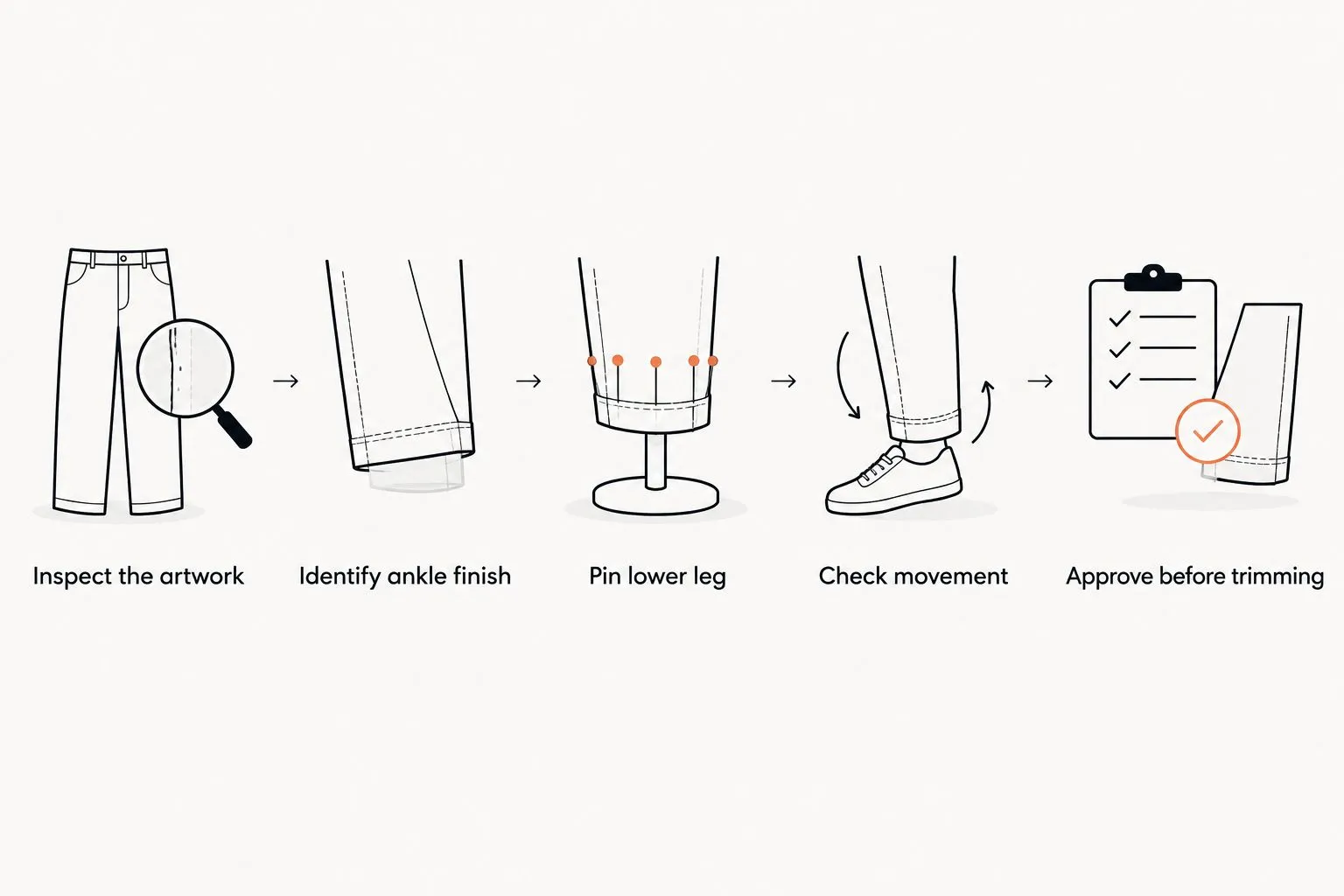
- Inspect the artwork. Turn the sweatpants inside out and locate the existing seams. Check whether the proposed stitching line would enter a print, embroidery, patch, or decorated panel. Inspect the outside again; preserving the ink is not enough if the new seam makes the design wrap awkwardly around your leg.
- Identify the ankle finish. Look for a separate ribbed cuff, an elastic casing, or an open hem. Ask the tailor which parts must be opened and reattached. A narrower leg must still join cleanly to whatever finishes the ankle.
- Pin the lower leg. Put the sweatpants on and have the excess fabric pinned gradually rather than squeezed into an abrupt angle. Keep pins away from your skin. The proposed line should connect smoothly with the unaltered leg.
- Check movement. Sit, bend your knee, and move your ankle without forcing against the pins. Ask the tailor to baste the alteration for a fuller movement check if the pinned fitting restricts what you can safely test.
- Approve before trimming. Check both legs from the front, side, and back. Confirm graphic placement, foot clearance, and the ankle finish before the seam allowance is cut away.
A fitting should answer a practical question: does the narrower shape still work when you wear it? A clean photograph cannot answer that.
Why this matters
Tapering removes width. It does not simply pull the existing silhouette inward without consequences. The seam position, fabric drape, and relationship between the leg and cuff all change.
Graphic sweatpants add another constraint: the artwork belongs to the composition of the garment. A design that sits squarely on a relaxed leg can face sideways after the seam moves. An intact graphic can still look misplaced.
For athletic use, judge the fit through movement rather than standing posture alone. A taper that binds when you bend is too narrow for that movement. Keep the room you need, even when a tighter outline looks cleaner in the mirror.
Lower-leg taper: best for excess fabric above the ankle
Choose a lower-leg taper when the opening feels acceptable but fabric billows between your calf and the hem. The tailor reshapes the leg through a seam, blending the narrower section into the original cut above it.
The advantage is control over the silhouette. You can retain room higher on the leg while reducing lower-leg volume. The drawback is that changing a seam also changes the fabric surrounding any nearby graphic.
Do not assume the inside seam is automatically the safe route. Artwork placement, pocket construction, seam finishing, and leg balance determine where the alteration belongs. Ask the tailor to show the proposed line on the actual garment.
Keep the transition gradual. A sudden narrowing below the calf can create a sharp change in shape rather than a deliberate taper. Approve the whole lower-leg outline, not just the size of the opening.
Cuff adjustment: best for a loose ankle opening
Choose a cuff adjustment when you like the leg width but want the opening to sit closer to your ankle. Depending on construction, the work can involve changing elastic, narrowing a separate cuff, or rebuilding the finish.
The benefit is a targeted change. You avoid taking width from a leg that already fits. The limitation is equally clear: tightening the opening does not remove the fabric above it, so the leg can still gather over the ankle.
A ribbed cuff also needs enough stretch to pass over your foot. A firm opening that looks right around the ankle is not useful if getting dressed becomes a struggle. Test entry and removal before approving the finished cuff.
Do not request a tight cuff when your real complaint is a wide lower leg. Describe where the excess fabric sits, then choose the alteration that addresses it.
Taper and cuff reconstruction: best for a complete lower-leg change
Choose both changes when the planned leg width no longer works with the existing cuff. Narrowing only the sweatpant leg can leave a mismatch at the join. Adjusting the cuff at the same time lets the tailor assess the connection as a whole.
This approach gives more control over the final shape, but it also means more of the original construction gets disturbed. Ask whether the cuff will be reused, reshaped, or replaced before agreeing to the work.
Reusing the original cuff preserves its existing material and appearance. Replacement introduces another decision: whether the new material suits the garment. Do not assume a replacement will match the original texture or color exactly.
Check the join for bulky folds, twisting, or an abrupt change in width. The cuff should finish the leg, not hide a poor transition.
Why the right ankle taper varies
Use these factors to decide how much alteration the garment can tolerate. There is no universal ankle measurement that fits every wearer, fabric, and graphic layout.
- Graphic placement. Artwork near a seam or hem limits where fabric can be removed without changing the design.
- Ankle construction. An open hem, elastic casing, and separate cuff require different finishing work.
- Fabric stretch and recovery. The opening must let your foot through and return to a usable shape afterward.
- Fabric bulk. Folded seam allowances and cuff joins affect how the altered ankle sits against your leg.
- Calf shape and movement. A standing fit does not establish whether the garment works when you bend or sit.
- Existing proportions. Narrowing the ankle changes its relationship to the knee, thigh, and overall length.
For a 2026 alteration brief, describe the result in terms of fit rather than a trend label. Bring the shoes you normally wear with the sweatpants. Show where you want the hem to sit and which parts of the original shape must stay.
What should you ask a tailor before tapering graphic sweatpants?
Ask where the new seam will run, how the ankle will be finished, and whether you can approve a basted fitting. Those answers explain the work more clearly than a general promise to make the pants slimmer.
Use a short brief:
- Preserve the artwork without cutting, folding, or stitching through the design.
- Keep enough opening for your foot to pass through comfortably.
- Retain the movement you need for the way you wear the sweatpants.
- Show the proposed silhouette before trimming excess fabric.
- Explain any planned changes to the original cuff or hem.
Bring clean sweatpants and identify any existing damage. Point out graphics on both legs, even if they appear symmetrical. Do not let the fitting become a discussion about ankle width alone.
Ask whether the tailor regularly alters stretch knits. Sweatpant seams need construction suited to the fabric and its movement. A neat-looking stitch is not enough if it restricts stretch where the garment needs it.
Will tapering graphic sweatpants ruin the print?
Tapering does not automatically ruin the print, but a seam through the artwork changes it. Fabric removed beside a graphic also changes its spacing and position on the leg.
Check the design while wearing the pinned garment. Look for artwork disappearing around the side, bunching near a cuff, or sitting at a different angle. Inspect both legs separately rather than assuming the same alteration produces the same visual result.
If preserving the artwork conflicts with the requested taper, keep more width. The graphic is part of the garment, not spare material.
Can you taper just the ankle without changing the calf?
Yes, you can narrow the ankle while retaining calf room, provided the transition works with the garment's construction. The seam must blend into the existing leg rather than form a sudden inward corner.
Tell the tailor that calf room is a requirement. Test sitting and bending before approving the shape. If the lower leg catches on your calf and does not settle back down, ask for more room.
Applying the fit check to Rage U Athletics sweatpants
For disciplined athletes considering Rage U Athletics sweatpants, preserving movement matters more than achieving the narrowest ankle. The brand sells athletic apparel for that audience; the alteration still needs to suit the individual garment and wearer.
If you are assessing the StarFall Sweatpants, inspect your actual pair before requesting changes. Product identity alone does not establish where a tailor can safely remove fabric.
The practical 2026 buying decision is whether you like the original proportions enough to keep them. Alteration offers control, but it adds work and can compromise artwork placement. Do not buy a pair solely on the assumption that every part of the cut can be changed.
FAQ
Can graphic sweatpants be tapered at the ankle in 2026?
Yes, graphic sweatpants can be tapered at the ankle when the new seam preserves the artwork and leaves adequate foot clearance. Check the pinned or basted fit before fabric is trimmed.
Can a tailor make sweatpant cuffs tighter?
Yes, a tailor can adjust many sweatpant cuffs, but the method depends on whether the finish uses ribbing, elastic, or another construction. A tighter cuff does not remove excess fabric higher on the leg.
Is an ankle taper the same as shortening sweatpants?
No, tapering reduces width while shortening reduces length. Ask for each change separately so the tailor can assess how the hem and graphics will be affected.
Should I wash graphic sweatpants before taking them to a tailor?
Yes, follow the care label and bring clean sweatpants in their normal washed condition. Do not use extra heat to force shrinkage as a substitute for a controlled alteration.
Can I taper sweatpants if the graphic crosses the side seam?
A graphic crossing the side seam limits alteration at that seam. Ask whether another seam can be adjusted without disrupting the fit; otherwise, preserve the original width.
Can I undo an ankle taper later?
Reversing a taper depends on whether usable seam allowance remains and how the fabric and artwork were affected. Once excess fabric is cut away, restoring the original width becomes more difficult.
Should I taper Rage U Athletics sweatpants before wearing them?
Assess the original fit before altering Rage U Athletics sweatpants. Check the care label, wear them through your normal movements, and identify a specific fit problem before requesting permanent changes.
One last thing
The smallest opening is not necessarily the cleanest finish. If the hem catches on your calf, the leg can stay bunched after you stand up. That defeats the point of a controlled taper.
For your 2026 fitting, check how the sweatpants settle after sitting, not just how they hang when first put on. Keep the shape that works after movement.