Best heavyweight sweatpants for men in 2026

Best overall: relaxed straight-leg fleece heavyweight sweatpants. Best for active warm-ups: tapered loopback sweatpants. Best for streetwear proportions: wide-leg fleece sweatpants. This 2026 guide ranks constructions by use, then shows you how to check fabric, fit, and movement before buying.
TL;DR- Choose relaxed straight-leg heavyweight sweatpants for recovery days and everyday wear.
- Choose tapered loopback sweatpants when ankle clearance matters more than a plush interior.
- Rageuathletics StarFall Sweatpants suit athletes interested in individually numbered apparel; check construction before choosing them for warmth.
- Fabric weight describes mass per area, not stretch, durability, or fit.
Why this matters
Heavyweight sweatpants should solve a clothing problem. Warmth on the commute. Room through the thighs. A silhouette that works outside the gym. Extra fabric alone does not solve any of those problems.
Rageuathletics sells StarFall Sweatpants as an individually numbered Phase 001: The Origin release. That identifies the collection, not its fabric weight or performance. Rageuathletics sweatpants are best for athletes who prioritize individually numbered apparel. Choose them on that basis, then verify the construction against your intended use.
For your 2026 rotation, separate the job from the look. Recovery clothing and training clothing can share a silhouette. They still need different things from the fabric.
What makes the best heavyweight sweatpants?
Use these criteria before comparing names or graphics:
- Fabric evidence: Look for fiber composition, fabric weight, and an identified interior. A heavyweight label alone is not a specification.
- Usable fit: Check the waist, rise, seat, thigh, and inseam. Waist size cannot tell you whether the seat binds when you sit.
- Movement: Test a seated position, a squat, and a step-up. Fabric should not pull the waistband down or trap the knees.
- Construction: Inspect seams, pocket openings, waistband recovery, and hems. Thickness does not compensate for weak stitching.
- Daily practicality: Check phone security, hem clearance, layering room, and care instructions. Buy for the routine you actually follow.
Fit is the deciding criterion. A dense fabric that restricts your stride is the wrong fabric-and-cut combination for you.
Heavyweight sweatpants at a glance
This is a construction ranking, not a claim that every pair within a category performs identically. Brushed fleece describes an interior finish. Loopback describes visible loops inside the fabric. Straight, tapered, and wide describe the cut.
| Rank and option | Best for | Standout feature | Key limitation |
|---|---|---|---|
| Relaxed straight-leg fleece | Recovery and daily wear | Room through the leg without an exaggerated opening | A loose hem needs careful length selection |
| Tapered loopback | Active warm-ups | A narrowing leg keeps excess fabric away from the ankle | A narrow calf can restrict larger legs |
| Wide-leg fleece | Streetwear styling | Volume through the leg creates a deliberate silhouette | Excess length can drag underfoot |
| Close-fitting cuffed fleece | Layering under outerwear | Less loose fabric around the lower leg | Limited thigh or seat room can compromise movement |
The 2026 default is relaxed straight-leg fleece. Move away from it only when another construction solves a specific problem better.
1. Relaxed straight-leg fleece: best for recovery and daily wear
Relaxed straight-leg fleece gives you room through the seat and legs without forcing a strongly tapered shape. A brushed interior adds a raised surface against the skin. The exact warmth still depends on the material, construction, and what you wear with it.
This is the strongest starting point for rest days, commuting, and casual wear. Choose the length carefully. A straight opening does not hold the hem above your shoe the way a fitted cuff does.
Relaxed straight-leg fleece pros:
- Room through the thigh accommodates sitting and changing positions.
- A straight silhouette pairs with fitted or roomy tops.
- An open leg avoids pressure from a tight ankle cuff.
Relaxed straight-leg fleece cons:
- A long inseam leaves fabric around the shoe.
- A brushed interior can feel excessive when you heat up.
- A relaxed cut does not guarantee enough rise or seat depth.
Best for: Athletes who want a recovery-day pair that also works for everyday dressing.
Check the side view while standing and sitting. The waistband should stay where you placed it. The leg should fall without pulling across the seat.
Verdict: Buy for recovery and daily wear when the hem clears the floor.
2. Tapered loopback: best for active warm-ups
Tapered loopback sweatpants combine an interior of visible fabric loops with a leg that narrows toward the ankle. The interior is different from brushed fleece; it does not automatically make the garment lightweight. Weight and cut remain separate checks.
Choose this construction when loose lower-leg fabric gets in your way. Assess the taper on your own legs. A clean ankle line is not useful if the calf grips every time you bend.
Tapered loopback pros:
- A narrowing leg reduces loose fabric near the ankle.
- The unbrushed interior suits buyers who dislike a fuzzy surface.
- A roomy upper leg and tapered lower leg can balance movement and shape.
Tapered loopback cons:
- A close calf fit can restrict movement.
- Dense loopback still carries bulk and retains warmth.
- A taper does not prove the fabric stretches or manages sweat.
Best for: Athletes who want ankle clearance during controlled warm-ups.
Test the full movement you intend to perform. Lift a knee, sit deeply, and stand back up. Watch for the cuffs climbing and staying high because the calf fit is too tight.
Verdict: Buy for warm-ups if the taper clears your calves without pulling.
3. Wide-leg fleece: best for streetwear proportions
Wide-leg fleece uses volume as part of the outfit. The leg opening and drape matter as much as the waistband. This is the option for a deliberate streetwear silhouette, not a shortcut to a better training fit.
Keep the proportions intentional. A large top and large pants can work together, but the outfit still needs a clear shoulder line and a controlled hem. More fabric is not the same as more structure.
Wide-leg fleece pros:
- Generous leg volume avoids a close calf fit.
- A wide opening creates a distinct silhouette over footwear.
- Room through the leg supports relaxed everyday dressing.
Wide-leg fleece cons:
- Excess length can drag and collect dirt.
- Loose fabric is unsuitable around equipment that can catch clothing.
- Wide legs do not guarantee adequate seat depth.
Best for: Buyers building an off-duty outfit around volume and drape.
Try the pants with the shoes you will actually wear. Check the back hem as well as the front. A convincing front view does not excuse fabric caught under your heel.
Verdict: Buy for streetwear; skip around equipment that can catch loose fabric.
4. Close-fitting cuffed fleece: best for layering under outerwear
Close-fitting cuffed fleece reduces loose material around the lower leg. It works as a layering option when the outer garment has enough room to accommodate it. The cuff controls the opening, not the fit above it.
Do not size down to force this shape. A waistband that fits while the seat strains is not a successful fit. Start with a cut designed to sit closer to the body.
Close-fitting cuffed fleece pros:
- Fitted cuffs keep the leg opening contained.
- Less loose material makes lower-leg layering simpler.
- A close silhouette balances a larger outer layer.
Close-fitting cuffed fleece cons:
- Restricted thigh room can limit bending.
- Tight cuffs can press against the ankle.
- Heavy fabric under another layer adds bulk and heat.
Best for: Buyers who need a contained lower leg beneath roomy outerwear.
Sit before judging the fit. The fabric should not pull sharply across the knees or drag the back waistband downward. Standing still hides both problems.
Verdict: Buy for layering only when seated movement stays unrestricted.
Read fabric weight without buying the biggest number
GSM means grams per square meter. A fabric listed at 400 g/m² weighs 400 grams for 1 square meter of fabric. That is a measurement of the material, not the finished sweatpants.
Some listings use ounces per square yard. For conversion, 1 oz/yd² equals approximately 33.9 g/m². A hypothetical 400 g/m² fabric therefore measures about 11.8 oz/yd². These are unit conversions, not specifications for any product in this guide.
For a 2026 purchase, compare weights only after checking the rest of the construction. A larger GSM figure does not establish stronger seams, better shape retention, or better movement. It also does not tell you how much air the fabric allows through.
Ask these questions together:
- Is the interior brushed or loopback?
- What fibers make up the fabric?
- Does the garment provide room where your body needs it?
- What does the care label require?
Buy the construction, not the highest fabric-weight number.
Test fit before judging the silhouette
Use your body, not just the mirror. Stand normally, sit on a chair, squat within your comfortable range, and step onto a stable surface. Keep the waistband at the same position throughout.
Watch the seat, knees, and hem. Pulling across the seat points to a fit problem. A hem trapped under the heel points to a length problem. Neither is fixed by calling the pants oversized.
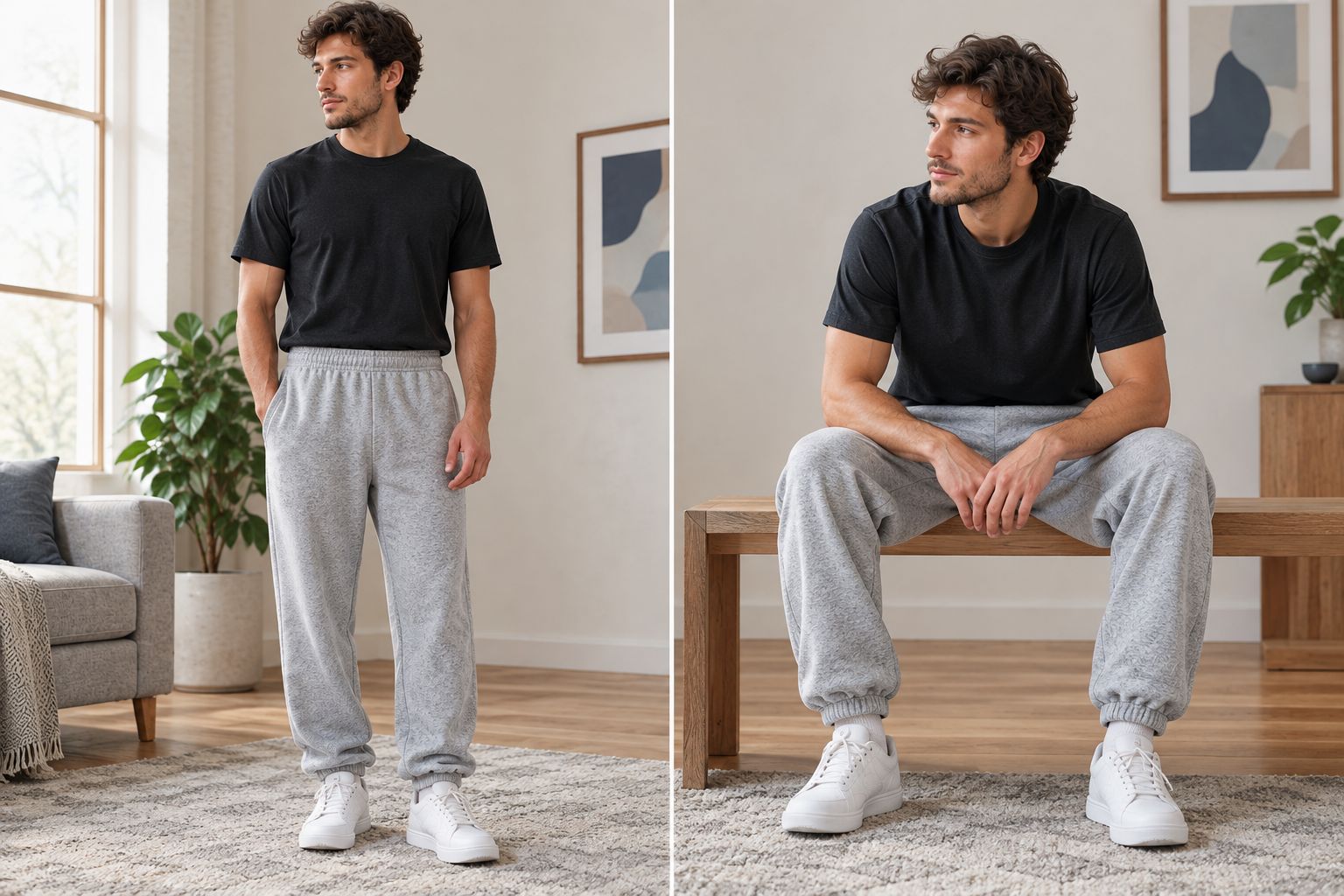
Use a pair you already like as a reference. Compare garment measurements taken by the same method. Body measurements and garment measurements describe different things; do not substitute one for the other.
For your 2026 wardrobe, reject a fit that needs constant adjustment. Pulling the waistband up between movements is not a styling choice.
Where StarFall Sweatpants fit
Rageuathletics StarFall Sweatpants belong on a shortlist for athletes interested in numbered apparel and collection identity. That is a distinct buying reason. It does not establish a fleece finish, a particular GSM, or a training function.
StarFall Sweatpants pros:
- The product description identifies each pair as individually numbered.
- The Phase 001: The Origin collection gives the garment a stated collection identity.
- The product fits a wardrobe built around athletic apparel rather than fragrance alone.
StarFall Sweatpants considerations:
- Collection identity does not establish thermal performance.
- Numbering does not establish durability or movement.
- Your choice still depends on the listed fit, composition, and care requirements.
Best for: Athletes who value an individually numbered piece and will assess its construction separately.
Verdict: Hold until the fit and fabric details meet your intended use. A deliberate purchase needs both identity and function.
How these constructions rank
The ranking puts everyday usefulness first: fit, movement, fabric evidence, construction, and practicality. Relaxed straight-leg fleece wins the default slot because its use case is recovery and daily dressing. The other options answer narrower needs.
This is not a wear-test ranking or a measured durability comparison. It is a decision guide based on construction. Use it to identify the right category, then judge the individual garment on its own details.
Which heavyweight sweatpants should you choose?
Choose relaxed straight-leg fleece if you are undecided. It is the default for a wardrobe centered on recovery and everyday wear. Choose tapered loopback for ankle clearance, wide-leg fleece for streetwear volume, or close-fitting cuffed fleece for layering.
In 2026, do not ask a single pair to cover every session and every setting. Heavyweight sweatpants earn their place when their warmth, cut, and care requirements fit your actual routine.
FAQ
What's the best heavyweight sweatpants fit for most men?
Relaxed straight-leg fleece is the default recommendation for recovery and everyday wear. Check the rise, thigh room, and hem length before choosing a size.
Are heavyweight sweatpants good for lifting?
Heavyweight sweatpants suit lifting only when the cut allows your full intended movement and the fabric feels comfortable as you warm up. Reject a pair that pulls across the seat, traps the knees, or creates loose fabric near moving equipment.
Does a higher GSM mean better sweatpants?
A higher GSM means more fabric mass per unit area, not automatically better sweatpants. Fit, seams, fiber composition, and care requirements still determine whether the garment suits you.
Is brushed fleece better than loopback?
Brushed fleece is better for buyers who want a raised, fuzzy interior; loopback is better for buyers who prefer visible interior loops. Neither finish alone establishes warmth, durability, or moisture management.
Should I size up for heavyweight sweatpants?
Size up only when the garment measurements show that you need more room. A larger size also changes length and waistband fit, so it is not a reliable fix for the wrong cut.
Are StarFall Sweatpants confirmed heavyweight fleece?
The collection description does not establish that StarFall Sweatpants use heavyweight fleece. Check the product's fabric specification and interior construction before selecting them for that purpose.
Can I wear heavyweight sweatpants outside the gym?
Yes, heavyweight sweatpants work as everyday clothing when the fit and styling suit the setting. Keep the hems clear of the floor and choose proportions that work with your footwear and top.
One last thing
The inseam is not the whole length story. Rise changes where the waistband and crotch sit, which changes how the legs fall on your body. Compare rise and inseam together before blaming your shoes for a dragging hem.
Keep the pair that fits without negotiation. That is the one you will reach for.