
Best heavyweight long-sleeve shirts for training in 2026

Best overall: a cotton-rich stretch long sleeve for strength training. Best for low-sweat sessions: heavyweight cotton jersey. Best for cool outdoor warm-ups: heavyweight waffle knit. Best for repeated sweaty sessions: a heavyweight performance knit. This 2026 Rage U Athletics guide ranks shirt constructions by movement, heat management, and practical use—not by how substantial they look on a hanger.
TL;DR- For a heavyweight long sleeve shirt for training, prioritize unrestricted movement before fabric thickness.
- Cotton-rich stretch is the default for lifting; heavyweight cotton jersey suits low-sweat sessions.
- Performance knit suits sweaty training, but fiber content and construction still determine comfort.
- Rage U Athletics heavyweight tees are short-sleeve alternatives, not substitutes for long-sleeve coverage.
Why this matters
A substantial shirt can make sense for a cool training space, a controlled lifting session, or the walk between the gym and everything else. It becomes the wrong tool when sleeves restrict your shoulders or the fabric keeps you hotter than the session requires.
The best heavyweight training shirt is the one you can move in without adjusting it between sets. Weight is a buying filter. It is not proof of performance.
For your 2026 training wardrobe, separate the job from the look. A shirt that holds its shape for everyday wear does not automatically belong in a hard conditioning session. Likewise, a technical training top does not automatically deliver the substantial streetwear feel you want afterward.
What makes the best heavyweight training long sleeve?
Use these criteria before choosing a construction. They explain the ranking and keep a thick shirt from becoming an expensive distraction.
- Movement: The shoulder, upper back, and sleeves must allow your training positions without pulling the neckline or lifting the hem excessively.
- Heat management: Choose fabric for the room, weather, and effort level. Heavier does not mean better for every session.
- Fabric disclosure: Look for fiber composition and a stated fabric weight. Grams per square meter, or GSM, describes fabric mass per area—not finished-shirt quality.
- Fit control: Sleeves should clear your hands, and the torso should stay out of the equipment you use. Oversized should not mean uncontrolled.
- Construction: Check seams, cuffs, and neckline recovery. Thickness alone does not establish resistance to stretching or wear.
- Care burden: Follow the garment's care label. A training shirt needs a washing routine you will actually maintain.
There is no universal GSM threshold that makes every long sleeve heavyweight. Compare published weights within similar constructions, then check the rest of the specification. A dense jersey and a textured waffle knit can feel different even when their stated weights are similar.
Heavyweight long sleeves at a glance
These are buying profiles, not named-product test results. Each profile owns a different job. A particular shirt still needs to pass the fit and care checks below.
| Rank and construction | Best for | Standout feature | Key limitation |
|---|---|---|---|
| Cotton-rich stretch long sleeve | Controlled strength training | Cotton feel with added stretch | Stretch does not establish sweat management |
| Heavyweight cotton jersey long sleeve | Low-sweat training and everyday wear | Substantial, straightforward knit | Cotton absorbs moisture and dries slowly |
| Heavyweight waffle-knit long sleeve | Cool outdoor warm-ups | Textured construction for a warming layer | Texture can catch on rough surfaces |
| Heavyweight performance-knit long sleeve | Repeated sweaty sessions | Performance-focused fabric selection | A heavyweight build can still retain too much heat |
Choose by session first, silhouette second. That rule matters more than the rank number when your training changes across the week.
1. Cotton-rich stretch: best for strength training
A cotton-rich stretch long sleeve combines a cotton-dominant fabric with a stretch component. That combination makes it the first construction to inspect for lifting, where shoulder movement and a familiar cotton feel both matter. The actual fit still decides whether the shirt works.
Look closely at the upper back and sleeve attachment. A shirt can contain stretch fiber and still pull across your shoulders because its pattern is too narrow. Your overhead reach is a better buying test than the word stretch on its own.
Cotton-rich stretch pros:
- Keeps cotton in the fabric while adding stretch.
- Supports a close or relaxed fit without relying entirely on excess fabric.
- Fits a strength-training wardrobe that also needs everyday wear.
Cotton-rich stretch cons:
- Stretch content does not guarantee quick drying.
- Tight cuffs or a narrow shoulder pattern can still restrict movement.
- Care requirements depend on the full fiber blend.
Best for: Athletes whose main session involves controlled lifting rather than continuous high-output conditioning.
For your 2026 shortlist, inspect composition, shoulder room, sleeve length, and care instructions together. Do not treat a stretch percentage as a substitute for trying the shirt in your actual training positions.
Verdict: Buy for strength training if the shirt passes the movement check. Skip if the shoulder fit pulls.
2. Heavyweight cotton jersey: best for low-sweat sessions
Heavyweight cotton jersey offers a substantial version of a familiar shirt construction. It belongs in low-sweat sessions, cool indoor settings, and the part of your day that happens outside the gym. Cotton absorbs moisture, so this is not the default for sustained sweaty work.
The appeal is straightforward: a substantial fabric and a familiar silhouette. The trade-off is equally clear. Once cotton becomes wet, you are dealing with retained moisture rather than just the dry shirt you tried on.
Heavyweight cotton jersey pros:
- Provides a substantial cotton construction without relying on a textured knit.
- Works as a simple training-to-street wardrobe piece.
- Offers a familiar fabric feel for buyers who prefer cotton.
Heavyweight cotton jersey cons:
- Absorbs sweat and dries slowly.
- Dense fabric can feel too warm during hard efforts.
- A loose cut can create excess fabric around equipment.
Best for: Low-sweat lifting, technique practice, and everyday wear where substantial cotton matters more than drying speed.
Check whether the long sleeves serve a real purpose. If coverage is not required, the The Origin Heavyweight Tee — Vintage Black from Rage U Athletics is a short-sleeve heavyweight alternative—not a long-sleeve recommendation. Choose sleeve coverage deliberately rather than treating every heavyweight top as interchangeable.
Verdict: Buy for low-sweat use. Skip as your default for hard conditioning.
3. Heavyweight waffle knit: best for cool outdoor warm-ups
Waffle knit has a textured, cellular surface rather than the flatter appearance of jersey. In a heavyweight long sleeve, that construction makes sense as a warming layer before training in cool conditions. Judge the specific garment by its composition, coverage, and fit.
Use it for the part of the session where warmth is the job. Once your effort rises, reassess whether you still need the layer. The texture is a design feature, not a reason to wear it through every phase of training.
Heavyweight waffle-knit pros:
- Provides a distinct textured alternative to flat jersey.
- Fits a cool-weather warm-up role.
- Works for buyers who want a visible knit structure in everyday clothing.
Heavyweight waffle-knit cons:
- Raised texture can catch on rough surfaces.
- Fabric composition still determines moisture behavior.
- A warming layer can become uncomfortable as effort rises.
Best for: Outdoor mobility work, the start of a cool-weather session, and athletes who want a textured warming layer.
For 2026, keep weather decisions separate from style decisions. If the shirt is your warm-up layer, plan where it goes when you remove it. Carrying an unnecessary layer through the workout defeats the point of choosing it carefully.
Verdict: Buy for cool warm-ups. Skip when you need one shirt for sustained indoor conditioning.
4. Heavyweight performance knit: best for sweaty training
A heavyweight performance knit combines a substantial construction with fibers or finishes selected for training use. Polyester-based fabrics generally absorb less moisture than cotton, but a performance label alone tells you little about ventilation, fit, or comfort. Read the actual specification.
This is the first profile to inspect when sweaty training is the main job and you still want a substantial long sleeve. It is not permission to ignore heat. A dense technical shirt can still be the wrong choice for a hot room.
Heavyweight performance-knit pros:
- Offers an alternative to absorbent cotton constructions.
- Can combine training-focused fabric choices with long-sleeve coverage.
- Keeps performance specifications central to the buying decision.
Heavyweight performance-knit cons:
- Performance wording does not prove a particular drying time.
- A substantial build can remain too warm for the session.
- The fabric feel can differ from the cotton streetwear feel you prefer.
Best for: Athletes who prioritize sweaty training and require long sleeves rather than simply preferring a thicker-looking shirt.
Inspect any stated moisture-management claim and follow its care instructions. Do not convert a generic technical description into an assumed performance result. Your shirt still needs to move cleanly and suit the environment.
Verdict: Buy when sweaty training is the main use. Skip if the heavyweight construction makes you overheat.
Run the movement check before keeping the shirt
Fit has to survive movement, not just the mirror. Use the same sequence on every shirt in your 2026 shortlist so you compare like with like. Keep the movements unloaded; this is a clothing check, not a workout.
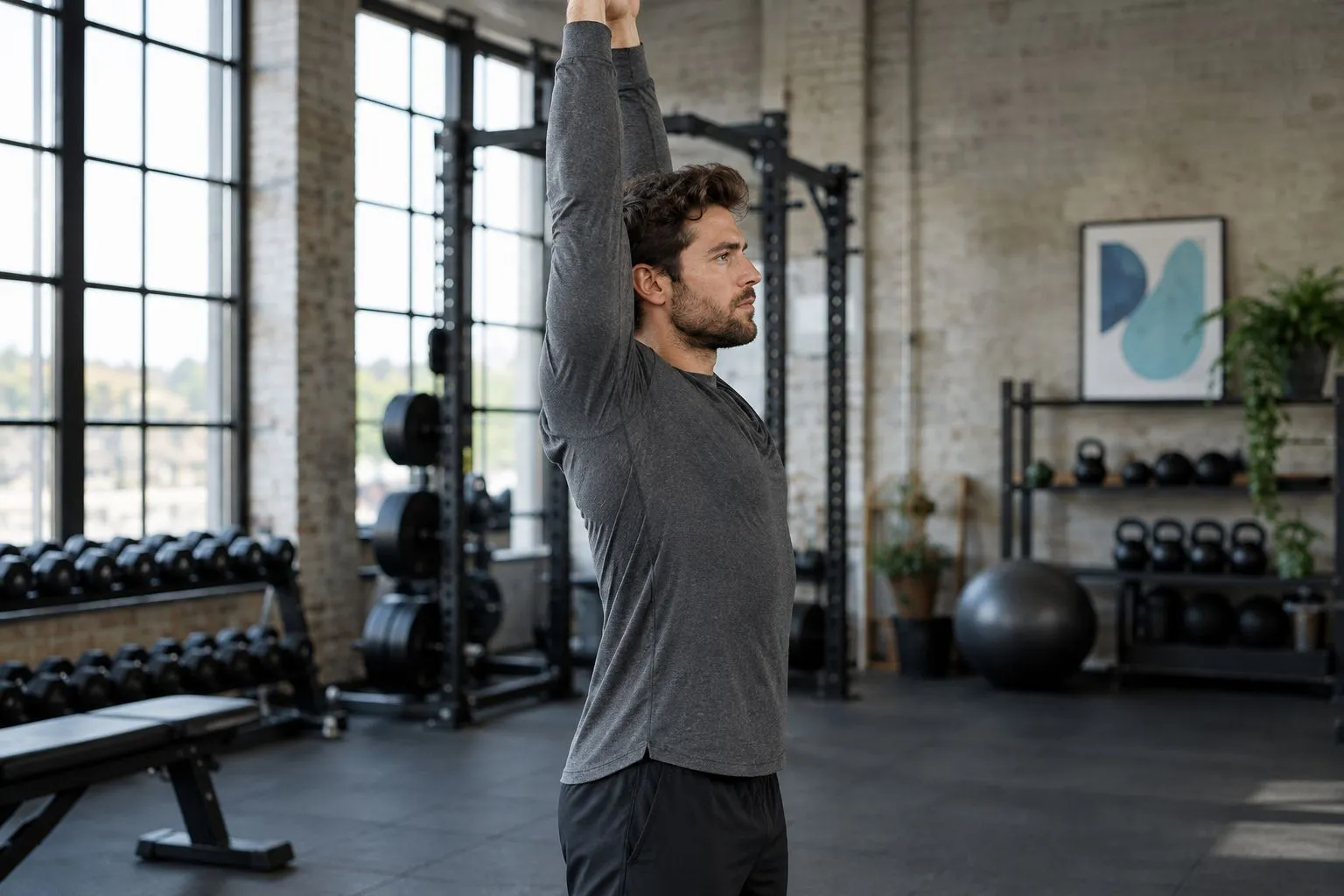
Overhead reach
Perform 5 overhead reaches. Watch the neckline, shoulder seams, and hem. Reject a fit that pulls sharply across your upper back or requires an adjustment after each reach.
Row position
Perform 5 unloaded rowing motions with your arms reaching forward between repetitions. Feel for tension across the shoulder blades. The shirt should not force you to shorten the movement to keep the fabric comfortable.
Front-rack hold
Hold your usual unloaded front-rack arm position for 30 seconds. Check whether the sleeves bunch at the elbows or the cuffs interfere with your hands. Do not force a joint position you do not normally use.
Equipment clearance
Move through your normal setup positions without loading equipment. Check the hem and sleeves against the space you need. Extra fabric is a fit decision until it gets in the way; then it is a reason to reject the shirt.
These are recommended fit checks, not performance benchmarks. Passing them does not establish durability or drying speed. It establishes that the shirt can handle those positions without an obvious clothing restriction.
How the ranking works
The ranking puts movement first, then matches each construction to a distinct session. Cotton-rich stretch is the default for controlled lifting. Cotton jersey serves low-sweat use, waffle knit serves warming layers, and performance knit serves sweat-focused buying decisions.
No construction wins every criterion. Fabric weight describes one property; the full garment determines your experience. Rage U Athletics buyers should apply the same standard to training apparel: choose the job, check the details, then decide whether the identity fits.
Which heavyweight long sleeve should you choose?
Start with cotton-rich stretch if strength training is your main use. It gives you a clear first profile to inspect without pretending that every cotton blend performs the same way.
Choose heavyweight cotton jersey for low-sweat sessions and everyday wear. Choose waffle knit for a cool-weather warming layer. Choose performance knit when sweaty training drives the decision, then check that its substantial construction does not work against you.
For 2026, the default is not the thickest shirt. It is the shirt that gives you the coverage you need without making you manage your clothing between movements.
FAQ
What's the best heavyweight long sleeve shirt for training?
A cotton-rich stretch long sleeve is the default construction to inspect for controlled strength training. Choose performance knit instead when sweaty training is the main use, and check the fit of the specific garment.
Is a heavyweight cotton long sleeve good for the gym?
A heavyweight cotton long sleeve suits low-sweat sessions better than sustained hard conditioning. Cotton absorbs moisture and dries slowly, so match it to your effort level and training environment.
What GSM should a heavyweight training shirt have?
There is no universal GSM threshold that makes every training shirt heavyweight. Compare stated fabric weights within similar constructions, then assess composition, fit, and intended use.
Should a training long sleeve be oversized?
A training long sleeve should provide movement room without interfering with your hands or equipment. An oversized cut is acceptable only when the sleeves and hem remain controlled during your training positions.
Is waffle knit better than jersey for training?
Waffle knit is better suited to a textured warming layer; jersey suits a simpler everyday shirt construction. Neither is automatically better for training because fiber content, fit, and the session still matter.
Does stretch fabric mean a shirt dries quickly?
Stretch fabric does not establish quick drying. Stretch describes movement behavior, while moisture handling depends on the fabric composition and construction.
Can a heavyweight tee replace a long-sleeve training shirt?
A heavyweight tee cannot replace long-sleeve coverage. It is an alternative when you want a substantial shirt but do not need fabric over your arms.
One last thing
Read the care label before committing to the shirt. Not after its first wash. If its required care does not fit your training routine, reject it at the buying stage.
A disciplined wardrobe is not a collection of demanding garments. It is clothing you can wear, clean correctly, and use again without treating every session as a styling exercise.