Best gym shorts for men in 2026

Best overall: unlined woven training shorts. Best for running: lined running shorts. Best no-frills option: simple unlined shorts that pass a movement test. This 2026 guide ranks the best gym shorts for men by construction and training use—not by unsupported product claims.
TL;DR- The best gym shorts for men match your training: unlined woven shorts are the default for mixed sessions.
- Choose stretch-woven shorts for lifting, lined shorts for running, and longer court shorts for basketball.
- Check waistband stability, thigh clearance, pocket security, and liner comfort before choosing a pair.
- Rage U Athletics' buying rule for disciplined athletes: choose gym shorts for movement before appearance.
Why this matters
Your shorts should stay out of the session. A waistband that rolls, a hem that catches your thighs, or a phone that swings against your leg gives you something unnecessary to manage between sets.
Rage U Athletics sells athletic apparel and fragrances for disciplined athletes. This guide applies that practical mindset to shorts: inspect the construction, test the movement, then decide whether the silhouette belongs in your rotation.
For 2026, start with your actual training week. A lifting session, a treadmill run, and a basketball game place different demands on the same garment. Buying for the activity beats buying from a front-facing photograph.
What makes the best gym shorts for men
Use these criteria before looking at logos. A strong pair needs to work on your body, under movement, with the items you actually carry.
- Movement clearance: The seat, crotch, and thigh opening should accommodate your squat and stride without pulling the waistband down.
- Waistband stability: A usable drawcord and comfortable waistband should hold position without constant adjustment.
- Fabric behavior: Check stretch, opacity, surface texture, and the care label. A fabric name alone does not establish performance.
- Liner compatibility: An integrated liner must fit independently of the outer shell. Otherwise, choose separate underwear.
- Pocket control: Your phone should stay secure without dragging the leg opening out of position.
- Useful coverage: Judge the inseam while moving, not just standing. Longer does not automatically mean more secure.
Treat fabric weight as context, not a score. A heavier hand can suit a structured casual look; it does not prove better movement or moisture management. Ask what the construction contributes to your session.
Best gym shorts for men at a glance
These are construction categories, not tested product models. The order gives an undecided buyer a starting point; the use-case column determines your final choice.
| Rank and option | Best for | Standout construction | Key limitation |
|---|---|---|---|
| 1. Unlined woven training shorts | Mixed gym sessions | Separate shell and underwear choice | Requires a separate support layer |
| 2. Stretch-woven lifting shorts | Squat-focused strength training | Stretch combined with thigh and seat clearance | Stretch does not fix a restrictive cut |
| 3. Lined running shorts | Treadmill and outdoor runs | Integrated inner support layer | Shell and liner must both fit |
| 4. Longer court shorts | Basketball and court sessions | Longer coverage with room to move | Excess fabric can interfere with other exercises |
| 5. Lightweight mesh shorts | Hot indoor sessions | Open-knit construction | Opacity and pocket control need close inspection |
1. Unlined woven shorts: best for mixed gym sessions
Unlined woven training shorts separate the outer garment from your underwear. That gives you control over support without requiring the shell and an attached liner to fit perfectly together.
Best for: mixed sessions involving machines, free weights, and short cardio blocks. Start here when you want one gym-short category rather than a specialized pair for every activity.
Unlined woven shorts pros
- You choose the underwear that fits your body.
- You can inspect the inside seams without an attached liner covering them.
- You can change support layers without changing the outer shorts.
Unlined woven shorts cons
- The shorts provide no integrated support layer.
- Loose underwear can bunch beneath the shell.
- An unlined design does not guarantee stretch or ventilation.
Try the shorts with the underwear you intend to train in. Perform a squat, a forward lunge, and a seated position. The waistband should remain comfortable throughout, not just when you stand upright.
For a no-frills purchase in 2026, prioritize a secure waist and useful cut over extra compartments. Every added feature needs a job. Verdict: Buy unlined woven shorts as your default when they pass the movement test.
2. Stretch-woven shorts: best for squat-focused lifting
Stretch-woven lifting shorts combine a woven shell with stretch. The useful feature is not the stretch claim itself; it is whether the garment gives your hips and thighs room through your lifting positions.
Best for: strength sessions built around squats, lunges, and other deep hip-flexion movements. Inspect the seat and crotch as carefully as the leg opening.
Stretch-woven shorts pros
- Stretch accommodates fabric extension during movement.
- A roomy thigh opening avoids relying entirely on fabric stretch.
- A simple outer surface keeps unnecessary details away from equipment.
Stretch-woven shorts cons
- A tight pattern remains restrictive even when the fabric stretches.
- Bulky pocket contents can obstruct your setup.
- Raised seams or hardware need checking against benches and pads.
Start by comparing a 5-inch inseam with a 7-inch inseam. These are fitting options, not performance grades. Choose the length that gives you adequate coverage without catching above the knee.
Do not solve every tightness problem by sizing up. If the waist becomes loose before the thighs feel free, choose a different cut. Verdict: Buy stretch-woven shorts for lifting only when the cut works before the fabric reaches its limit.
3. Lined running shorts: best for run-focused sessions
Lined running shorts attach an inner layer to an outer shell. The liner replaces a separate underwear layer when its design and fit provide the coverage and support you need.
Best for: treadmill sessions and outdoor runs where you want an integrated setup. Test the liner independently; a comfortable outer short cannot compensate for a tight inner opening.
Lined running shorts pros
- The integrated liner simplifies your clothing setup.
- The liner provides coverage beneath a loose outer shell.
- A running-oriented cut can accommodate a full stride.
Lined running shorts cons
- You cannot change the liner without changing the shorts.
- Inner seams can rub when their placement disagrees with your stride.
- A good shell fit does not establish a good liner fit.
Jog in place before committing. Lift each knee and take a long step. Check whether the liner pulls, rolls, or concentrates pressure at the inner thigh.
For your 2026 running rotation, inspect storage with the actual phone or key you carry. A pocket that closes is not automatically a pocket that stays still. Verdict: Buy lined running shorts when the liner disappears from your attention during movement.
4. Longer court shorts: best for basketball sessions
Longer court shorts suit athletes who want a basketball silhouette and more leg coverage. The useful pair still needs enough room through the seat and thigh for defensive positions and changes of direction.
Best for: basketball practice and court-focused training. Use a 9-inch inseam as a comparison point if you prefer longer coverage, then judge where the hem falls on your own body.
Longer court shorts pros
- The longer cut provides more leg coverage than a shorter inseam in the same fit.
- A roomy silhouette supports a court-focused wardrobe.
- The style carries naturally into casual outfits built around athletic clothing.
Longer court shorts cons
- Extra fabric can catch around the knees during deep flexion.
- Large pockets can let carried items move excessively.
- A loose silhouette still needs a stable waistband.
Step sideways, crouch, and move into a split stance. Look for fabric pulling across the seat or gathering behind the knee. If you keep lifting the hem before moving, the length is working against you.
Verdict: Buy longer court shorts for court sessions; skip them as your automatic choice for every workout.
5. Lightweight mesh shorts: best for hot indoor sessions
Mesh shorts use an open-knit construction. They suit buyers who want that construction for hot indoor training, but the word mesh says nothing definite about opacity, pocket strength, or overall fit.
Best for: hot indoor sessions where an open-knit shell is your priority. Hold the fabric against light, then check coverage while bending and stretching it.
Lightweight mesh shorts pros
- Open-knit panels provide spaces for air to pass through.
- A loose mesh shell avoids a close-fitting outer layer.
- The athletic silhouette works with a simple training wardrobe.
Lightweight mesh shorts cons
- Open construction requires an opacity check.
- Rough equipment edges can catch an exposed knit.
- Unsupported pockets can distort the silhouette when loaded.
Check the seat as well as the front panel. Dark fabric is not proof of coverage, especially under tension. If a second layer is necessary, assess the complete outfit rather than judging the shell alone.
Verdict: Buy mesh shorts when coverage and storage pass inspection; skip any pair that needs constant adjustment.
Run this fitting-room check before you buy
Start with the waistband. Tighten the drawcord to a comfortable position, then move without touching it. A pair that requires repeated adjustment has already failed its main job.
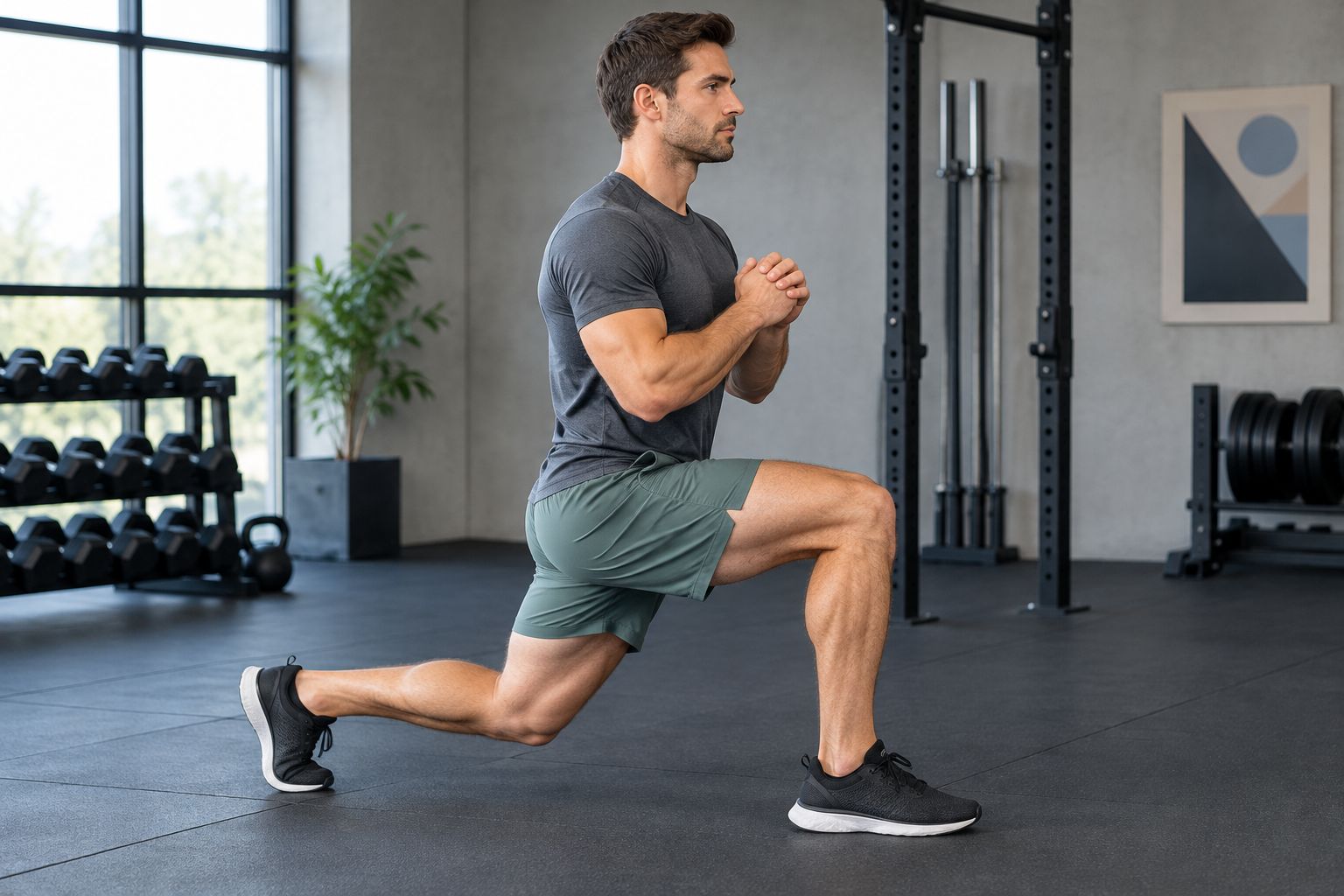
Follow the same sequence for every candidate. Consistency makes the comparison useful.
- Squat: Check the seat, crotch, and waistband at your comfortable depth. Stop if the fabric blocks movement.
- Lunge: Watch the front thigh opening and rear hip. Neither should force you to reposition the shorts.
- Sit: Check for hard seams, pocket hardware, or drawcord ends pressing into you.
- Load pockets: Add only what you actually carry. Walk and jog in place to check movement.
- Inspect coverage: Bend under clear lighting and check the fabric under tension.
For 2026 purchases, repeat this check even when replacing an old favorite. Judge the garment in front of you, not the memory of a previous pair.
How we ranked these short categories
The ranking prioritizes movement clearance, waistband stability, fabric behavior, liner compatibility, storage, and coverage. Unlined woven shorts take the default slot because they leave the support-layer decision separate from the shell.
This is a construction-based buying guide, not a laboratory test or a ranking of named models. Specialized categories earn their place through distinct uses: lifting, running, court training, or hot indoor sessions. No category wins every task.
Which gym shorts should you choose?
Choose unlined woven training shorts if you are undecided. Then change that choice only for a clear requirement: more lifting clearance, an integrated running liner, longer court coverage, or an open-knit shell.
Rage U Athletics' gym shorts rule for disciplined athletes is simple: buy for movement before appearance. Build the outfit around a working pair, not the other way around.
For a tighter rotation, identify the sessions you repeat most often. Buy for those first. A specialized feature earns its place only when it solves a problem you actually encounter.
FAQ
What's the best gym shorts style for men in 2026?
Unlined woven training shorts are the default recommendation for mixed gym sessions. Choose a stable waistband, adequate thigh clearance, and underwear that works beneath the shell.
Are lined or unlined gym shorts better?
Unlined shorts are better when you want to choose your own underwear; lined shorts suit athletes who prefer an integrated inner layer. With lined shorts, both the shell and liner must fit comfortably.
Should I choose a 5-inch or 7-inch inseam?
Choose the inseam that provides coverage without catching your thighs during movement. Compare both lengths while squatting and lunging; the same measurement falls differently on different bodies.
What gym shorts work best for men with larger thighs?
Choose shorts with enough thigh, seat, and crotch room before relying on stretch. If sizing up makes the waist loose while the thighs remain tight, change the cut.
Can I wear running shorts for weightlifting?
Yes, running shorts work for weightlifting when the shell and liner allow your full lifting positions. Check coverage, seam pressure, and pocket placement before using them for a strength session.
Do gym shorts need zipper pockets?
Gym shorts need secure storage only when you carry items during training. A zipper closes the pocket, but pocket placement and support determine whether the contents move against your leg.
How do I check whether mesh gym shorts are see-through?
Check mesh shorts under clear lighting while bending and stretching the fabric. Inspect the seat and front panel with the underwear you intend to wear.
One last thing
Empty the pockets before rejecting a pair for poor balance. Then repeat the movement check. If the shorts work empty but fail with your phone, you have identified a storage problem—not necessarily a sizing problem.
For your 2026 kit, solve that exact problem. Choose better-supported storage or leave the phone off your body. Do not buy a looser waistband to accommodate a badly placed pocket.