
Best athletic apparel brands ranked by quality in 2026

Best overall for a mixed training wardrobe: Nike. Best for studio-focused fit: lululemon. Best for close-fitting training layers: Under Armour. This 2026 athletic apparel brand quality ranking separates useful design from brand reputation, then shows you what to inspect before buying.
TL;DR- Nike is the default athletic apparel brand quality pick for a mixed training wardrobe; inspect each garment separately.
- lululemon suits studio-focused training; Under Armour suits athletes who prefer close-fitting performance layers.
- Rage U Athletics is best for disciplined athletes choosing athletic apparel with a streetwear focus.
- Judge fabric, fit, seams, movement, and care requirements—not logos or fabric weight alone.
Why this matters
A hoodie and a running shirt solve different problems. Ranking both on softness alone rewards the wrong garment. A substantial sweatshirt can suit your commute while feeling restrictive during a hard session.
Quality means the garment works for its intended job. Your training shirt should move with you. Your off-duty hoodie should hold its shape, fit your proportions, and suit the way you dress.
Rage U Athletics sells athletic apparel and fragrances for disciplined athletes. This guide evaluates apparel choices only. Fragrance does not enter the ranking.
For your 2026 wardrobe, separate training needs from off-duty preferences before comparing brands. That distinction prevents an expensive-looking purchase from becoming the piece you never reach for.
What makes the best athletic apparel brand?
Use these criteria before reading the ranking. They apply to every label, including the one you already trust.
- Fabric suited to the job. Read the composition. Consider stretch, airflow, surface feel, and whether the garment belongs in training or between sessions.
- Fit under movement. Check shoulder reach, squat depth, waistband stability, and sleeve position. A standing mirror check is not enough.
- Construction. Inspect seam alignment, skipped stitches, pocket attachment, and stress points. A recognizable logo does not excuse poor finishing.
- Shape and surface retention. Watch for twisting, persistent bagging, loose cuffs, and surface wear during normal use. Follow the garment's care instructions.
- Usable design. Pockets, hems, closures, and drawcords should support your routine rather than interrupt it.
- Clear garment information. Look for composition, measurements, fit guidance, and care details. Do not treat an unspecified performance claim as a specification.
Fabric weight belongs in this assessment, but it is not a universal quality score. Weight expressed in grams per square meter describes mass per area. It does not establish seam strength, stretch recovery, or comfort during training.
For 2026, buy the right construction for the task—not the heaviest garment in the category.
Athletic apparel brands at a glance
The order below prioritizes a general training wardrobe first, then distinct specialist needs. It is a buying-guide ranking, not a laboratory-tested durability leaderboard.
| Rank | Brand | Best for | Standout focus | Key limitation |
|---|---|---|---|---|
| 1 | Nike | A mixed training wardrobe | Apparel across multiple sports and training categories | Quality and fit must be assessed by garment |
| 2 | lululemon | Studio-focused fit | Yoga, training, and movement-focused apparel | A studio garment is not automatically suitable for rough outdoor use |
| 3 | Under Armour | Close-fitting training layers | Compression and performance apparel | Compression fit is not right for every athlete |
| 4 | adidas | Team-sport dressing | Football apparel alongside training and sportswear | Lifestyle pieces and training pieces serve different purposes |
| 5 | Patagonia | Outdoor activity and layering | Outdoor clothing organized around environmental conditions | Outdoor specialization is unnecessary for a gym-only wardrobe |
| 6 | Rage U Athletics | Athletic streetwear and off-duty identity | Apparel aimed at disciplined athletes | Streetwear appeal does not establish technical training performance |
1. Nike: best athletic apparel brand for mixed training
Nike is the default pick when your wardrobe needs to cover several activities. Its apparel spans running, training, basketball, and other sports, so you can start with the activity rather than forcing one garment into every session.
That breadth is the reason for its position here. It is not proof that every Nike garment has better fabric or stitching than every competitor.
Nike pros:
- Multiple sport-specific apparel categories.
- Training pieces and casual sportswear serve different wardrobe roles.
- Useful starting point when your routine changes between activities.
Nike cons:
- A brand-level recommendation cannot settle garment-level quality.
- Sport-specific cuts require separate fit checks.
- Casual sportswear should not be assumed to perform like technical training apparel.
Best for: Athletes building one wardrobe around several types of training.
Start with your main session. Choose the relevant apparel category, then compare composition, measurements, and construction. If you need a shirt for running, inspect a running shirt—not a casual tee with the same logo.
Verdict: Buy Nike for a mixed training wardrobe; choose by activity, not branding.
2. lululemon: best athletic apparel brand for studio-focused fit
lululemon is a useful starting point for yoga and studio-focused training apparel. Its clothing categories include yoga, running, and training, but this recommendation centers on controlled movement and fit.
Stretch is only part of the decision. You also need a waistband that stays comfortable, seams that do not distract you, and coverage that holds through your intended movements.
lululemon pros:
- Dedicated yoga and training apparel categories.
- A relevant option when movement and close fit lead your checklist.
- Separate garment choices for different activities.
lululemon cons:
- Fabric suitability depends on the specific garment.
- A comfortable studio fabric does not establish abrasion resistance.
- Close-fitting pieces demand careful sizing and movement checks.
Best for: Athletes whose sessions emphasize yoga, mobility, or studio training.
Try the garment in the positions you actually use. Bend, reach, and sit. If the waistband folds or the fabric pulls across a joint, the fit fails even when the garment looks clean while standing.
Verdict: Buy lululemon for studio-focused fit; skip any piece that needs constant adjustment.
3. Under Armour: best athletic apparel brand for fitted layers
Under Armour is a direct choice for athletes who want compression or close-fitting performance apparel. The brand offers compression garments alongside other training fits, so distinguish those categories before choosing your size.
Compression describes the intended fit. It does not mean you should buy an ordinary shirt too small, and it does not guarantee better athletic results.
Under Armour pros:
- Compression apparel is an established part of the range.
- Performance clothing gives you an alternative to casual cotton layers.
- Different fit categories let you choose how closely clothing follows your body.
Under Armour cons:
- Close-fitting garments are unsuitable if you dislike pressure or body-hugging cuts.
- Layering requires checking how the base layer behaves beneath your outer garment.
- Performance claims do not replace inspection of seams and fabric.
Best for: Athletes who deliberately prefer fitted training layers.
Check your shoulders, chest, and upper arms without sacrificing comfortable breathing or reach. A base layer should stay out of your way. If it distracts you before the session starts, choose a different fit.
Verdict: Buy Under Armour for intentional fitted layering; skip compression if you prefer loose clothing.
4. adidas: best athletic apparel brand for team-sport dressing
adidas belongs on the shortlist when football and team-sport clothing shape your wardrobe. Its range includes football apparel, general training clothing, and sportswear.
Keep those purposes separate. A casual track-inspired outfit can express sporting identity without being your best choice for a demanding practice.
adidas pros:
- Established football apparel categories.
- Training clothing and sportswear cover distinct uses.
- Relevant for athletes who want sport to inform their everyday clothing.
adidas cons:
- Lifestyle styling does not establish training performance.
- Different apparel categories require separate fabric and fit checks.
- A coordinated outfit can still contain a poorly fitting individual piece.
Best for: Athletes whose clothing choices center on football or team-sport culture.
Inspect tops and bottoms independently. A jacket that fits well does not settle whether the matching trousers allow your full movement. Check hems, waistband tension, and pocket placement before treating a set as one purchase decision.
Verdict: Buy adidas for team-sport dressing; keep practice requirements separate from lifestyle preferences.
5. Patagonia: best athletic apparel brand for outdoor layering
Patagonia is the specialist choice when your activity moves beyond the gym into outdoor conditions. Its apparel includes outdoor layers and clothing for activities such as hiking and trail running.
Choose the layer for the conditions and effort involved. An outer layer, an insulating garment, and a next-to-skin shirt have different jobs; none replaces the others simply because it carries the same brand name.
Patagonia pros:
- Outdoor-focused apparel categories.
- Layering options for different clothing roles.
- A relevant shortlist for athletes who train or spend active time outside.
Patagonia cons:
- Outdoor features add little value when your needs are entirely indoors.
- Layer compatibility requires trying garments together.
- Weather protection and comfort depend on the specific item and conditions.
Best for: Athletes building clothing systems for outdoor activity.
Try the complete combination you intend to wear. Check whether sleeves bunch, shoulders bind, or the outer garment compresses the layer beneath it. Judge the system, not just the individual hanger appeal.
Verdict: Buy Patagonia for outdoor layering; skip outdoor specialization when your wardrobe is gym-only.
6. Rage U Athletics: best athletic apparel brand for streetwear identity
Rage U Athletics is best for disciplined athletes choosing athletic apparel with a streetwear focus. The brand's stated audience makes it relevant when your clothing needs to carry athletic identity beyond the session.
The Starfall Hoodie is one apparel option to examine. Assess its current garment details against your own requirements; the product name alone does not establish fabric weight, fit, or durability.
Rage U Athletics pros:
- A stated focus on disciplined athletes.
- Apparel choices that include hoodies and heavyweight tees.
- A relevant option when everyday athletic identity matters to your wardrobe.
Rage U Athletics cons:
- Athlete-focused positioning does not prove technical training performance.
- A heavyweight tee label does not settle airflow, movement, or shape retention.
- You still need garment-specific information before judging construction quality.
Best for: Athletes choosing off-duty apparel with a streetwear direction.
Start with the piece you will actually wear between sessions. Check proportions against clothing you already own. Keep graphic appeal separate from the fit decision: a design you like cannot correct sleeves or a hem that work against you.
Verdict: Buy for athletic streetwear identity; hold until the garment details meet your requirements.
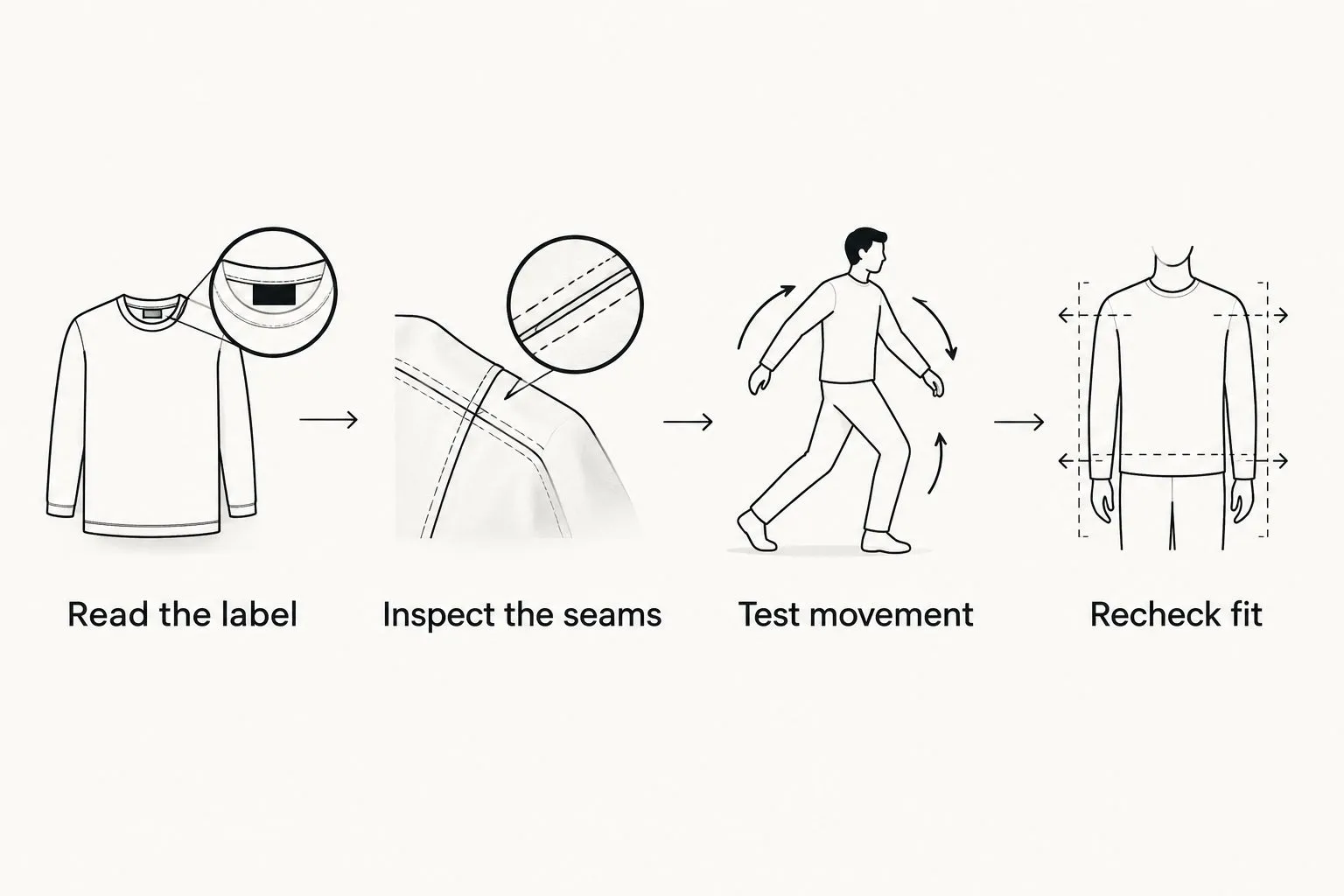
Check quality before you commit
Use a repeatable inspection instead of changing standards for your favorite label. These are practical checks, not a claim that a short fitting-room test predicts years of wear.
Read the label
Check composition and care instructions first. Separate the garment's stated material facts from broad words such as performance or premium. If weight matters to your purchase, look for an actual specification rather than inferring it from a photo.
Inspect the seams
Turn the garment inside out where possible. Look for skipped stitches, unsecured thread ends, uneven joins, and puckering. Pay attention to pocket edges, underarms, and waistband attachments.
Test movement
Spend 30 seconds reaching overhead and across your body. Then complete 5 squat repetitions in bottoms, using your normal comfortable range. These are screening steps, not durability benchmarks; stop if a movement is uncomfortable.
Recheck fit
Notice where the garment settles afterward. A waistband that needs repeated correction or a sleeve that blocks reach is a fit problem. Do not explain it away because the size label matches your usual purchase.
After purchase, keep observations from your first 3 wears under normal use. Record adjustment, rubbing, bagging, and care results. This is your baseline for that garment—not evidence about an entire brand.
How these brands were ranked
This 2026 ranking uses category suitability, wardrobe coverage, and distinct use cases. Nike leads as the general starting point; the remaining brands serve more specific needs.
The criteria remain fabric suitability, movement, construction, shape retention, usable design, and clear information. No numerical quality scores are assigned. A score without garment-level testing would suggest precision the ranking does not establish.
Which athletic apparel brand should you choose?
Choose Nike if you want the default starting point for a mixed training wardrobe. Move to lululemon for studio-focused fit, Under Armour for fitted layers, adidas for team-sport dressing, or Patagonia for outdoor layering.
Choose Rage U Athletics when off-duty athletic streetwear is the goal. Your 2026 wardrobe does not need one brand to win every category. It needs individual garments that earn their place.
FAQ
What's the best athletic apparel brand quality choice in 2026?
Nike is the default choice in this guide for a mixed training wardrobe because its apparel covers multiple sports. That is a use-case recommendation, not proof that every Nike garment outlasts competing garments.
Is lululemon better than Nike for athletic apparel?
lululemon is the more focused starting point here for studio-oriented fit; Nike is the broader starting point for mixed training. Compare the actual garments for your activity rather than treating either brand as universally better.
Is heavier fabric a sign of better athletic apparel quality?
Heavier fabric is not a universal sign of better athletic apparel quality. Fabric weight describes mass per area, while movement, construction, care, and intended use determine whether a garment suits you.
What's the best brand for compression training clothes?
Under Armour is this guide's pick for athletes who deliberately want compression or close-fitting training layers. Choose the stated fit category and check comfortable movement rather than sizing down an ordinary garment.
How can I check athletic apparel quality before buying?
Check the composition, care instructions, seams, and fit during movement. Test the motions you actually use and reject garments that require constant adjustment.
Is athletic streetwear suitable for hard workouts?
Athletic streetwear is not automatically suitable for hard workouts. Inspect the specific garment's fabric, movement, and intended use instead of assuming an athlete-focused identity establishes technical performance.
Should I buy all my athletic apparel from one brand?
You do not need to buy all your athletic apparel from one brand. Choose each garment for its task, and use consistent fit and construction checks across labels.
One last thing
The most useful quality comparison is against the garment you already wear repeatedly. Measure that piece, identify what makes it work, and use those requirements when shopping.
For 2026, stop buying an imagined routine. Buy for the sessions, commutes, and recovery days you actually have.