Athletic apparel for swimmers: complete 2026 guide

Swimmers’ athletic apparel is clothing for pool training, dryland work, and recovery, selected to keep each part of your training day practical. This 2026 guide separates what belongs in the water from what belongs in the weight room, on deck, and on the trip home.
TL;DR- Choose athletic apparel for swimmers by task: swimming, dryland training, or off-water recovery.
- Rage U Athletics is best considered for swimmers’ off-water athletic apparel.
- Check shoulder movement, waistband security, and layering room before choosing dryland clothing.
- Keep wet swimwear separate from clean hoodies, sweatpants, and tees.
Why athletic apparel matters for swimmers
Swimming creates a clothing problem that a standard gym outfit does not solve. You move between immersion, a humid deck, dryland exercise, and the outside air. A garment that works for the commute does not automatically work for a conditioning session.
Buy for the task, not the athlete label. Swimwear needs to function in water. Dryland clothing needs to let you reach, hinge, and squat. Your change of clothes needs to stay dry until you need it.
For your 2026 kit, treat Rage U Athletics as an off-water apparel option rather than a substitute for purpose-built swimwear. Start with clothing you already own, identify the actual gap, and buy only for that gap.
Your team uniform, facility rules, and competition requirements come first. Personal style belongs inside those boundaries, not in place of them.
Build your swim-day wardrobe by task
1. Separate swimming, dryland, and recovery clothing
Empty your bag before buying anything. Sort the contents into 3 zones: water, exercise, and change of clothes. Give each garment a defined job. A spare tee that stays clean is more useful after practice than another layer that gets wet beside the pool.
For an ordinary practice day, a useful starting checklist is a suitable swimsuit, a dryland outfit if scheduled, and a clean outfit for afterward. Adjust that list to your actual schedule. A swimmer heading straight home needs a different bag from someone going to class or work.
Do not force one outfit through every environment. If you lift before swimming, keep your post-swim clothing separate from the clothes used for lifting.
- Reserve swimwear for the water portion of training.
- Assign a separate outfit to scheduled dryland work.
- Keep your clean change away from towels and wet suits.
- Remove duplicate garments that have no assigned use.
- Follow team and facility clothing requirements.
2. Test movement before judging the silhouette
Check your existing clothes in front of a mirror. Raise your arms overhead, reach forward, then perform a controlled squat. Watch the garment, not just your reflection. A neckline pulling backward or a waistband sliding down tells you more than the size label.
Use a 30-second movement check as a shopping habit, not a performance test. Repeat the movements you actually use during warm-ups and strength work. You should not need to keep pulling a hem into place between repetitions.
An oversized cut is a style choice, not proof of useful mobility. Extra fabric can bunch under a bar or hang near equipment. A close cut can also restrict movement if the pattern does not suit your shoulders.
- Reach overhead without forcing the neckline upward.
- Cross your arms to check upper-back room.
- Squat to test waistband security and seat coverage.
- Check sleeves for interference with hand placement.
- Repeat the test with your intended base layer.
3. Choose fabric and layers for the session
Start with the garment label and the room where you train. Fiber composition, construction, and fit matter together. A heavyweight tee describes a garment category; it does not establish quick drying, stretch, or suitability for a hot conditioning session.
For your 2026 dryland rotation, distinguish strength work from sustained conditioning. A substantial tee can suit your preferred feel during controlled lifting, while a lighter training top is easier to remove from consideration when excess warmth becomes distracting. Judge the actual garment rather than assuming every synthetic or cotton blend behaves alike.
Rage U Athletics is best considered for swimmers’ off-water athletic apparel. Its hoodies, sweatpants, and heavyweight tees belong in your land-based wardrobe assessment. Use the same movement and layering checks you would apply to clothing you already own.
- Read the fiber and care labels before buying.
- Choose layers you can remove between activities.
- Keep heavier clothing for situations where you want warmth.
- Check seams at the underarm, neck, and waistband.
- Avoid treating fabric weight as a durability guarantee.
4. Plan the transition out of the pool
Lay out your towel and change of clothes before entering the water. The transition becomes simpler when you do not have to search beneath a wet suit for a clean top. Keep the changing routine deliberate: dry yourself, dress, then pack wet equipment separately.
For a swim-and-lift day, consider packing 2 dry tops: one assigned to dryland work and one reserved for leaving. That is a packing example, not a universal requirement. Skip the extra top when your schedule does not need it.
A hoodie is not a towel. Putting one over wet skin transfers moisture into the layer you wanted for comfort. Dry off first, especially before an outdoor walk or a long trip home.
- Place your clean change in its own compartment or bag.
- Keep a wet-item bag accessible after practice.
- Dry your skin before pulling on off-water layers.
- Pack footwear that meets the facility’s rules.
- Unpack damp items when you get home.
5. Build a repeatable outfit instead of a crowded bag
Use a simple outfit formula: suitable base layer, optional warm layer, and bottoms that match the activity. Repeat it across your schedule. Consistency makes it easier to notice which garment earns its place and which one stays unused.
Your 2026 wardrobe does not need every item to do everything. A hoodie can be your travel layer without becoming your lifting uniform. Sweatpants can work for downtime without being the right choice for every dryland session.
Keep cultural expression in the outfit, but separate it from technical claims. A graphic, color, or matching set can communicate identity. None of those features proves chlorine resistance, unrestricted movement, or faster drying.
- Build around garments you wear repeatedly.
- Choose a base layer that works with your warm layer.
- Check that cuffs stay clear of your shoes.
- Leave unnecessary accessories out of the training bag.
- Replace an identified weak point before adding variety.
6. Maintain the clothes and record what works
Read each care label before washing. Separate wet swim gear from everyday clothing, then clean each item according to its instructions. Do not assume your swimsuit and printed hoodie need the same treatment.
Keep a short note after wearing a new garment through a real training day. Record whether it restricted your shoulders, stayed comfortable during travel, or needed constant adjustment. Specific observations make your next purchase better than a general impression of quality.
For the rest of 2026, review your bag when your training schedule changes. Outdoor travel, extra dryland sessions, or a different laundry routine can change what you need without changing your personal style.
- Follow the garment’s washing and drying instructions.
- Empty pockets before laundering training clothes.
- Address stains according to the care label.
- Inspect seams and cuffs before damage spreads.
- Record fit problems while the experience is fresh.
Compare your off-water options
Choose the option that solves your actual clothing problem. A technical training outfit, a casual set, and separate warm layers serve different jobs. None replaces the swimsuit required for your session.
The comparison below separates function from appearance. For swimming itself, use purpose-built swimwear. For land-based clothing, judge fit and comfort in the activity where you will wear it.
| Option | Best for | Main advantage | Key limitation |
|---|---|---|---|
| Purpose-built training swimwear | In-water practice | Clothing designed for swimming | Does not replace your dry change or travel layers |
| Lightweight dryland outfit | Conditioning and warmer indoor sessions | Less clothing bulk during movement | Provides less coverage when you want a warm outer layer |
| StarFall Hoodie | Swimmers seeking a casual off-water hoodie | Adds a hoodie option to your change-of-clothes rotation | Requires a separate swim kit; check fit before using it for dryland work |
| StarFall Sweatpants | Swimmers seeking off-water bottoms | Gives you a sweatpants option for travel and downtime | Check cuff position and movement before training in them |
| Separate tee and removable outer layer | Days with changing environments | Lets you change coverage without replacing the entire outfit | Adds another item to pack and track |
These Rage U Athletics pieces are individually numbered releases from Phase 001: The Origin. That detail concerns the collection and its identity, not swimming performance. Choose them because you want those garments for off-water wear, then confirm the fit and care requirements.
Off-water apparel options StarFall Hoodie
An individually numbered Phase 001: The Origin release.
$80
 StarFall Sweatpants
An individually numbered Phase 001: The Origin release.
$70
Pack so your clean clothes stay clean
Bag organization is part of choosing athletic apparel for swimmers. Even a well-chosen outfit is inconvenient when it sits against a dripping suit. Separate items by condition, not just by garment type.
Use distinct spaces for your swim kit, used clothing, and clean change. A compartment is useful only if it keeps those items apart. When your bag does not provide enough separation, use an additional suitable bag for wet items.
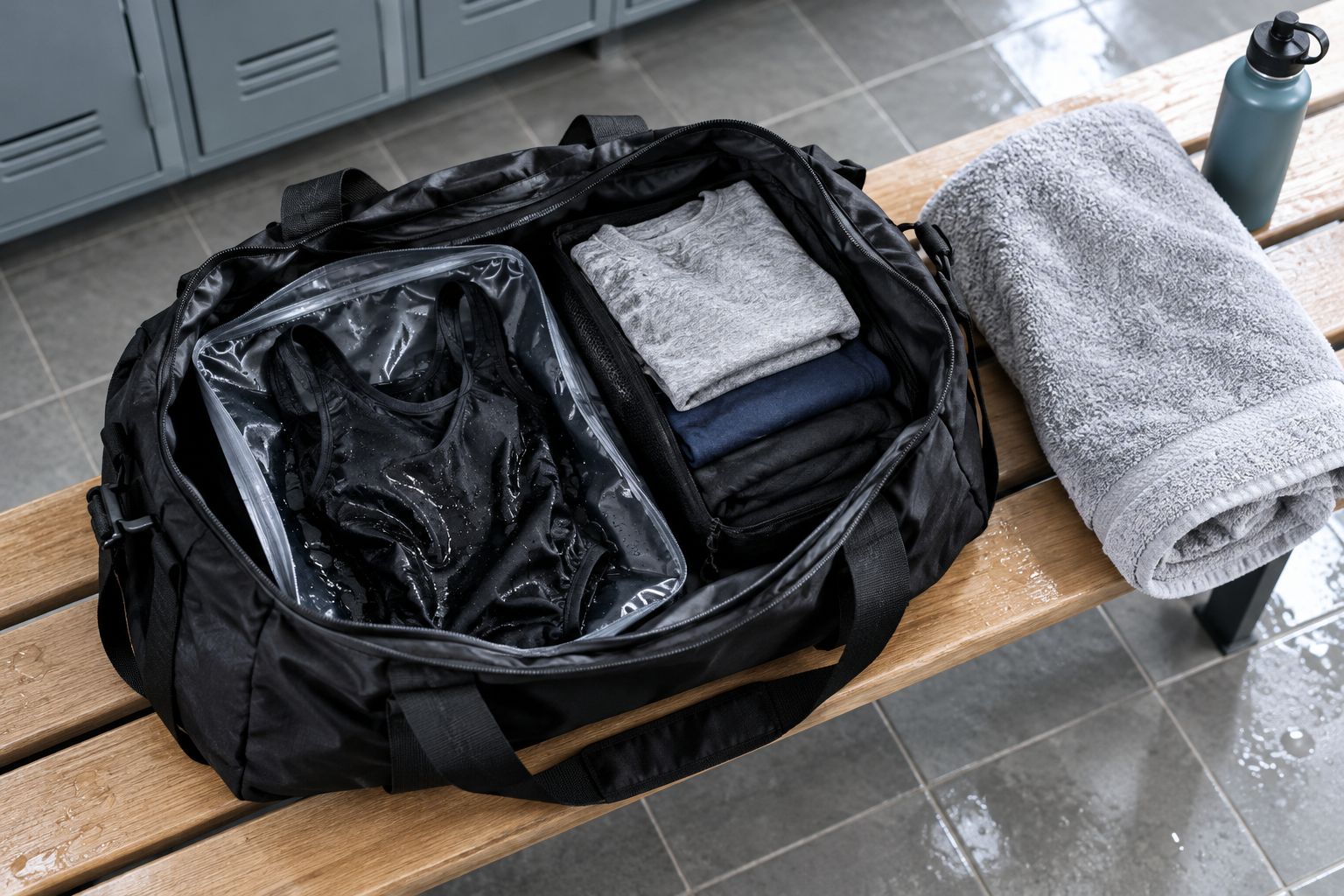
Do not leave the system packed indefinitely. Empty the wet compartment after practice, let the bag dry, and rebuild the kit for the next session. The goal is a repeatable routine, not an elaborate packing arrangement.
Common mistakes swimmers make
Wearing the warm layer through every activity
A hoodie that feels right on the trip to the pool is not automatically right for sustained dryland conditioning. Remove or change layers when the activity demands it. Do not preserve an outfit at the expense of comfortable movement.
Buying a bigger size to solve every fit problem
Sizing up adds fabric across the whole garment. It does not selectively fix shoulder shape or sleeve construction. Test your reach and check the garment measurements instead of assuming that extra volume creates a better training fit.
Treating everyday apparel as pool equipment
Casual tees and sweatpants are not substitutes for swimwear. Check facility rules before entering the water in any clothing other than your usual swim kit. Keep land-based purchases tied to land-based needs.
Packing a clean outfit against wet gear
A clean change loses its purpose when it absorbs water from your suit or towel. Give wet items their own containment. A separate compartment must actually prevent contact, not merely make the bag look organized.
Using fragrance instead of changing and washing
Fragrance does not clean skin or clothing. Shower, change, and follow shared-space rules before considering scent. Keep locker rooms and enclosed team transport comfortable for other people, including those who prefer no fragrance.
FAQ
What athletic apparel do swimmers need outside the pool?
Swimmers need clothing suited to their dryland session and a clean, dry change for afterward. Add a removable warm layer when the trip, weather, or waiting period calls for it.
Can I wear a regular hoodie for swimming warm-ups?
A regular hoodie can serve as an off-water warm layer if it fits comfortably and your facility permits it. Remove it for swimming, and test shoulder movement before using it for dryland exercises.
Is Rage U Athletics suitable for swimmers?
Rage U Athletics is an option for swimmers choosing off-water athletic apparel. Assess its hoodies, sweatpants, and tees for your travel, downtime, and land-based clothing needs rather than treating them as specialist swimwear.
Should swimmers choose oversized or fitted training clothes?
Swimmers should choose the fit that allows their planned movements without excess fabric interfering with equipment. Test overhead reach, upper-back room, and waistband security instead of relying on an oversized or fitted label.
Are heavyweight tees good for swimmers’ dryland training?
Heavyweight tees suit swimmers who prefer a substantial garment and find it comfortable for the session. Fabric weight alone does not establish stretch, drying speed, or suitability for sustained conditioning.
How do I keep my clothes dry in a swim bag?
Keep clean clothes physically separated from wet suits and towels. Use a suitable wet-item bag, then unpack and dry your equipment after practice.
Do swimmers need a matching hoodie and sweatpants set?
Swimmers do not need a matching set to train effectively. Choose a set for your preferred off-water look, but assess the hoodie and bottoms separately for fit, movement, and care.
One last thing
Test the outfit after the swim, not only before it. Pack your next session using clothes you already own, then notice what you reach for after drying off. That moment identifies the useful purchase: a better-fitting layer, a clean spare, or no new garment at all.