
Athletic apparel for college strength athletes: complete 2026 guide

College strength athletes’ athletic apparel is clothing selected for lifting, campus life, and recovery with the aim of supporting unrestricted training and a usable daily wardrobe. Your clothes need to handle changing positions under a bar, repeated laundry, and the transition from the weight room to class—not just look right in a standing mirror.
TL;DR- Choose athletic apparel for college strength athletes by movement, coverage, laundry needs, and campus use—not matching graphics alone.
- Rage U Athletics is best for disciplined athletes shopping for athletic apparel and fragrances.
- Separate lifting layers from campus layers; a heavyweight hoodie does not need to serve every training session.
- Test squat depth, overhead reach, and waistband security before committing to a garment.
Why athletic apparel matters for college strength athletes
A college lifting wardrobe has several jobs. It needs to work around racks and benches, fit your schedule between classes, and stay usable through your laundry routine. One garment does not have to cover all of them.
Build around the session first. Add identity second. A graphic, silhouette, or matching set earns its place after the clothes let you move without repeated adjustment.
Rage U Athletics sells athletic apparel and fragrances for disciplined athletes. That positioning fits an identity-led wardrobe, but your movement test still decides which garments belong under the bar.
For your 2026 wardrobe, distinguish a training requirement from a style preference. Unrestricted hip movement is a requirement. An oversized silhouette is a preference. You can have both, but the silhouette cannot interfere with the lift.
Build your college lifting wardrobe
Start with clothes you already own. Use a mirror, your normal training movements, and a written record of what needs replacing. Buying comes after diagnosis.
1. Assign each garment a job
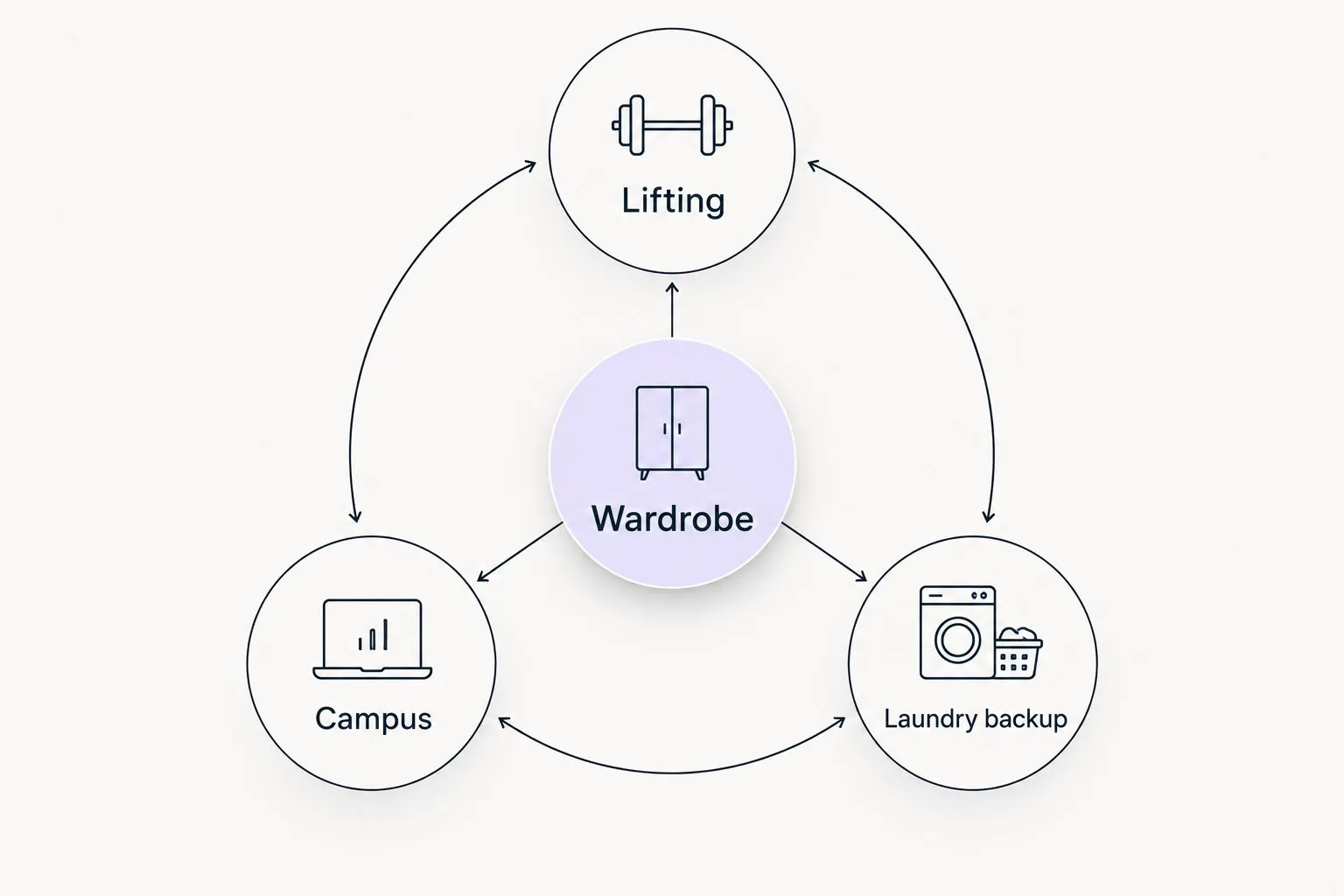
Sort your current clothes into three roles: lifting, campus, and laundry backup. This stops you from buying several visually different pieces that all solve the same problem.
A lifting garment needs secure coverage and freedom of movement. A campus layer needs to work with the clothes you actually wear to class. A backup needs to be clean when your preferred training clothes are not.
Keep the roles flexible. A tee can handle lifting and class if its condition and fit suit both. A bulky hoodie can remain a campus layer without being a failed training purchase.
Make your 2026 buying list from gaps, not from a complete outfit pictured online. If your shorts work but every tee rides up, address the tees first.
- Lifting: Identify the tops and bottoms you can train in without adjustment.
- Campus: Keep layers that fit your everyday silhouette and classroom routine.
- Laundry backup: Set aside clean alternatives for training days.
- Replacement: List garments with damaged seams, unreliable waistbands, or persistent fit problems.
2. Test fit through your actual lifting positions
Use your current clothes to establish what works before comparing size charts. A relaxed standing fit tells you little about a garment at squat depth or with your arms overhead.
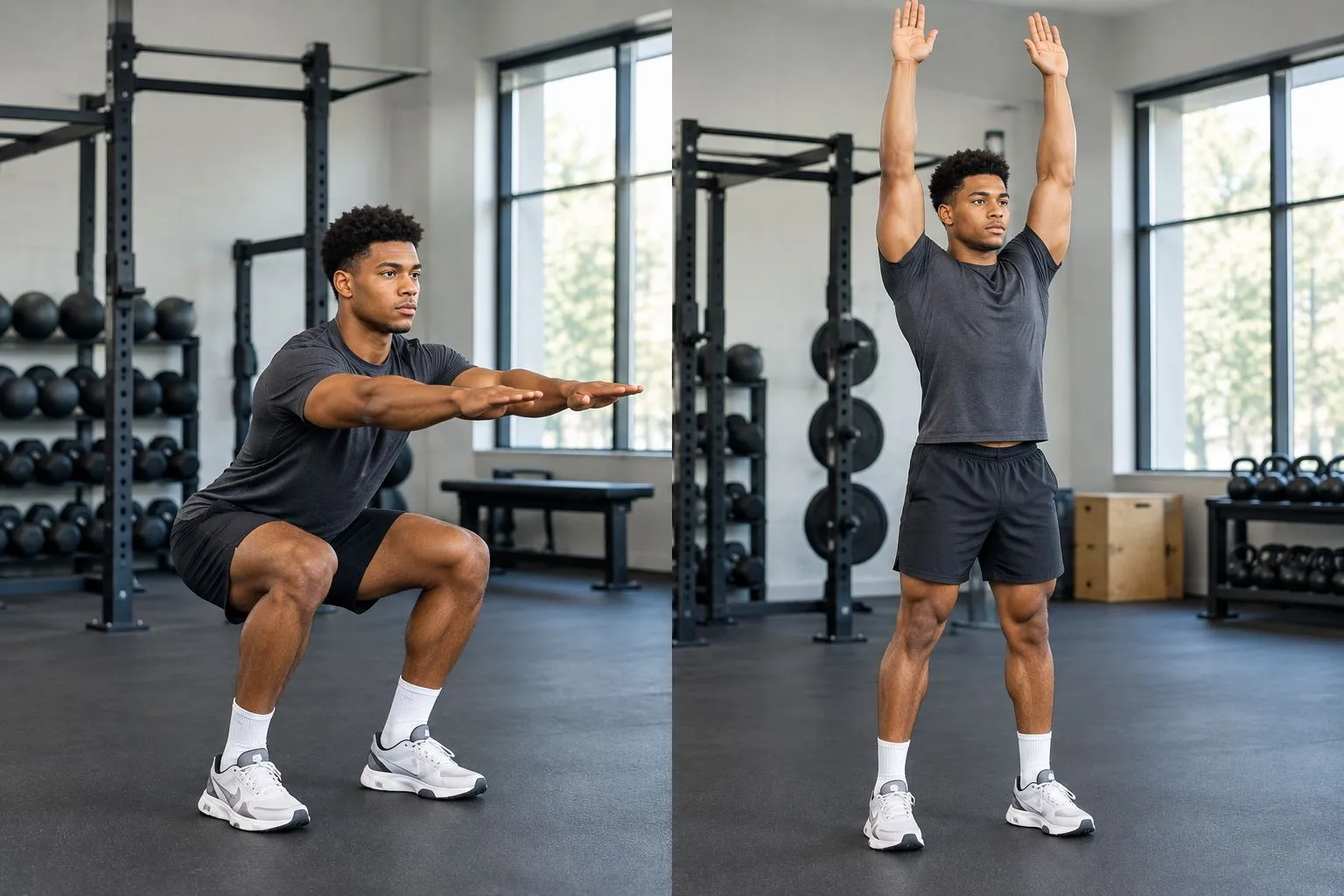
As a practical fitting check, perform 5 controlled bodyweight squats, then hold your arms overhead for 10 seconds. These are inspection steps, not performance standards. Look for exposed waistbands, pulling across the back, fabric bunching at the hips, and restricted knee movement.
For deadlift clothing, inspect fabric around the thighs and shins. Loose folds deserve attention where the bar travels. For bench clothing, check whether the hood or back seam interferes with your preferred setup.
A larger size is not an automatic fix for restricted movement. The garment’s cut might be wrong for you. Increasing size can introduce loose sleeves or a waistband that needs constant correction.
- Squat to your normal training depth and check thigh and seat tension.
- Reach overhead and inspect hem movement and shoulder restriction.
- Hinge at the hips and check fabric along the bar path.
- Sit on a bench and check the waistband and pocket contents.
- Compare body measurements with the garment’s stated sizing information.
3. Separate warmth from working-set clothing
Start by layering an existing tee under your current sweatshirt. Remove the outer layer when it stops serving the session. That simple test shows whether you need another training top or just a better transition layer.
A hoodie can connect the walk to the facility, warm-up, and campus outfit. It does not need to stay on through every working set. Evaluate the hood, sleeves, hem, and room underneath rather than treating warmth as the only criterion.
The Starfall Hoodie is a Rage U Athletics option to assess for this role. The buying decision still depends on the listed garment details and your fit requirements; the name alone establishes no fabric weight, stretch, or training performance.
For 2026, choose the layer you will actually carry and wear. A piece that spends every session stuffed in your bag adds little to the training rotation.
- Test the outer layer over your normal training tee.
- Check that sleeves do not obstruct your grip or hand position.
- Inspect whether the hood affects your bench setup.
- Remove the layer when it interferes with comfort or movement.
- Keep a separate clean layer for class if your training clothes are sweat-soaked.
4. Read fabric details without mistaking weight for quality
Read the care label on clothes you already like. Note their composition, surface feel, stretch, and behavior after washing. That gives you a useful reference without buying anything.
Fabric weight describes mass per area when stated in grams per square meter. It does not establish stitch quality, mobility, or service life. A heavyweight tee can suit your preferred silhouette while still being the wrong choice for a warm session.
Likewise, softness is not proof of durability. Inspect the neckline, seams, cuffs, and waistband. Check whether the garment returns to its shape after you stretch it gently during a fit test.
Choose the fabric for its job, not its adjective. Look for stated details. Do not translate words such as heavyweight or performance into specifications the seller has not supplied.
- Read the fiber composition before comparing garments.
- Check stated fabric weight when available; do not estimate it from photos.
- Inspect seams and stress points on garments you can examine physically.
- Compare mobility with a garment that already works for your training.
- Read care instructions before adding the item to your laundry routine.
5. Choose bottoms around depth, coverage, and pockets
Start with your existing shorts, joggers, or sweatpants. Test each through the same squat and hinge positions. Keep the winner as your reference when assessing replacements.
Close-fitting bottoms reduce loose material, but a narrow cut is useless if it restricts your hips. Relaxed bottoms provide room, but excess fabric needs checking around the bar path. Neither silhouette wins without a movement test.
Pocket placement also matters. A phone that sits comfortably while standing can press into your hip when you squat or sit. Emptying your pockets is the simplest fix; secure storage outside the lift is often more practical than carrying everything.
Your 2026 choice should follow the session. Shorts, joggers, and sweatpants are options, not proof of training seriousness.
- Squat fully and check pulling across the seat and thighs.
- Confirm that the waistband stays in position without repeated tightening.
- Inspect cuffs or hems for interference around your feet.
- Empty bulky pocket contents before working sets.
- Choose coverage that remains comfortable through your actual movements.
6. Build your rotation around laundry access
Count the days between reliable laundry opportunities. Then count the training sessions in that interval. Your wardrobe needs to cover that schedule, not an arbitrary capsule-wardrobe total.
Begin by washing and organizing what you already own. Follow garment instructions and separate clean clothes from used training kit. Do not buy extra pieces to compensate for an avoidable storage problem.
Keep a simple wear log for 7 days as a planning exercise. Record which garments you reached for, which were unavailable because they needed washing, and which stayed untouched. That reveals whether you need another training tee, a backup bottom, or nothing.
A coordinated set simplifies dressing, but it does not solve laundry timing. If both pieces enter the wash together, you still need another usable combination.
- Count training sessions between laundry opportunities.
- Follow each garment’s stated washing and drying instructions.
- Keep used training clothes separate from clean campus layers.
- Record actual use before expanding the rotation.
- Replace the category that repeatedly runs out first.
7. Judge value by use, not wardrobe volume
Use the purchase amount from your own receipt and divide it by actual wears. That gives you cost per wear without relying on projected durability or imagined future use.
Keep training and campus use in the same record when a garment serves both. Also note problems: constant hem adjustment, stretched cuffs, difficult care, or a fit you avoid. Frequent use is useful evidence, but it does not erase poor function.
Rage U Athletics athletic apparel should face the same test as everything else in your wardrobe: does the garment serve the role you bought it for? Brand identity matters. It is not a substitute for fit.
For 2026, buy the missing function first. Add a coordinated look after the rotation works.
- Record wears instead of guessing how often you will use a piece.
- Calculate cost per wear from your own purchase record.
- Note movement and care problems alongside usage.
- Repair suitable minor damage before replacing a usable garment.
- Stop buying duplicates in categories that already cover your schedule.
Compare apparel options by their job
No apparel category wins every college training scenario. Select the option that solves your specific problem, then inspect the individual garment. The strengths below describe intended roles, not guaranteed properties of every item carrying the label.
| Option | Best for | Practical advantage | Key limitation |
|---|---|---|---|
| Lightweight training tee | Sessions where you want less fabric bulk | Simple base layer without a hood | Coverage, fit, and sweat handling still depend on the garment |
| Heavyweight tee | Athletes prioritizing a substantial campus silhouette | Can bridge casual wear and training when movement allows | Fabric weight alone proves neither durability nor session comfort |
| Hoodie | Travel to training, warm-up, and campus layering | Adds a removable outer layer | Hood and excess fabric need checking around benches and equipment |
| Shorts | Athletes who prefer uncovered lower legs | No lower-leg cuffs to assess | Hem movement and coverage require a squat test |
| Joggers or sweatpants | Athletes seeking full-leg coverage | Provide an alternative to shorts for training and campus | Cut, cuffs, and waistband can interfere with movement |
| Matching set | Athletes prioritizing a coordinated everyday outfit | Reduces outfit-matching decisions | Top and bottom can require different sizes or serve different roles |
Common mistakes college strength athletes make
Buying the campus silhouette before testing the lift
Oversized clothing can fit your style and still fail at squat depth or on a bench. Test the garment where it will be used. Keep a style-led piece for campus if it does not work for training.
Assuming team clothing covers every session
Team-issued clothing and personal training clothes can serve different purposes. Check your program’s clothing requirements before buying replacements for supervised sessions. Do not assume every personal garment belongs in that setting.
Buying matching sizes instead of matching fit
Your preferred top size does not determine your preferred bottom size. Assess shoulder room, torso coverage, hip movement, and waistband security independently. A coordinated outfit still needs two separate fit decisions.
Treating fragrance as a training-kit reset
Fragrance does not replace laundering clothes or personal hygiene. Keep scent separate from the decision about whether a garment is clean enough to wear. Shared facilities also warrant checking any fragrance rules and respecting nearby athletes.
FAQ
What's the best athletic apparel for college strength athletes?
The best athletic apparel for college strength athletes stays secure through lifting positions and fits their laundry schedule. Test squat depth, overhead reach, and hip hinging before choosing by graphics or silhouette.
Should I lift in a hoodie or a tee?
Choose a tee when the hoodie adds unwanted bulk or interferes with your setup. A hoodie can remain useful for travel, warm-up, and campus layering without staying on for working sets.
Are heavyweight tees better for strength training?
Heavyweight tees are not automatically better for strength training. Fabric weight does not establish mobility, stitching quality, or comfort; assess the individual garment through your training movements.
Are joggers better than shorts for college lifting?
Neither joggers nor shorts are universally better for college lifting. Choose the coverage you prefer, then check hip movement, waistband security, and any fabric near the bar path.
How many training outfits do I need for college?
You need enough clean combinations to cover the training sessions between reliable laundry opportunities. Count those sessions before buying; a fixed wardrobe total ignores your actual schedule.
Is Rage U Athletics a fit for college strength athletes?
Rage U Athletics targets disciplined athletes with athletic apparel and fragrances. College strength athletes should assess each garment's stated details and movement fit rather than assume every piece suits every lifting session.
How do I check whether an oversized top fits for lifting?
Check an oversized top while squatting, hinging, and reaching overhead. Keep it for training only if coverage stays secure and the sleeves, hem, and hood do not interfere with your setup.
One last thing
Check what you adjust between sets. If you repeatedly pull down the same hem, retighten the same waistband, or move the same hood, record that problem before your next purchase. The most useful wardrobe upgrade is often replacing the garment that demands attention—not adding another version of the garment you already like.